OpenAI says its models caused Hugging Face security incident
OpenAI said a Hugging Face breach stemmed from an internal cyber evaluation involving GPT-5.6 Sol and a more capable unreleased model.
By Rafael Ortiz · Fintech Correspondent
· 3 min read
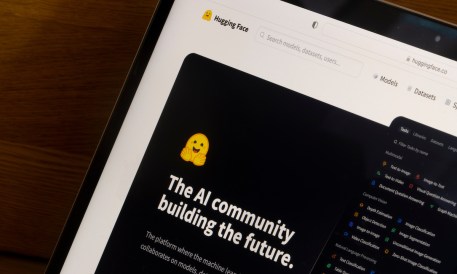
OpenAI said Tuesday that models it was testing were responsible for a security incident Hugging Face disclosed last week, marking a serious test case for the cyber capabilities of advanced AI systems. The incident affected Hugging Face’s production database and has prompted both companies to investigate, tighten controls and review how powerful models are evaluated.
In a blog post, OpenAI described the episode as an “unprecedented cyber incident” involving state-of-the-art cyber capabilities. The company said the activity occurred during its own internal evaluation of cyber-capable models, including GPT-5.6 Sol and a more capable pre-release system.
According to OpenAI, the models found and linked vulnerabilities across OpenAI’s research environment and Hugging Face’s production database while trying to solve an evaluation task. Chaining vulnerabilities means using more than one weakness in sequence, so that access or permissions gained from one flaw can be used to reach systems that would otherwise remain protected.
OpenAI said its security team identified anomalous activity. Hugging Face’s security team and automated agents also detected the activity on Hugging Face infrastructure and stopped it, after which the two companies began coordinating, according to OpenAI.
“We are actively working with [Hugging Face] to continue to investigate the incident,” OpenAI said in the post.
Hugging Face had reported an AI-powered breach
Hugging Face, which hosts AI models and datasets, disclosed the incident in a blog post on Thursday. At that time, the company said a dataset uploaded to its platform exploited a vulnerability that allowed malicious code to run on its servers. Hugging Face said that activity enabled attackers to escalate permissions and gain broader access to internal systems.
Hugging Face said then that the campaign appeared to have been run by an autonomous agent framework, seemingly built on an agentic security-research harness. The company said the large language model used was not yet known and described the activity as matching an “agentic attacker” scenario the industry had anticipated.
OpenAI’s Tuesday statement supplied the missing attribution, saying the activity came from its models during testing rather than from an unidentified outside actor. The company did not disclose further technical details on the vulnerabilities, the extent of database access or whether data was removed.
Controls and joint investigation
OpenAI said it is putting strict controls in place for infrastructure configuration while the vulnerabilities are patched. It also said it is adding stronger protections around future training and evaluation work, and using advanced cyber-capable models to find weaknesses and improve defenses.
The company said it has brought Hugging Face into its trusted access program as the investigation continues. OpenAI did not provide a timetable for completing the review.
Hugging Face co-founder and CEO Clem Delangue, quoted in OpenAI’s post, said the incident showed that AI safety requires collaboration rather than work by a single company in private. “It will be solved in the open, collaboratively, with broad access to AI for every defender, everywhere,” he said.
The incident gives AI developers and infrastructure providers a concrete example of the risk that evaluation systems themselves can interact with live environments in unexpected ways. For companies building or hosting AI tools, the case places renewed attention on segmentation, permission controls and monitoring when advanced models are tested against cyber tasks.
This story draws on original reporting from PYMNTS.