Retailers add financial services as cash meets digital wallets
Executives from Green Dot, PayPal and PayNearMe told PYMNTS that stores are becoming practical access points for payments, deposits and wallet funding.
By Rafael Ortiz · Fintech Correspondent
· 3 min read
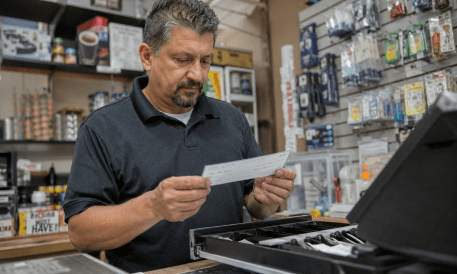
Retailers are increasingly being used as places where consumers handle routine financial tasks, executives from Green Dot, PayPal and PayNearMe said during a PYMNTS roundtable. The shift adds bill payment, cash loading, account funding and money transfers to store visits that still center on groceries, prescriptions and household goods.
The change reflects a practical gap in digital finance. Mobile wallets and banking apps allow consumers to move money on demand, but cash remains part of many household budgets. For those users, a store checkout can serve as the point where physical money enters a digital account or pays a digital obligation.
Crystal Bryant-Minter, senior vice president and general manager of Green Dot’s Consumer Division, told PYMNTS that cash usage should not be read as rejection of digital tools. “Cash isn’t dying. Cash only is,” she said, adding that cash-reliant consumers are seeking entry points that match their routines.
Boris Goykhman, director of Consumer Financial Services at PayPal, said physical retailers have become part of digital payments infrastructure for transactions that cannot start inside an app. He described neighborhood stores as a point of entry to the digital economy for many consumers.
Checkout design becomes part of the product
The executives said the customer experience at the register now affects whether financial services gain adoption. Consumers who use simple mobile commerce tools may judge an in-store bill payment or wallet load against other app-based experiences, rather than against older financial-service counters.
Steve Kramer, vice president of product at PayNearMe, said the consumer expectation is direct: “Why isn’t it just that easy?” In practice, that means customers should be able to find a barcode or payment instruction quickly, while cashiers should not have to move between systems or learn complex procedures for each transaction.
Kramer said the desired result is “the sound of silence,” meaning a checkout flow that works without customers or store staff having to call attention to it.
The model also depends on how responsibilities are split among participants. Bryant-Minter said retailers can focus on customer service, while infrastructure providers handle compliance, fraud controls, banking relationships and the movement of funds. FinTech companies, in that structure, can build consumer-facing services without taking on every regulated banking function themselves.
For retailers, the executives framed the opportunity as broader than a fee on an individual transaction. Bill payments, deposits and wallet loads can bring customers back at different points in the month, creating more chances to connect those visits with loyalty programs or other services.
Goykhman said PayPal evaluates whether the services draw customers who might not otherwise come into a store. The aim, he said, is to support repeat behavior rather than add a single isolated transaction.
The roundtable participants also discussed artificial intelligence as a tool that could connect digital prompts with physical-store completion. Goykhman said an AI-enabled wallet could detect a low balance, point a customer to a nearby participating retailer and show merchant offers before the trip. Bryant-Minter said loyalty programs could reward financial activities, such as funding an account or paying a bill, alongside retail purchases. Kramer said AI may begin the process digitally, while the store remains the place where cash-based transactions are completed.
This story draws on original reporting from PYMNTS.