Smart checkout offers could move $349 billion, PYMNTS-FIS report says
A PYMNTS-FIS survey of 60 merchants finds checkout offers are widely used, but data gaps and coupon friction limit results.
By Rafael Ortiz · Fintech Correspondent
· 3 min read
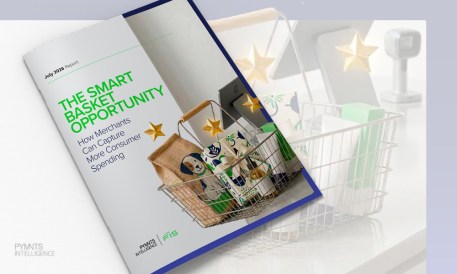
Smart checkout offers could become a larger channel for merchant promotions, with PYMNTS framing the opportunity at $349 billion in a report produced with FIS. The survey of 60 merchants found that 73% use targeted offers, while 48% describe them as their most successful promotion tool, pointing to a gap between adoption and effectiveness.
PYMNTS Intelligence said it independently designed, fielded and analyzed the research for the report, The Smart Basket Opportunity: How Merchants Can Capture More Consumer Spending. The respondents came from grocery and supermarket, retail, eCommerce, restaurant and food service businesses, and held leadership or decision-making roles in marketing, sales, operations or merchandising.
The findings suggest merchants increasingly see checkout as more than a payment endpoint. According to PYMNTS, most merchants already use checkout to deliver promotions, and many report that the channel performs better than other promotional tools.
How would smart checkout offers work?
In the model examined by PYMNTS, the basket is assessed in real time at the point of sale. The system can identify eligible product-level discounts, loyalty rewards and brand-funded incentives, then apply them automatically without requiring the shopper to enter a code, present a paper coupon or activate an offer in advance.
That mechanism addresses a common weakness in merchant promotion systems: an offer can fail if the shopper does not see it or cannot use it when paying. PYMNTS said current systems often depend on coupon codes, loyalty accounts, paper offers or messages that customers may not open.
The report also points to operational constraints. Merchants often have difficulty linking data across systems, which limits their ability to respond to the actual contents of a basket at the moment of purchase.
For payment firms, issuers, card networks, loyalty operators and technology vendors, the report presents smart checkout as a way to place offers inside the payment flow rather than around it. For merchants, the commercial test is whether the system can lift completed sales while preserving control over promotion rules and margins.
- PYMNTS found that targeted offers are common, but not consistently viewed as the best-performing promotional tool.
- Restaurants showed the strongest interest in investment tied to real-time checkout, according to the report.
- Retailers and grocers bring existing channel strengths and loyalty programs to the model, PYMNTS said.
- Merchants want transparency, privacy safeguards and clear limits on partner use of shared data.
Data sharing remains a central issue. PYMNTS said merchants want evidence that providing basket or promotion data to partners produces higher sales, along with privacy protections and restrictions on how that information can be used.
The report was produced in collaboration with FIS, a financial technology provider. PYMNTS said the research was intended to show where demand is strongest, which obstacles remain and what conditions merchants would require before taking part in embedded smart checkout systems.
This story draws on original reporting from PYMNTS.