Spanish banks roll out Bizum Pay for in-store account payments
Bizum’s new tap-to-pay service lets Spanish shoppers pay merchants from bank accounts, adding a local alternative to card networks.
By Rafael Ortiz · Fintech Correspondent
· 3 min read
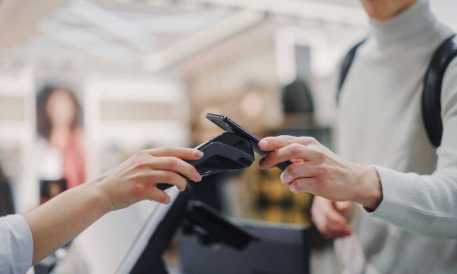
Spanish banking consortium Bizum has introduced an in-store tap-to-pay service that moves money directly from consumers’ bank accounts to merchants, Bloomberg News reported on July 22. The launch extends Bizum beyond person-to-person transfers and gives Spanish lenders a bank-controlled payment route in a market where Visa and Mastercard process most debit and credit card transactions in stores and online across Europe, according to Bloomberg.
Bizum Pay allows shoppers to use mobile devices for contactless payments at retailers, with participating banks handling the accounts on the consumer side and the merchant side. Bloomberg reported that Bizum’s member banks also manage at least 60% of Spain’s point-of-sale terminals, a local structure that may help the system reach stores without relying on a separate acceptance network.
Bizum is owned by a consortium of more than 30 banks in Spain. Its move into customer-to-merchant payments marks what Bloomberg described as Spain’s first attempt to build an alternative to US payment systems, at a time when European policymakers and financial firms are paying closer attention to domestic payment capacity.
Fernando Rodriguez, Bizum’s deputy managing director of international expansion, told Bloomberg that interest in European alternatives is rising “in a context dominated by non-European providers.” He said Bizum offers “an option to reduce the number of players in the chain.”
How the model differs from card payments
Card payments typically involve a card network, issuers, acquirers, processors and other intermediaries that help authorize, route and settle transactions. In a bank-to-bank model, the payment is initiated from the customer’s account and sent to the merchant’s bank account through banking rails, with fewer parties involved if the same banking group controls key parts of the transaction chain.
Rodriguez told Bloomberg that Spain has a specific advantage because point-of-sale terminals in stores are controlled by banking entities. In some other countries, he said, terminals may depend on different participants, which can make deployment more complex.
The effort comes as European payment initiatives seek to reduce dependence on international card networks. Bloomberg noted that Visa and Mastercard have spent decades and billions of dollars developing their European payment infrastructure, meaning any shift away from those systems would be difficult and gradual.
One related project is Wero, run by the European Payments Initiative. PYMNTS has reported that Wero had 48.5 million members across Belgium, France and Germany as of February and plans to add in-store payments by 2027.
Consumer adoption remains the test
Bank-to-bank payment services, often described as pay-by-bank, have gained attention as mobile banking and digital wallets become more common. PYMNTS Intelligence research published earlier this year found that users of digital banks are among the consumers helping drive adoption because they already manage payments, bill settlement and transfers through phones rather than physical cards.
That research also found that consumers may need a clear reason to switch payment habits. PYMNTS Intelligence said incentives such as discounts and rewards, together with strong buyer protections, are among the factors that can encourage people to choose pay-by-bank options instead of cards.
For Spanish banks, Bizum Pay puts an existing peer-to-peer brand into physical retail payments. For merchants and consumers, its broader significance will depend on acceptance, ease of use and whether the service can match the protections and convenience that card networks have built into everyday spending.
This story draws on original reporting from PYMNTS.