Stablecoins lack distinct identity for many credit union members
A PYMNTS Intelligence and Velera report says younger consumers show interest in digital currencies, while many members still blur crypto and stablecoins.
By Rafael Ortiz · Fintech Correspondent
· 3 min read
Stablecoins remain poorly differentiated from cryptocurrency for many credit union members, according to a June 2026 report by PYMNTS Intelligence and Velera, with the study’s title citing an awareness shortfall among 70% of members. The gap matters for credit unions because interest is concentrated among younger consumers, while digital wallets appear to increase willingness to use these assets for payments.
The report, “The Wallet Effect: How Credit Unions Can Close the Digital Currency Access Gap”, found that many consumers do not clearly distinguish between stablecoins and other crypto assets. PYMNTS Intelligence and Velera said the findings point to an education role for credit unions, particularly if they introduce services through channels members already trust.
Cryptocurrencies are often treated by consumers as investment assets, and their market prices can move sharply. Stablecoins are structured differently: they are usually linked to government-issued currencies such as the U.S. dollar and are designed to support payments. In practice, the report found that this distinction has not reached many consumers across age groups.
Generational differences
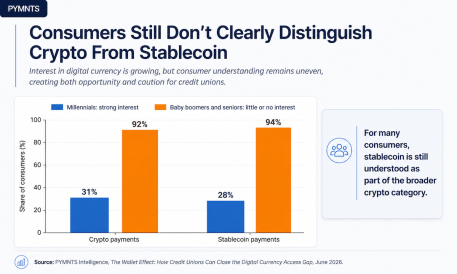
Millennials showed the strongest appetite in the report for using digital assets in payments. PYMNTS Intelligence and Velera found that 31% of millennials expressed strong interest in paying with cryptocurrency, while 28% expressed strong interest in stablecoin payments. The three percentage point gap suggests stablecoins have not developed a materially separate consumer identity among that cohort.
Older consumers were far less receptive. The report said 94% of baby boomers and seniors had little or no interest in stablecoin payments, compared with 92% who said the same about cryptocurrency payments.
Those results indicate that wider public familiarity with crypto, built through media coverage and investing apps, has not translated into a clear understanding of stablecoins. PYMNTS Intelligence and Velera said consumers often carry assumptions from crypto into stablecoins, including concerns tied to volatility, even though stablecoins are generally designed around a different use case.
Wallet access as a bridge
The report argued that credit unions do not need to rush into complex digital-asset products to respond to member interest. It pointed instead to measured engagement that combines education, familiar member experiences and carefully chosen partnerships.
Digital wallets may be one such channel. According to the report, millennials’ strong interest in cryptocurrency payments rose to 35% when access was available through a digital wallet, compared with 31% for direct payments. Among credit union members, strong interest in stablecoin payments increased to 12% with wallet access, compared with 5% without it.
Digital wallets can make new payment instruments feel closer to existing routines because consumers already use them to pay, send funds and manage money. For credit unions, the report said that creates an opening to explain how different digital assets work, where they may be useful and what risks members should consider.
The findings frame digital currency adoption as an education and access question rather than only a product launch question. PYMNTS Intelligence and Velera said credit unions can use trusted interfaces to help members understand the difference between speculative crypto use and payment-oriented stablecoin use.
This story draws on original reporting from PYMNTS.