Wage to Wallet Index shows commuting costs reshaping hourly work
PYMNTS and WorkWhile say gas, distance and pay timing are changing which hourly shifts workers can afford to accept.
By Rafael Ortiz · Fintech Correspondent
· 3 min read
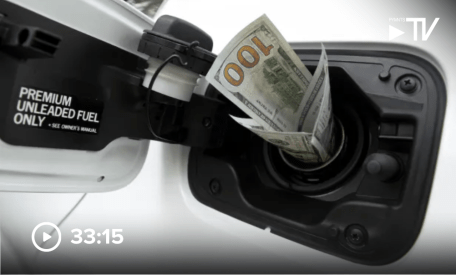
The latest Wage to Wallet Index says hourly workers are weighing jobs against the full cost of getting to work, not only the posted rate of pay. PYMNTS and WorkWhile said transport costs, commute distance and the timing of wages are affecting attendance, turnover and the price employers must pay to staff on-site roles.
The findings come from a joint research effort by PYMNTS and WorkWhile, discussed by PYMNTS CEO Karen Webster and WorkWhile CEO Simon Khalaf. They focused on the roughly 60 million hourly workers in the United States, including staff in warehouses, healthcare facilities, delivery operations and events, where remote work is not an option.
According to the discussion, 28% of the Labor Economy workforce has so little income left after expenses that accepting a shift becomes a financial calculation. Webster described the issue as one that can affect employers’ access to labor, not only household affordability.
How do commuting costs affect hourly worker pay?
For hourly staff, the effective wage is the posted pay less the cost of travel and the delay before cash reaches the worker. A higher hourly rate can lose to a lower-paid shift if the cheaper commute leaves the worker with more take-home money.
Khalaf said workers using shift platforms compare total earnings after transport rather than the advertised hourly wage alone. “They’re looking at their total take-home pay, including transportation, and looking at the total money they’re making, not the money per hour,” he said.
WorkWhile’s year-over-year wage growth, including changes in the types of jobs being filled, was above 7% around June, Khalaf said. He attributed part of that increase to employers having to account for transport and incidental costs that previously sat outside their wage calculations.
WorkWhile has adjusted bonuses based on traffic and gasoline prices within a 30-mile radius, Khalaf said. The company has also accepted a lower take rate in some cases to help shifts get filled. Asked whether those measures had closed the gap, Khalaf said they had helped “some, but not a lot.”
Why same-day pay is becoming part of the staffing equation
PYMNTS and WorkWhile also pointed to pay timing as a constraint on labor supply. A worker may need to buy fuel or cover transport costs before earning wages that arrive days or weeks later.
“Especially for the hourly labor, in the next three years, if there’s no same-day pay, people are not showing up to work,” Khalaf said.
Faster pay requires someone to finance the gap between the day labor is performed and the day the employer funds payroll. Khalaf said some earned-wage products place that cost on workers and can amount to roughly 64% APR when annualized.
WorkWhile said its model shifts that financing burden away from the worker. As employer of record, it pays workers within 24 hours, generally receives payment from customers on 30-day terms and funds the intervening period itself.
Where AI fits into hourly labor matching
Khalaf said the higher costs in hourly labor also come from scheduling and payment inefficiencies. He described labor-market “leakage” as 60% and said absenteeism becomes more expensive once replacement labor, overtime and operational disruption are included.
WorkWhile uses artificial intelligence to assess worker skills and match people to shifts while accounting for distance and travel cost, according to Khalaf. The aim is to improve the chance that a worker accepts a shift that is economically worthwhile and then attends it.
Khalaf also said credit has become harder for low-income borrowers to access as capital is drawn toward large corporate and technology investments. In that context, the timing of pay can determine whether workers can afford to keep taking shifts, while employers face the same pressures through staffing levels, churn and wage costs.
This story draws on original reporting from PYMNTS.