AI-led stocks outpace a slower U.S. economy in 2026
Economists say technology earnings and AI expectations have pushed equity indexes higher while GDP growth and labor-market indicators have cooled.
By Sarah Jenkins · Chief Macro Economics Correspondent
· 3 min read
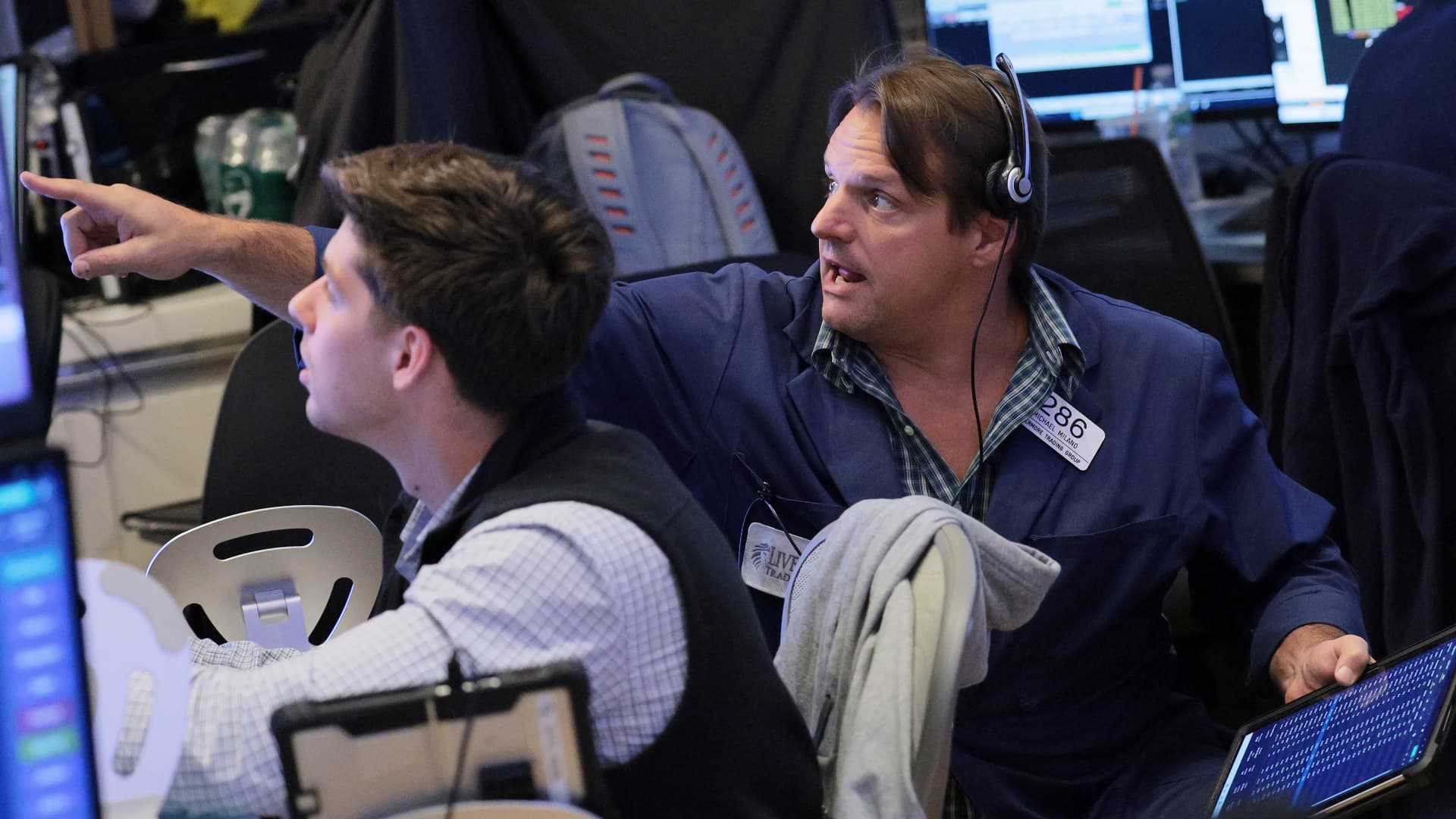
U.S. equities rose sharply in the first half of 2026 even as the broader economy expanded at a more subdued pace, a split economists largely attribute to artificial intelligence. CNBC reported that the S&P 500 gained nearly 10% in the period, while the Dow Jones Industrial Average advanced almost 9%, its strongest first half since 2021.
The rally extended a multi-year run for large-cap U.S. stocks. According to CNBC, the S&P 500 rose 24% in 2023, 23% in 2024 and 16% in 2025, marking the second-strongest three-year winning streak for the index since 2000.
Economic output has not matched that pace. Joe Seydl, senior markets economist at J.P. Morgan Private Bank, told CNBC that real U.S. gross domestic product growth has slowed from about 3.3% in 2023 to roughly 1.9% so far in 2026. Seydl described growth as steady, while Mark Zandi, chief economist at Moody’s, characterized growth near 2% as soft and roughly unchanged from last year.
The Federal Reserve’s June projections put 2026 U.S. growth at 2.2%. Zandi told CNBC that economists’ consensus forecasts are clustered around 2% for the full year.
Why markets and GDP can part ways
Equity indexes and national output measure different things. Stock prices reflect investor expectations for listed companies’ future profits, discounted into current valuations. GDP measures the value of goods and services produced across the economy, including many sectors and businesses that are not represented in stock indexes.
That distinction is especially relevant when gains are concentrated in a narrow group of companies. Seydl told CNBC that technology represents about 35% of the stock market, and about 50% if Alphabet, Amazon, Meta and Tesla are included in an expanded technology group. By contrast, he said technology accounts for only about 10% to 15% of the U.S. economy.
Capital Economics said in a July 1 research note that earnings growth has been concentrated among large technology firms, especially semiconductor companies and hyperscale cloud providers that support AI infrastructure. It identified Microsoft, Amazon and Oracle as examples of hyperscalers, and Intel, TSMC and Samsung as examples of chip manufacturers.
According to Capital Economics, those two groups have accounted for almost two-thirds of the growth in S&P 500 earnings since the end of 2022, shortly after OpenAI made a free version of ChatGPT available to the public.
Consumers carry more of the economy
The U.S. economy remains more dependent on households than on the listed technology sector. Seydl told CNBC that consumer spending makes up about 70% of GDP.
That spending has held up, but Moody’s analysis published in June by Zandi found that higher-income households are carrying a larger share. Households in the top 20%, with incomes of about $200,000 or more, account for nearly 60% of personal outlays, up from about half in the early 1990s, according to the analysis.
Zandi wrote that spending by the top 20% rose about 4% after inflation in the first quarter of 2026, while spending by the bottom 80% was flat. He described the pattern as a K-shaped dynamic that has persisted since the pandemic.
Because wealthier households hold most stocks, economists told CNBC that market gains can support spending through the wealth effect: rising portfolios make households feel wealthier, which can encourage consumption. The same channel can work in reverse if a prolonged market decline leads those households to reduce spending.
Labor-market and sentiment data point to strains beneath the headline GDP figures. Zandi told CNBC that the labor market is weakening. CNBC reported that labor force participation is near its lowest level in about 50 years outside the pandemic, hiring is at its slowest pace in more than a decade excluding the pandemic, and long-term unemployment has increased steadily.
The University of Michigan’s Surveys of Consumers said sentiment fell to a record low in May amid inflation concerns, then improved somewhat in June while remaining unfavorable. Economists also cited inflation above the Federal Reserve’s target and the possibility of renewed U.S.-Iran hostilities as risks beyond the AI trade.
This story draws on original reporting from CNBC.