AI and data center concerns test Michigan Democratic Senate primary
Abdul El-Sayed and Rep. Haley Stevens are contesting a tight Aug. 4 primary as AI policy becomes a dividing line in a toss-up Senate race.
By Sarah Jenkins · Chief Macro Economics Correspondent
· 4 min read
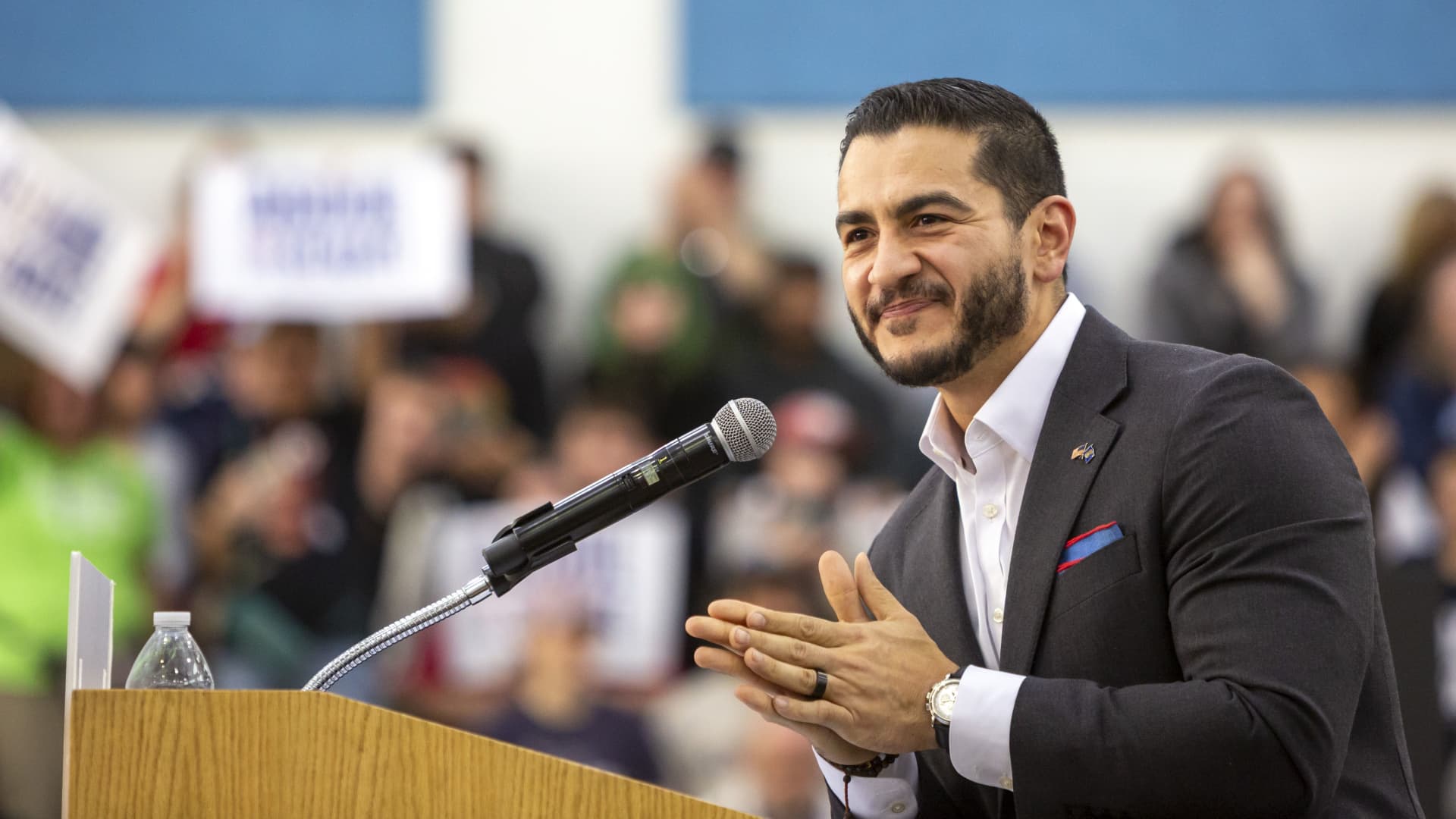
Artificial intelligence and the data centers that support it have become a central issue in Michigan’s Democratic Senate primary, where progressive Abdul El-Sayed and U.S. Rep. Haley Stevens are competing ahead of an Aug. 4 vote. The winner is expected to face former Republican Rep. Mike Rogers for the seat being vacated by Democratic Sen. Gary Peters, a contest the Cook Political Report with Amy Walter rates as a toss-up.
El-Sayed, an epidemiologist and former public health official, told CNBC that voters regularly raise concerns about AI and data centers at campaign events. He is seeking to make those concerns part of a broader argument against concentrated corporate control over a technology that, in his view, could reshape work, public services and democratic oversight.
The race is being watched beyond Michigan because it pits a left-wing candidate against a more moderate House Democrat in a state that could help determine Senate control. Tyler Simko, an associate professor of political science at the University of Michigan, told CNBC that party actors are likely to draw conclusions from the outcome about whether progressive criticism of AI and data center development can win in a competitive statewide race.
Data centers become a campaign issue
Michigan is not among the top 10 states for AI data centers, according to CNBC, but DataCenterMap lists 77 operating data centers in the state, with additional projects under consideration. Data centers provide the computing capacity used by AI systems and other digital services, but campaigns and local opponents have focused on whether new facilities could raise utility costs, strain local resources or produce fewer jobs than promised.
El-Sayed released what his campaign called “terms of engagement” for data centers in January. CNBC reported that he has not called for a development moratorium, unlike Sen. Bernie Sanders of Vermont and Rep. Alexandria Ocasio-Cortez of New York, who have backed a federal moratorium proposal. El-Sayed instead has called for conditions including job guarantees, commitments that utility rates will not rise and environmental protections.
His broader AI agenda, released this month, calls for public ownership of the technology, payments to the public through an AI dividend, mandatory separation of AI developers from major technology companies and a tax on AI automation, according to his campaign. El-Sayed told CNBC that allowing large corporations and wealthy individuals to control development without democratic oversight was unacceptable, saying he trusted democratic governance to hold new technology accountable.
Stevens cites congressional record
Stevens, who has represented Michigan’s 11th Congressional District since 2019, has taken a less confrontational stance. Her campaign pointed CNBC to her role as the top Democrat on the House Research and Technology Subcommittee and her service on a bipartisan House AI task force in the previous Congress.
Her campaign also cited legislation she co-led, signed into law in 2020, to support research on identifying deepfakes, as well as her work on the CHIPS and Science Act of 2022, which sought to strengthen domestic semiconductor manufacturing and invest in AI safety programs.
According to her campaign, Stevens’ AI approach includes expanded worker training, protections against job losses, continued human control over AI systems and safeguards against discriminatory algorithmic use in employment, education and housing. On data centers, the campaign said Stevens wants projects to create union jobs without pushing up utility bills.
“Congress must take concrete steps to ensure that not a single Michigan job is lost and that not a single Michigander sees their costs rise as a result of artificial intelligence,” Stevens said in an emailed statement to CNBC. Her campaign did not make her available for an interview.
Primary reflects wider party split
The candidates have also clashed over health care, campaign funding and Israel. El-Sayed supports universal Medicare and co-wrote a 2021 book on the issue, while Stevens has backed expanding the Affordable Care Act and creating a government-run insurance option. El-Sayed has criticized Stevens for taking corporate money and contributions from pro-Israel groups; Stevens has portrayed him as too extreme and less electable against Rogers.
At a Tuesday debate, Stevens said data centers should pay their fair share while arguing Michigan should remain at the forefront of innovation and manufacturing. She said manufacturers are already using AI and that workers should not be forced to bear its costs.
State Sen. Mallory McMorrow, who had released her own AI safety and data center plans, suspended her campaign on July 5 and said she would not endorse in the head-to-head race. In an interview with CNBC before ending her campaign, McMorrow criticized El-Sayed’s AI proposals as unrealistic and said they appeared designed to move farthest left.
El-Sayed rejected that critique, telling CNBC that 50% public ownership was short of full public control. He said his concern was not AI itself, but the incentives driving its development, which he described as focused on maximum gain.
This story draws on original reporting from CNBC.