Ukraine expands tanker strikes as Russian fuel strains grow
Kyiv says its drones hit dozens of Russian vessels in the Sea of Azov as refinery attacks and fuel shortages put pressure on Moscow.
By Sarah Jenkins · Chief Macro Economics Correspondent
· 3 min read
Ukraine has increased drone attacks on Russian fuel vessels in the Sea of Azov, extending a campaign aimed at disrupting supply routes to Crimea while Russia faces gasoline shortages at home. Robert Brovdi, commander of Ukraine’s drone force and known as Magyar, said on Telegram that Ukrainian drones struck 14 Russian ships on Thursday evening and 35 over a 96-hour period, according to CNBC, which said it had not independently confirmed the tally.
The attacks target a maritime corridor near Crimea, the peninsula Russia seized by force in 2014. The Sea of Azov lies northeast of Crimea, off the southern coasts of Ukraine and Russia, and provides access to routes used to move fuel and other supplies around the region.
Kyiv’s approach combines strikes on transport assets with attacks on refining capacity. By hitting tankers, Ukraine seeks to interfere with the movement of fuel. By striking refineries, it seeks to reduce Russia’s ability to process crude into gasoline and other products, while also putting pressure on energy revenues that help finance the war.
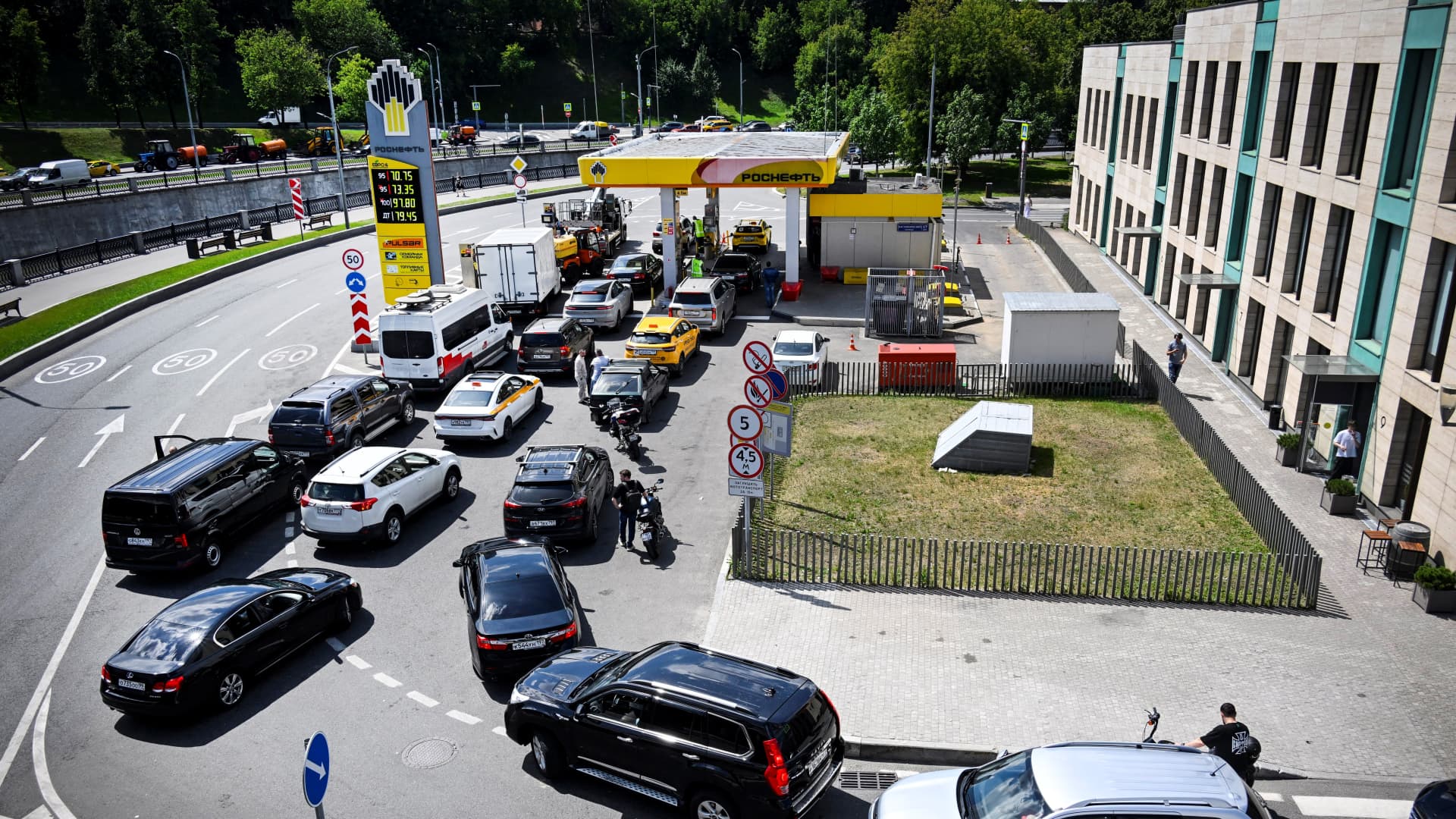
Ukraine has repeatedly attacked major Russian oil refining sites in recent weeks, including facilities near Moscow and St. Petersburg, CNBC reported. The strikes have coincided with long lines at some Russian petrol stations and a widening domestic fuel crunch.
Deeper strikes inside Russia
Earlier in the week, Ukraine appeared to carry out one of its longest-range attacks of the war. Black smoke was seen rising from an oil refinery in Omsk on Tuesday, a city in Siberia near Russia’s border with Kazakhstan and roughly 2,500 kilometers, or 1,553 miles, from Ukrainian territory.
Ukrainian President Volodymyr Zelenskyy said after the Omsk incident that upgraded Ukrainian drone capabilities had brought Siberia “within reach,” CNBC reported. The statement underscored Kyiv’s effort to show that Russian energy infrastructure far from the front line is no longer insulated from attack.
Defense specialists cited by CNBC have said Ukrainian drone operations have helped slow Russian military momentum. They have also warned that successful long-range attacks raise the risk of escalation, as Kyiv pushes the conflict deeper into Russian territory.
Economic pressure on Moscow
The fuel disruption is adding to broader strains in Russia’s economy. Russian President Vladimir Putin recently acknowledged for the first time the effect of Ukrainian drone attacks on Russian fuel production, according to CNBC.
Holger Schmieding, chief economist at Berenberg, wrote in a Friday research note that the “costs of war are mounting” for the Kremlin. He said Russia’s private sector appears to be shrinking because of labor shortages, scarce materials and high interest rates, while the military sector continues to expand.
Official figures showed Russian gross domestic product growth stalled in the first quarter, after a marked slowdown last year and a temporary lift from elevated military spending in 2023 and 2024, CNBC reported.
Schmieding said Russia’s economic and fiscal position would probably deteriorate further unless a sustained closure of the Strait of Hormuz drove energy prices and Russian export receipts sharply higher. His assessment links Moscow’s budget outlook to both battlefield disruption and global energy market conditions.
This story draws on original reporting from CNBC.