AI wealth distribution ideas gain traction as public unease grows
Economists and tech researchers are weighing data royalties, public stakes, taxes and shorter workweeks as AI gains test public support.
By Sarah Jenkins · Chief Macro Economics Correspondent
· 3 min read
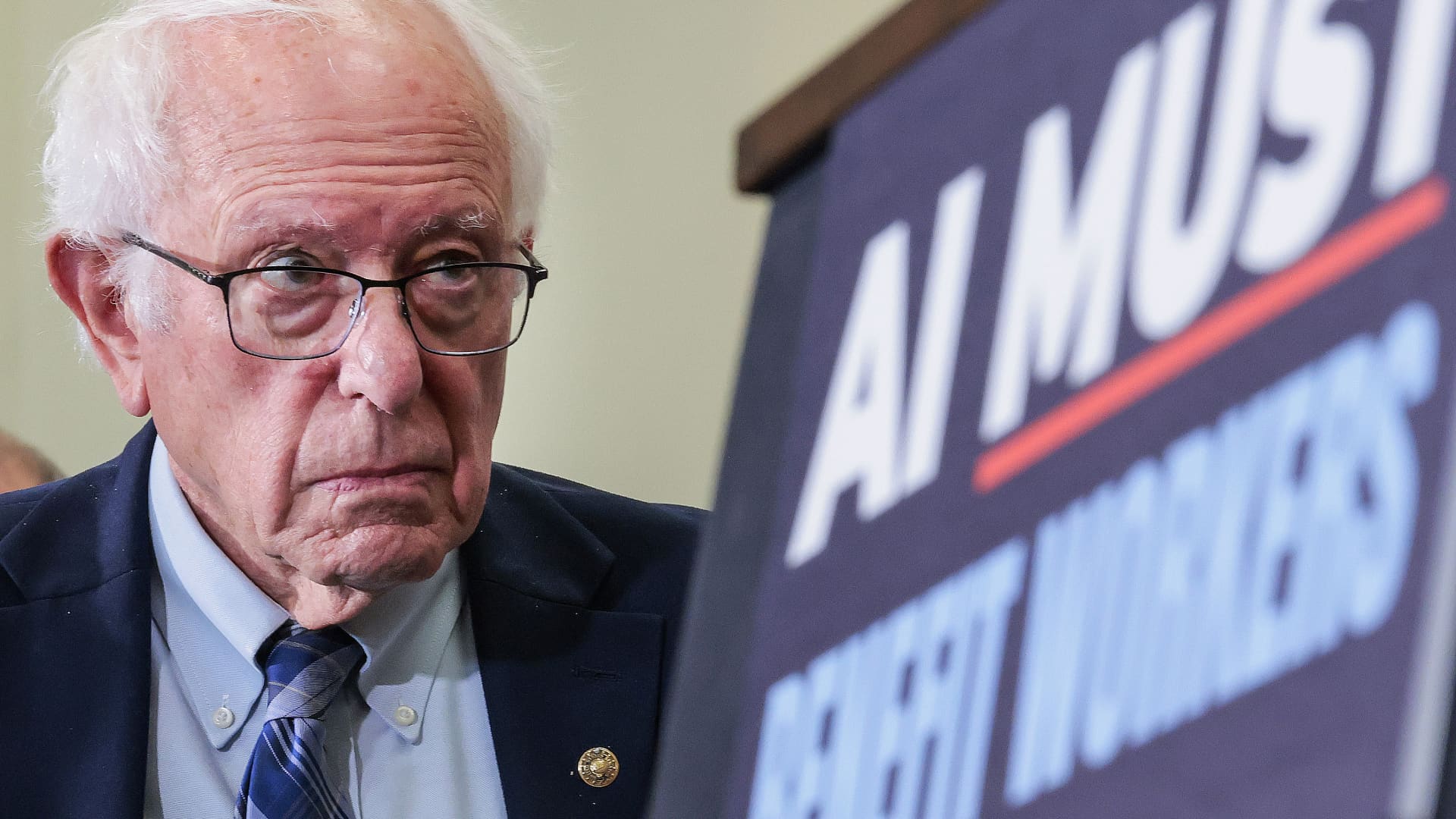
AI wealth distribution has moved from an abstract technology debate into a policy question as artificial intelligence companies draw large market gains and communities push back against new infrastructure. Sen. Bernie Sanders’ proposal that the public own half of AI is not expected to become law soon, according to CNBC, but economists, researchers and policy advocates are advancing other ways to share potential trillions of dollars in value.
The shift is occurring as public support for AI infrastructure weakens. An Emerson College poll released this week found that 27% of Americans support data centers being built in or near their communities, while 63% oppose them. In December 2025, a similar poll found 33% support and 42% opposition.
CNBC has reported that survey work shows a majority of U.S. workers support holding companies accountable through an AI sovereign wealth fund. It has also reported unconfirmed discussions in which OpenAI considered offering the U.S. government a 5% equity stake ahead of a potential initial public offering. Separately, Jeff Bezos told CNBC that removing federal income taxes for the bottom half of U.S. earners would be his preferred way to make the economy more even.
How could AI wealth be distributed to Americans?
One approach would pay people, creators or intermediaries when their data helps train AI systems. The idea is that model developers would contribute part of their profits to a pool, with payments tied to audited evidence of how much human-supplied data improved model performance.
Jaron Lanier, a computer scientist at Microsoft Research, has argued for what is often called data dignity, in which people receive compensation for the information and oversight that make AI systems more useful. Lanier told CNBC that a government-run system would depend on the quality of the public institution handling the money, and said he favored a more distributed model if it could deliver meaningful payments.
Raul Castro Fernandez, an assistant professor of computer science at the University of Chicago, said AI companies already estimate the value of data through scaling laws. He compared a possible system to music royalties, where companies would pay into a collective pool and distributions would follow measured contributions from creators, publishers, platforms or other intermediaries.
Other researchers warn that valuing individual data points may be costly and contested. Nicholas Vincent of Simon Fraser University and Brent Hecht of Northwestern University wrote in a 2023 study that small design choices can sharply alter how value is assigned across contributors. They also argued that when millions or billions of people contribute to a system, each individual payment may be very small.
What alternatives are being proposed?
Matt Prewitt, president of the RadicalxChange Foundation, has argued for new legal rights that individuals could exercise collectively through regulated associations. Under that model, people would not waive rights one by one, and associations could seek compensation, governance powers or other claims from AI companies.
Glen Weyl, a Microsoft principal researcher and founder of RadicalxChange, has cautioned against focusing only on public ownership or fractional shares. RadicalxChange staff have argued that conventional ownership models can either spread existing incentives more widely or concentrate authority in the state, and have promoted common ownership structures instead.
Dean Baker, co-founder of the Center for Economic and Policy Research, told CNBC that policymakers could use familiar tools: stronger corporate taxation, antitrust enforcement and labor rules. He said one version of a corporate tax could require companies to turn over non-voting shares equal to the target tax rate, such as 25% of shares for a 25% rate.
Baker also pointed to shorter working time as a direct way to share productivity gains if AI delivers them. He said the 40-hour workweek was set 90 years ago and argued that the threshold could move to 32 hours, with the overtime premium doubled to 100% from 50%.
This story draws on original reporting from CNBC.