ETF Action’s Akins points to laggards after AI-led first half
ETF Action’s Mike Akins told CNBC that lagging software, cloud, disruptive tech and Magnificent Seven shares could regain ground after trailing AI-led market leaders.
By Amanda Ross · Deals Correspondent
· 3 min read
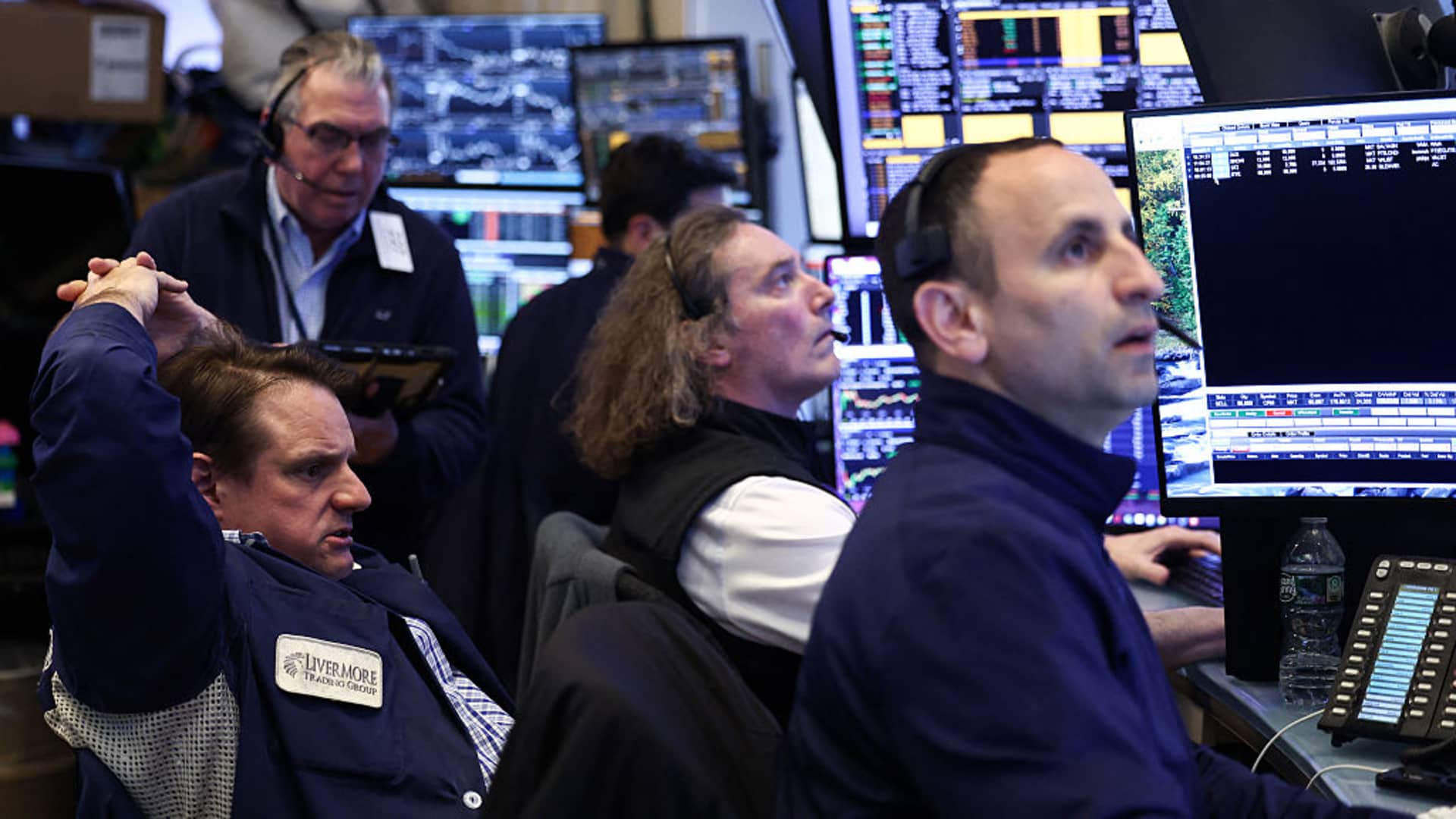
Mike Akins, co-founder of ETF Action, said investors should look beyond the artificial intelligence and semiconductor winners that drove much of the market’s first-half gains, citing underperforming software, cloud and disruptive technology shares as areas with potential in the next six months. The call comes after a split first half in which the Magnificent Seven index fell more than 2%, while the Nasdaq-100 rose nearly 20%, according to CNBC market data.
Speaking on CNBC’s “ETF Edge,” Akins said parts of the technology market that lagged the AI trade now offer stronger relative opportunities. He singled out software and cloud computing companies, saying many had retreated from “nosebleed valuations” while still carrying “very strong growth scenarios.”
“These companies prove that ‘yes,’ we still do need software to do our day-to-day jobs,” Akins said.
His comments reflect a broader rotation argument rather than a claim that the AI trade has ended. In market terms, a catch-up trade occurs when investors move capital toward shares or groups that have trailed a leading segment, often because earnings expectations, valuations or positioning begin to look more attractive on a relative basis. Akins argued that several overlooked technology groups fit that description after a market led by mega-cap and semiconductor stocks.
Akins also highlighted disruptive technology companies, describing the group as a thematic strategy with more exposure to mid-cap and small-cap names. He said those companies had been left behind while larger technology and chip stocks attracted most investor attention.
“It kind of plays a little bit further down market into the mid and small-cap range,” Akins said on CNBC. “Those names have been kind of left behind in this mega-cap, semiconductor-led market.” He added that analysts’ earnings growth estimates for the group made the setup appear favorable.
The Magnificent Seven, made up of Nvidia, Microsoft, Alphabet, Amazon, Meta, Apple and Tesla, is another group Akins said could participate in a second-half rebound. He noted that few investors would have expected the group to be roughly flat at the midpoint of the year, given its role in recent market leadership.
Early second-half trading has moved in that direction, according to CNBC. The Magnificent Seven index was up 5% in the first trading days of the half, while the Nasdaq-100 was down 1% as of Friday’s close.
Akins, who previously led exchange-traded funds at ALPS before co-founding ETF Action, also pointed to small and mid-cap companies as attractive areas heading into 2027. He said smaller companies in particular had performed well this year and could benefit from both earnings and revenue growth, along with valuation multiples recovering from depressed levels.
The Russell 2000 index, a benchmark for small-cap stocks, has gained almost 20% so far this year, compared with an almost 11% advance for the S&P 500, according to CNBC. Akins said the recent improvement among smaller companies could continue through the year, though his comments were framed as a market view rather than a guarantee of returns.
This story draws on original reporting from CNBC.


