Alphabet and Tesla shares fall as AI investment strains cash flow
Both companies beat revenue expectations but reported negative free cash flow, putting Wall Street’s scrutiny of AI-related capital spending in sharper focus.
By Sarah Jenkins · Chief Macro Economics Correspondent
· 4 min read
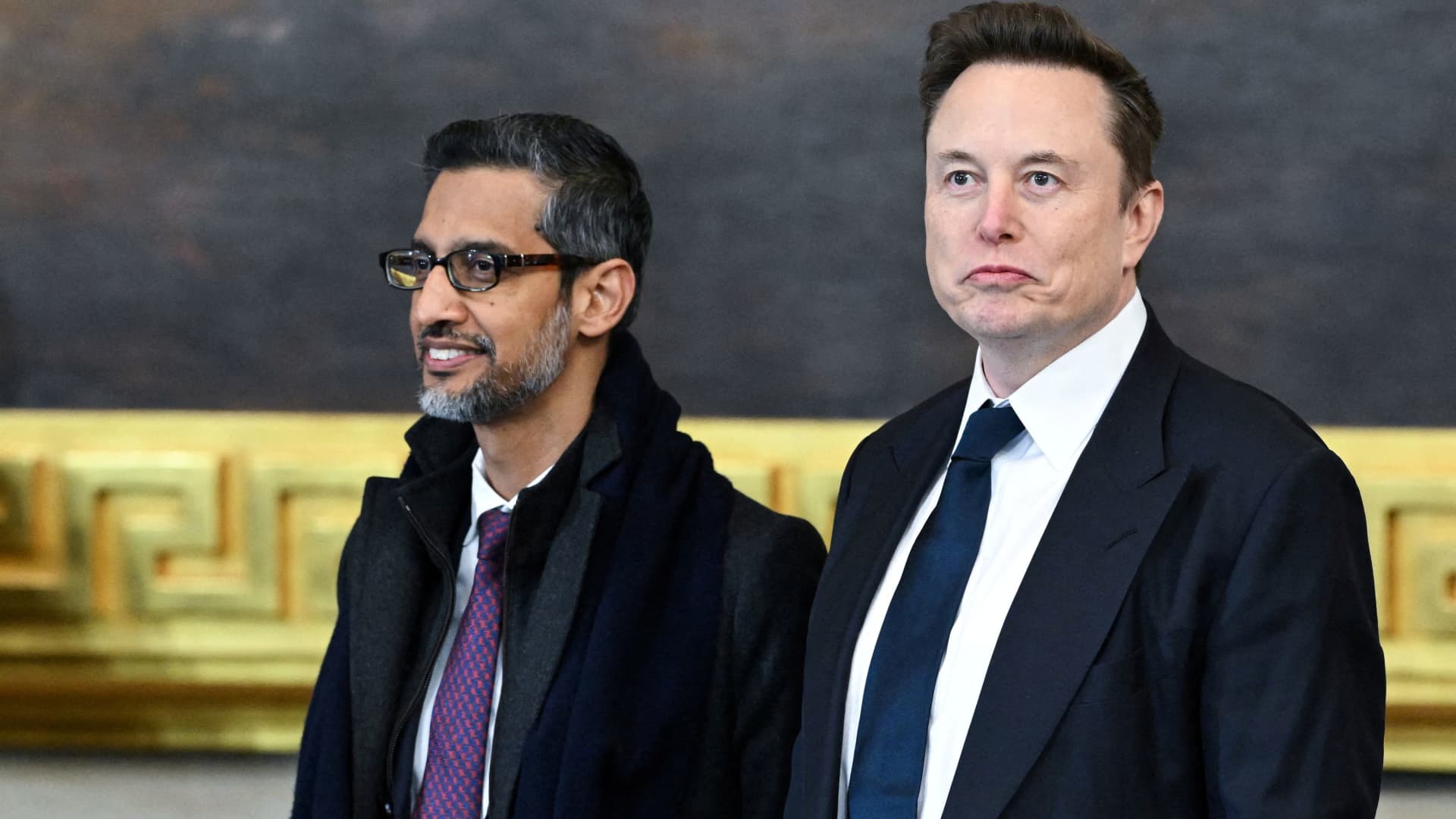
Alphabet and Tesla shares fell in after-hours trading Wednesday after both companies reported stronger-than-expected revenue but negative free cash flow and rising capital spending. Tesla declined about 4%, while Alphabet dropped more than 3%, according to CNBC, as investors weighed whether AI infrastructure outlays are running ahead of near-term returns.
The results opened a major stretch of technology earnings with spending discipline under review across the largest US technology groups. Meta and Microsoft are due to report next Wednesday, followed by Amazon and Apple a day later, CNBC reported.
AI investment among the largest technology companies has centered on data centers, advanced chips and computing capacity needed to train and operate large models. CNBC reported that large investments in model developers including OpenAI and Anthropic have helped fuel the AI boom, while lower-cost open-source models, many from China, and tighter corporate spending on AI services have raised questions about future returns.
Before the reports, Alphabet shares were on track for a third consecutive monthly fall after an April rally, according to CNBC. Tesla was down 11% in July and 17% for the year, while the Nasdaq had fallen about 5% from its early-June record.
Alphabet lifts capital spending plan
Alphabet now expects 2026 capital expenditure of $195 billion to $205 billion, up from earlier guidance of $180 billion to $190 billion, and warned that spending would rise again in 2027, CNBC reported. At the top of the revised range, Alphabet could be among the largest technology capital spenders this year. Amazon’s most recent guidance was for more than $200 billion, though CNBC noted that figure could change when the company reports next week.
Alphabet’s second-quarter capital expenditure was $44.9 billion, most of which went toward technical infrastructure for AI, Chief Financial Officer Anat Ashkenazi said on the company’s earnings call. Free cash flow fell to negative $5.9 billion, compared with nearly $25 billion generated a year earlier.
Ashkenazi said Alphabet expects free cash flow to remain under pressure because of infrastructure investment designed to support the company’s AI opportunity and returns. Google executives also said the company would use capacity from third-party cloud providers in addition to its own data centers, including a recent compute agreement with SpaceX, which now owns xAI and its Memphis data centers, CNBC reported.
Google Cloud revenue rose 82% from a year earlier, ahead of estimates, CNBC reported. Mizuho analysts wrote that the increase in Google’s capital spending had been broadly expected and said the quarter was positive overall because cloud revenue grew sharply, margins expanded and use of the Gemini model accelerated. The analysts said they were surprised by the after-hours decline in Alphabet shares and expected the stock to recover.
Tesla spending accelerates
Tesla reiterated that it expects more than $25 billion in capital expenditure this year, which CNBC said would amount to roughly 200% growth from a year earlier. Second-quarter capital expenditure rose 142% to $5.79 billion as the company increased investment in self-driving systems, AI and robotics.
Tesla is retooling factories to produce the two-seat driverless Cybercab and Optimus humanoid robots, which remain under development, while preparing to begin construction of an AI chip-manufacturing plant in Texas, CNBC reported.
Chief Executive Elon Musk told investors that Tesla should spend on capital projects as quickly as it can without becoming too wasteful. “It’s ok to be a little less capital efficient if we get things done sooner,” Musk said on the earnings call.
Tesla reported negative free cash flow of $1.1 billion in the quarter, compared with positive free cash flow of $146 million a year earlier and $1.44 billion in the first quarter of 2026. Musk said the company was confident its investments would produce strong returns and compared Tesla’s current buildout with Henry Ford’s Model T expansion.
Some analysts remained constructive after the reports. Keith Fitz-Gerald, principal at Fitz-Gerald Group, wrote that Tesla was sacrificing profitability for infrastructure, similar to earlier periods at Amazon and Netflix. Rebecca Wettemann, chief executive of Valoir, said Google’s core business remained strong and that its AI investments were producing returns.
This story draws on original reporting from CNBC.