Andy Burnham to take office as UK prime minister amid gilt scrutiny
Burnham is due to become Britain’s seventh prime minister in a decade, with investors watching his fiscal plans and North Sea energy policy.
By Sarah Jenkins · Chief Macro Economics Correspondent
· 3 min read
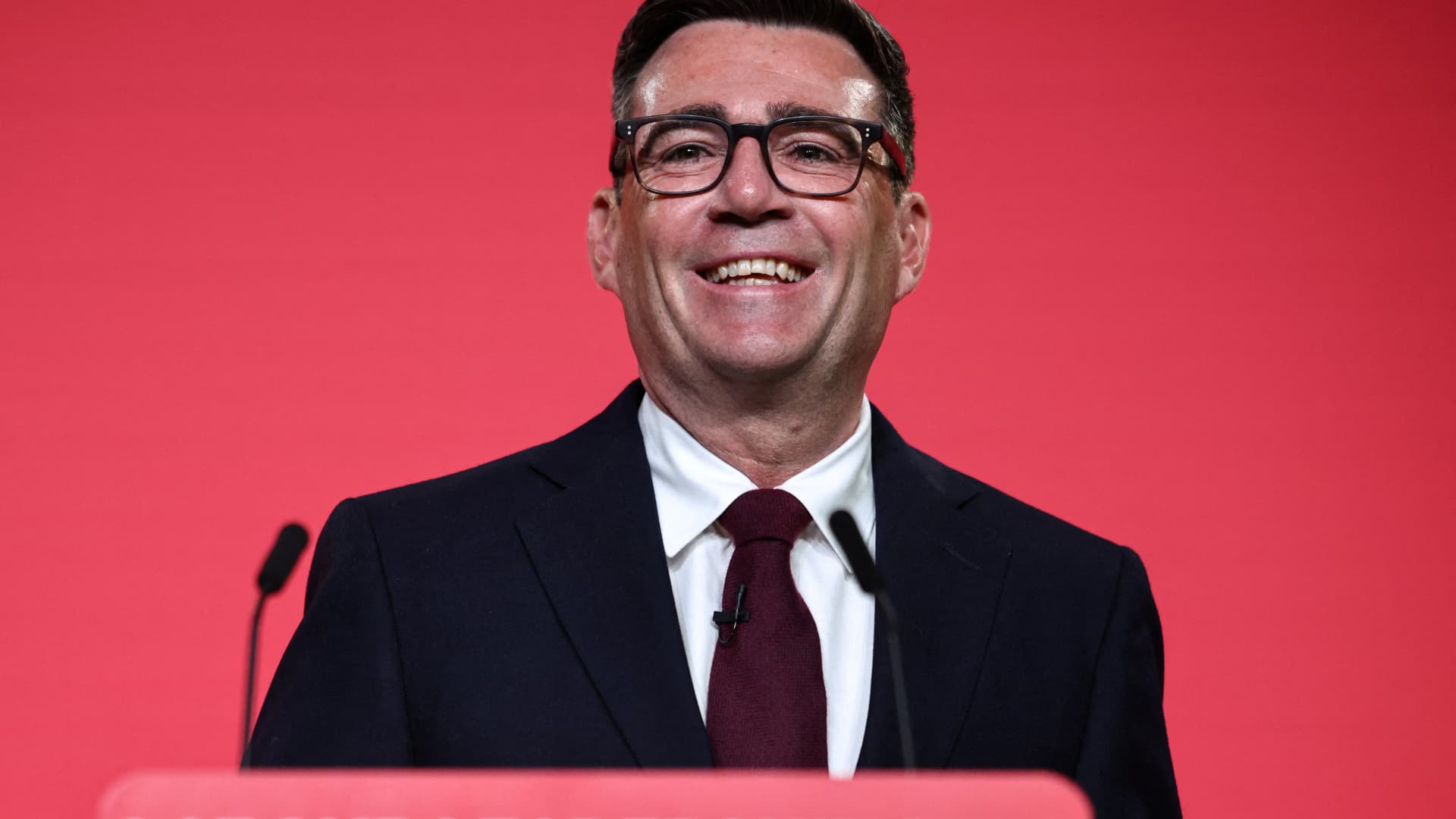
Andy Burnham is due to be appointed U.K. prime minister on Monday, becoming the country’s seventh holder of the office in a decade, as investors assess the fiscal and regulatory direction of his incoming Labour government. U.S. President Donald Trump has praised Burnham’s plan to accelerate oil and gas exploration in already-licensed North Sea fields, while describing Britain on Truth Social as a “Poverty Stricken Disaster.”
King Charles is expected to ask Burnham to form a government at Buckingham Palace on Monday morning, after which Burnham is expected to deliver his first speech as premier and outline his programme for government.
Burnham takes over after Keir Starmer said last month that he would resign, following pressure from within Labour after policy reversals, controversies over staffing appointments and a severe local election defeat. Burnham had no rivals in the contest to lead the governing party.
Trump wrote over the weekend that North Sea oil was “invaluable” and said it could help turn the U.K. into “one of the Richest Countries anywhere in the World!” Burnham’s proposal concerns exploration in fields that already hold licences, a distinction that matters for energy companies because the state has already granted legal rights to pursue activity, subject to the relevant approvals and commercial decisions.
Burnham returned to Parliament only weeks ago after winning a by-election in Makerfield, a seat in northern England. Labour rules allow only sitting members of Parliament to run for the party leadership. Before that return, he served for nearly a decade as mayor of Greater Manchester, one of Britain’s largest urban regions. He had previously been a Labour MP and held cabinet roles under Tony Blair and Gordon Brown.
After being confirmed as Labour leader on Friday, Burnham told supporters: “I am ready.” In the same speech, he said he wanted to address major policy areas including social care, and criticised changes over recent decades in which, he said, “political power was centralized and economic power was privatized.”
Markets focus on borrowing and public ownership
Burnham is regarded as more left-leaning than Starmer, and the prospect of his premiership had earlier unsettled parts of the gilt market, according to CNBC. Gilts are U.K. government bonds; when the state needs to finance deficits or investment, it can issue more of them, leaving investors to judge whether the borrowing path is sustainable and what yield they require to hold the debt.
Investors had appeared broadly comfortable with Starmer and outgoing finance minister Rachel Reeves because of their stated commitment to restrain public borrowing and spending, CNBC reported. Burnham’s policy details remain incomplete, and his first budget is now expected to receive close attention.
Rachel Vahey, head of public policy at AJ Bell, wrote in a note last week that there were “clues as to the direction Burnham will take when he assumes office,” while stressing that much was still unclear. She said recent rumours that the autumn Budget could be widened to include a departmental spending review suggested the package could be “hugely significant,” potentially including tax changes and policies affecting household finances.
Vahey said Burnham had committed to Labour’s manifesto pledges, including not increasing income tax, but added that this did not exclude longer-term plans that might depart from those commitments. She cited speculation about inheritance tax, council tax and “stronger public control” of services such as energy, transport and water.
Andrew Wishart, senior U.K. economist at Berenberg, told CNBC’s “Europe Early Edition” on Friday that markets appeared “fairly relaxed about the Burnham agenda.” He said concern would rise if the government turned to higher public spending, and added that uncertainty remained around nationalisation, house building and how larger projects would be funded.
This story draws on original reporting from CNBC.