Bisignano targets 70 million children for Trump Account rollout
The IRS chief told CNBC that 6.5 million children have been signed up, with tax preparers, banks and incentives seen as routes to wider enrollment.
By Marcus V. Thorne · Markets Editor
· 3 min read
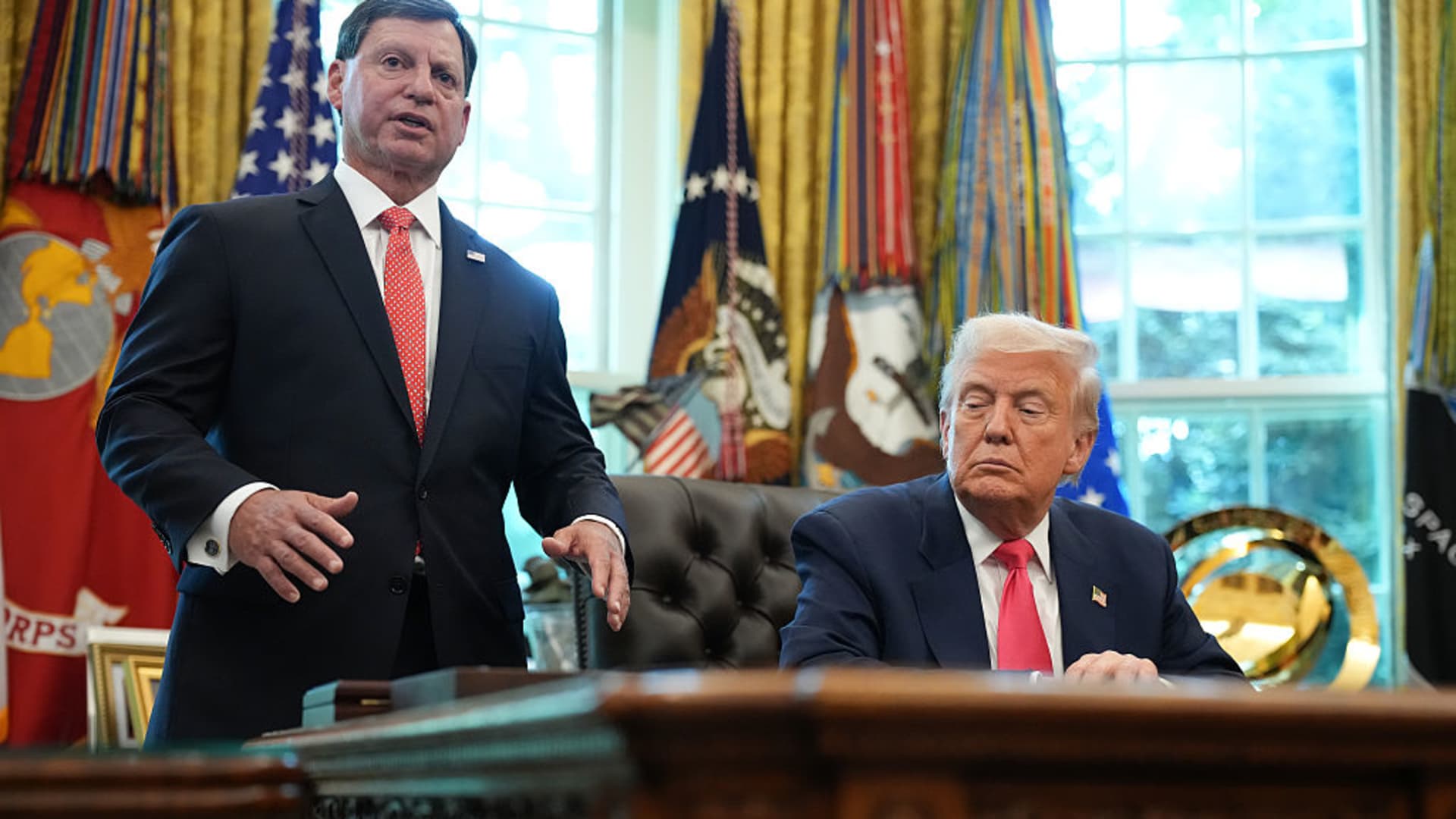
IRS chief Frank Bisignano said the administration wants Trump Accounts opened for as many as 70 million U.S. children, expanding a new tax-deferred investment account program that has enrolled 6.5 million children so far. The July 10 enrollment figure came from the U.S. Treasury Department, according to CNBC.
Bisignano, who CNBC said has been selected to lead the expansion of the accounts, told the network’s “Squawk Box” on Thursday that the government has the ability to sign people up in a straightforward way. “We should have every family enrolled in a Trump Account,” he said.
Trump Accounts are tax-deferred investment accounts for children. The program includes federal seed funding of $1,000 for babies born between 2025 and 2028, according to CNBC, while other potential contributions include employer matching funds and philanthropic grants.
The policy aim, as described by Bisignano, is broad participation across the population of children under 18. He said the target is 70 million children, a scale that would require distribution channels beyond direct government outreach.
Tax preparers and banks seen as distribution channels
Bisignano said he has met chief executives of tax-preparation companies to discuss whether their businesses could help distribute Trump Accounts, CNBC reported. He also cited banks as a possible channel.
The mechanics matter because tax-preparation firms already collect household, dependent and income information from millions of families each filing season. If the government uses those firms as a sign-up route, families could encounter the account enrollment process while completing tax returns. Banks could provide another access point for families that already maintain deposit or investment relationships.
“It’s a technology business, really, and I think we’re going to make it simple for people to enroll,” Bisignano told CNBC.
Bisignano also serves as commissioner of the Social Security Administration, according to CNBC. That role may be relevant to the expansion because the agency maintains records tied to children and Social Security numbers, although CNBC reported the automatic creation of accounts as a proposal raised by another backer rather than as a confirmed government action.
Incentives expected to support sign-ups
Bisignano pointed to the $1,000 federal contribution for eligible newborns, employer matching funds and grants from philanthropists including Michael and Susan Dell as factors that could increase take-up, CNBC reported. “This is why I’m so confident about the 70 million ultimately,” he said.
Matching contributions can raise participation by making the account more valuable to families at the point of enrollment. Employer matches would add workplace-based funding on top of family contributions, while philanthropic grants could target groups or cohorts identified by donors and program administrators.
Earlier in July, Altimeter Capital CEO Brad Gerstner, who CNBC said helped spearhead Trump Accounts, said during a CNBC appearance that the government could automatically create accounts for eligible children. Gerstner said he hoped that over the following months the government, working with the Social Security Administration, would be “auto-creating” 70 million accounts for children under 18.
Bisignano’s comments indicate that the administration is treating enrollment infrastructure as central to the rollout. The program’s scale will depend on how account creation is handled, which partners participate and how federal, employer and philanthropic money is attached to the accounts.
This story draws on original reporting from CNBC.


