Brent crude price falls on report of U.S.-Iran talks push
Brent and WTI fell more than 4% after Reuters reported Pakistan is seeking renewed U.S.-Iran talks with China's support.
By Marcus V. Thorne · Markets Editor
· 3 min read
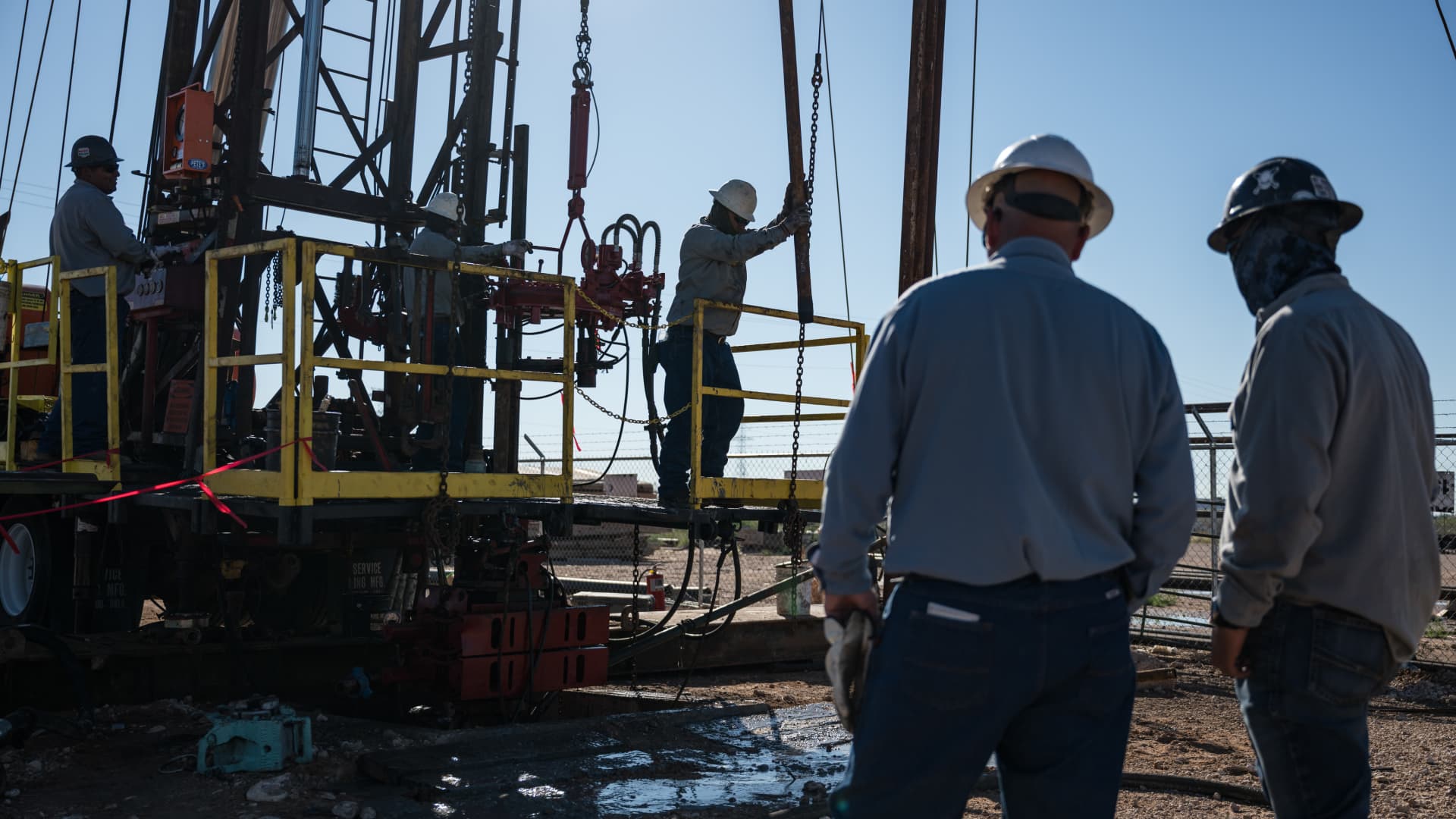
The Brent crude price fell sharply on Friday after Reuters reported that Pakistan is seeking to restart talks between the United States and Iran, with support from China. Brent futures, the global benchmark, were nearly 5% lower at $95.73 a barrel, while U.S. West Texas Intermediate crude fell 4.3% to $88.27.
The drop came after a strong weekly advance driven by conflict risk in the Middle East. U.S. crude had gained about 7% for the week, while Brent had risen more than 8%, as attacks near key shipping routes raised concerns about supply and maritime security.
Why did oil prices fall Friday?
Three sources told Reuters that Pakistan's effort to revive U.S.-Iran talks has China's backing. A Pakistani government official told Reuters that Beijing was dissatisfied because Iranian attacks on other Gulf states and the closure of the Strait of Hormuz were affecting Chinese interests.
Diplomatic efforts can weigh on crude prices when traders see a lower probability of supply disruption or a reduced risk premium. The Strait of Hormuz is an international waterway used by commercial vessels, according to U.S. Central Command, and disruptions there can influence prices because energy markets price the risk of interrupted flows as well as current supply.
Military pressure in the region continued overnight. U.S. Central Command said it had completed its 13th consecutive night of strikes on Iran, targeting military command centers, drone storage facilities, communications networks, coastal surveillance sites and maritime capabilities.
Centcom said the strikes were aimed at reducing the threat Iran poses to civilian mariners and commercial vessels using the Strait of Hormuz. The command said the waterway remained open despite recent attacks by Iran's Islamic Revolutionary Guard Corps and that commercial vessels were still transiting with U.S. military support. It also said more than 50,000 U.S. service members are operating across the Middle East.
President Donald Trump told Axios on Thursday that he was considering a much larger attack on Iran after the conflict spread further into the Red Sea. Trump said in the interview that he was close to a decision and that the planned action would be larger than earlier strikes in the war.
The comments followed Trump's warning on Truth Social that the United States would hold Iran responsible for further attacks by Yemen's Tehran-backed Houthis. The group had claimed to have struck two Saudi Arabian oil tankers in the Red Sea. Trump said major military punishment would be imposed on Iran and the Houthis if such attacks were repeated.
Iran's Revolutionary Guard said Thursday that it had attacked U.S. military facilities at an American base in Jordan, according to state media. U.S. Secretary of State Marco Rubio, speaking to reporters the same day, described Trump's approach to the Iran war as “a head for an eye.”
Analysts continued to point to shipping disruption as a central driver of crude pricing. Daniela Hathorn, senior market analyst at capital.com, said in a Friday note that instability around key shipping corridors had rebuilt a sizeable geopolitical risk premium in oil markets. She said Red Sea attacks on commercial vessels had added to concerns about global trade and energy security, while tensions around Hormuz kept inflation risks elevated.
Giovanni Staunovo, a strategist at UBS Global Wealth Management, said in a Thursday note that markets may be overestimating how quickly the oil market can recover from the conflict. He said Middle East production recovery would require more inbound vessels, and that those flows remained depressed as fighting resumed. UBS expects Brent to fall to $85 a barrel by the end of the year.
This story draws on original reporting from CNBC.


