Chernihiv power outage hits 150,000 after Russian strike
A Russian attack hit an energy site in northern Ukraine while Kyiv said it struck missile components, oil and logistics targets in Russia.
By Marcus V. Thorne · Markets Editor
· 3 min read
A Russian strike caused a Chernihiv power outage affecting about 150,000 residents on Friday, according to the regional electricity distribution company. The attack hit an energy facility in the northern Ukrainian city and its surrounding district, while Ukrainian officials also reported air-defense activity in Kyiv and strikes on Russian military-supply targets.
The regional electricity distributor said on Telegram that crews were working to restore service to consumers in the affected area. It did not give a timeline for the return of power.
Kyiv Mayor Vitali Klitschko said Ukrainian air defenses were operating on Friday morning to repel a Russian attack on the capital. No further details on damage or casualties in Kyiv were included in his update.
What happened in Chernihiv?
The reported Russian attack struck an energy facility serving Chernihiv and nearby communities, cutting electricity to roughly 150,000 people. Such attacks on power infrastructure can disrupt homes, businesses and public services by removing supply from the local grid until repairs or rerouting restore connections.
The outage came as President Volodymyr Zelenskyy praised Ukrainian Defense Forces for strikes inside Russia, including an attack on a missile-components facility in Kirov. Zelenskyy said on social media that the Kirov site supplied parts used in Russian aircraft and missile systems, and he argued the strike was justified because those systems had been used against Ukrainian cities and communities.
Zelenskyy also referred to a Ukrainian attack on an oil facility nearly 1,350 kilometers, or 838.9 miles, from Ukraine. He said other operations were continuing against Russian logistics that supply the occupying army with drone components, navigation equipment and military gear.
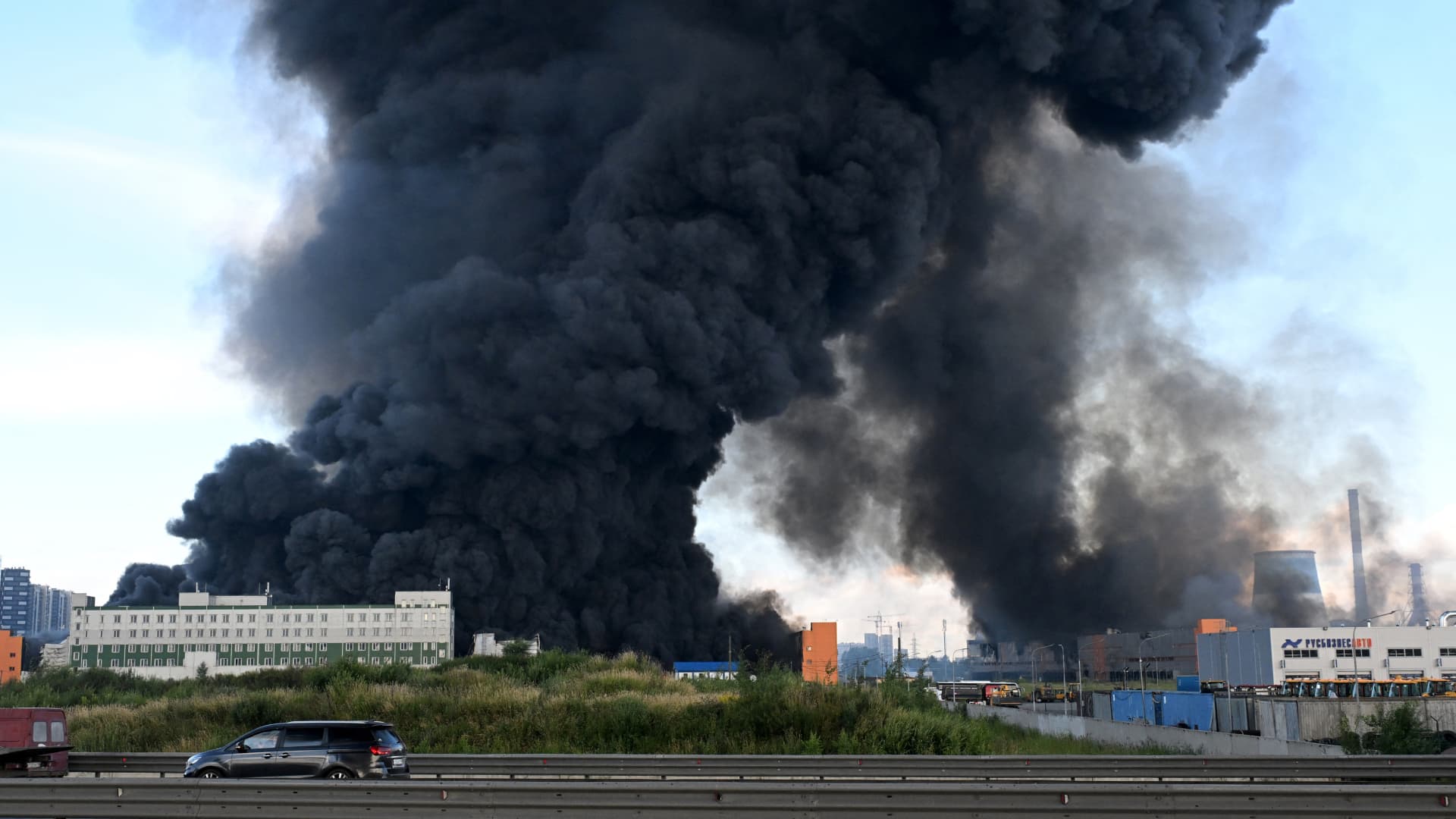
Ukraine has targeted major logistics centers on Russian territory over the past week, including facilities linked to Wildberries, Russia’s largest online retailer and a company often compared with Amazon. Local authorities said a Ukrainian drone strike on logistics sites in St. Petersburg and the surrounding Leningrad region injured three people, according to the caption information accompanying an Anadolu photograph from the scene.
The cross-border strikes add pressure to Russian supply networks at a time when Moscow continues attacks on Ukrainian infrastructure and cities. The targets described by Ukrainian officials include missile components, oil infrastructure and logistics sites tied to military supplies.
What did the EU sanction this week?
Separately, the European Union announced on Thursday what it described as its largest Russia sanctions package in four years. The measures target almost 220 individuals and entities, according to the EU, and are intended to restrict Russia’s economy and its ability to continue its full-scale invasion of Ukraine.
EU foreign policy chief Kaja Kallas said the package covers “over a hundred banks and crypto operators, 40+ vessels in Russia’s shadow fleet, and several oil refineries in Russia and Belarus.”
“Russia will only negotiate to end its illegal war and stop killing civilians if it is pressured to do so. Sanctions add to this pressure,” Kallas said in the EU statement.
The sanctions announcement and the latest reported strikes underscored the widening economic dimension of the war, with energy assets, financial channels, logistics hubs and military-industrial suppliers all cited by officials as targets of pressure.
This story draws on original reporting from CNBC.