China car sales slump puts market on course for weakest year since 2021
Passenger vehicle sales fell 20.2% in the first half, prompting China’s auto trade body to project a 14% full-year decline.
By Marcus V. Thorne · Markets Editor
· 3 min read
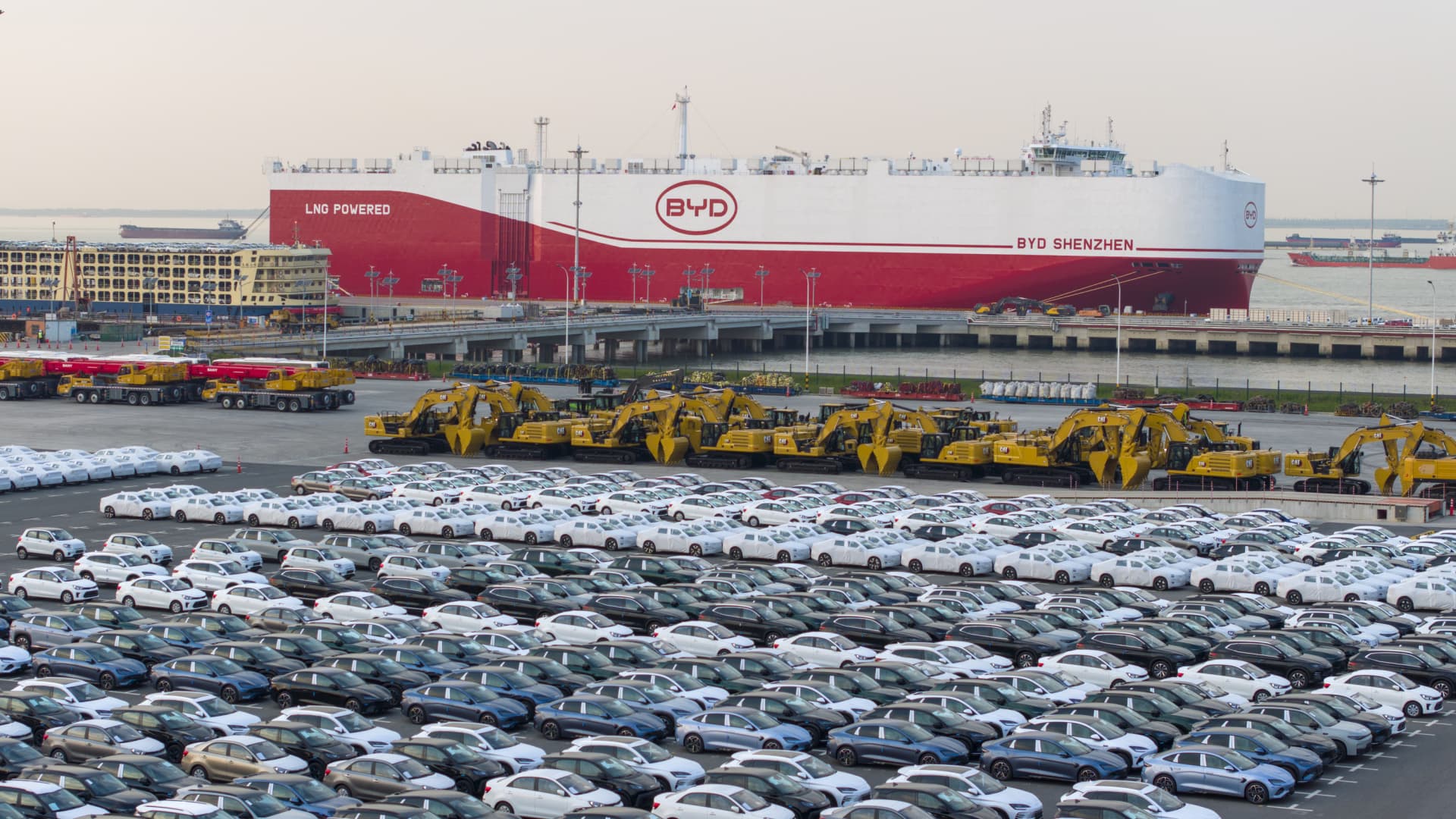
China’s passenger-car market is heading for its weakest year since 2021 after first-half retail sales dropped 20.2% from a year earlier. The China Passenger Car Association cut its 2026 full-year forecast in June to a 14% decline, from a previous expectation that sales would be broadly flat.
The industry group now expects 20.4 million passenger vehicles to be delivered this year, compared with a record 23.7 million units in 2025. First-half sales reached 8.7 million units, according to the association.
Xiao Feng, head of Hong Kong and China industrials research at Citic CLSA, told CNBC he expects an even steeper annual fall of about 20%. He was less negative on new energy vehicles, including battery-electric and hybrid models, forecasting a 5% to 6% decline in that segment.
Sino Auto Insights founder Tu Le told CNBC that the year remained difficult for manufacturers as companies compete for a smaller pool of buyers.
Fuel prices, subsidies and margins
The downturn reflects pressure from both demand and cost. China’s National Bureau of Statistics said transport energy costs rose 15.3% year on year in June, a headwind for vehicles powered by internal combustion engines. Retail sales of those vehicles fell 39% in June from a year earlier, while gasoline-only models dropped 42%, accounting for 78% of the month’s decline in passenger-vehicle sales.
Demand for electric vehicles has also been affected by changes to state support. Feng told CNBC that subsidies tend to shift the timing of purchases, and said this year’s weaker sales may partly reflect demand brought forward into 2025 when incentives were stronger.
Manufacturers face cost pressure at the same time. CPCA Secretary General Cui Dongshu said battery-related inputs, including lithium and memory chips, had risen sharply. He said the industry’s sales profit margin fell to 3.4% between January and May, while profits declined 20% year on year. Official statistics showed passenger-vehicle prices were down more than 1% in June from a year earlier, adding further pressure to margins.
Feng said those thin margins could force consolidation in China’s fragmented electric-vehicle market. He expects seven or eight leading manufacturers to remain by 2030, and told CNBC that U.S. automakers are unlikely to retain a place among the main survivors in China. He identified BYD, Geely, Leapmotor, Volkswagen and Toyota as companies he expects to remain significant.
Scale is central to that assessment. Feng estimated that a carmaker in China needs annual sales of 500,000 units to break even, 1 million units to generate sustainable profits and 2 million units to reach full economies of scale.
Company disclosures show wide gaps in volume. BYD reported 1.8 million sales in the first half of 2026, while Geely reported 1.4 million and Leapmotor 356,000 deliveries. Volkswagen Group said it delivered 973,000 vehicles in China during the period, down 25.9% year on year. Toyota reported 579,000 deliveries from January through May.
Exports offer support
Analysts cited by CNBC expect pressure to persist through the second half, though Feng said demand could improve in 2027 as older vehicles are replaced and the economic outlook strengthens.
Exports remain a stronger part of the market. CPCA said China’s passenger-vehicle exports reached 877,000 units in June, up 11.5% from May and 82.3% from a year earlier.
Fengming Lu, assistant professor in the Department of Political and Social Change at the Australian National University, told CNBC’s “The China Connection” that overseas buyers are turning to Chinese-made electric vehicles because operating costs are lower. Lu said shipping disruption and higher fuel prices linked to the war in the Middle East were among the factors encouraging that shift.
This story draws on original reporting from CNBC.