China industrial profits June growth slows as oil-driven price lift fades
China’s industrial profits rose 15.1% in June, but lower energy prices and weak domestic demand cooled a rebound in factory earnings.
By Sarah Jenkins · Chief Macro Economics Correspondent
· 3 min read
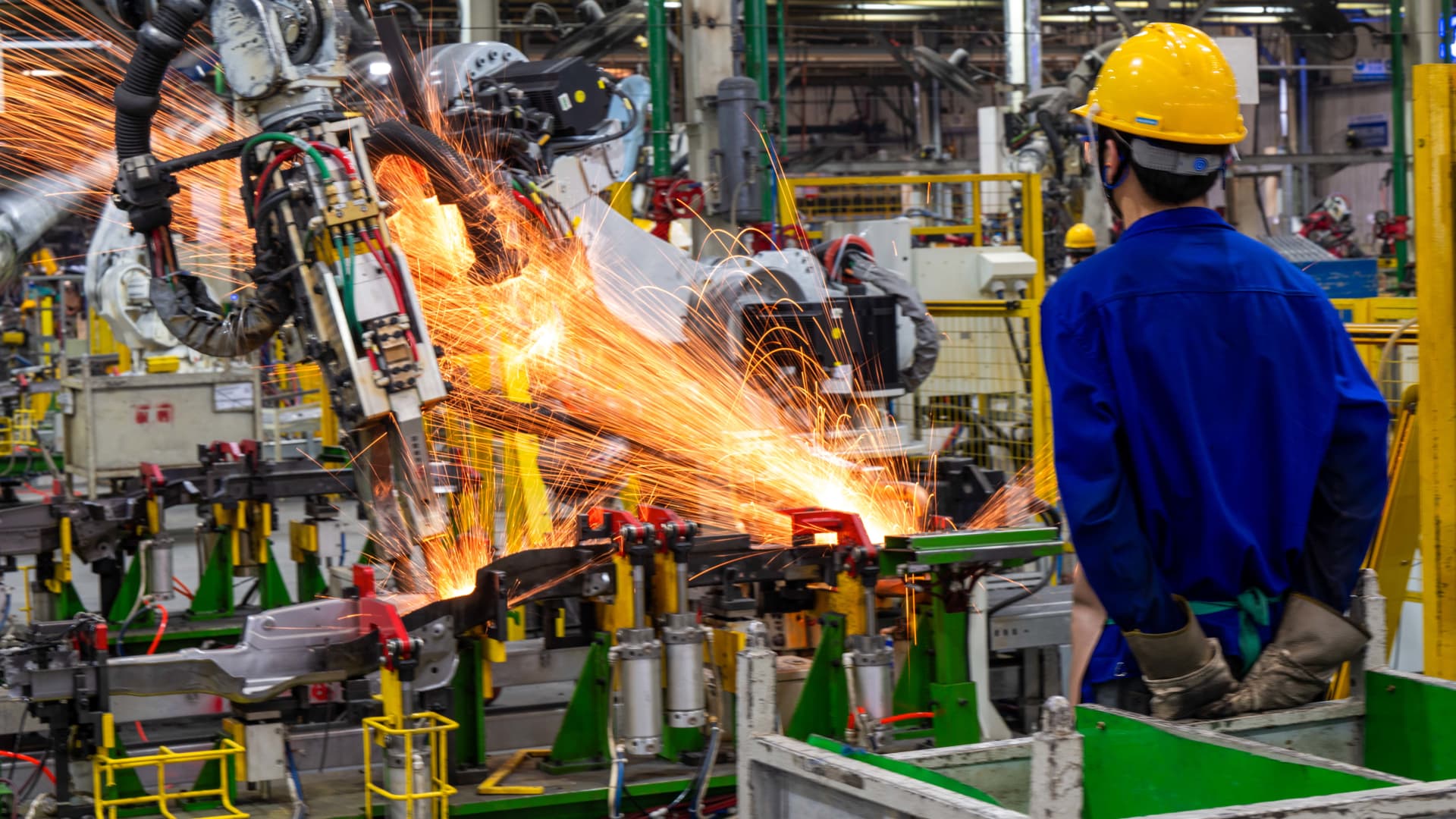
China industrial profits June growth slowed for a second consecutive month, with earnings at large industrial companies rising 15.1% from a year earlier, the National Bureau of Statistics said Monday. The moderation points to a softer earnings impulse from producer-price reflation after lower oil, refined fuel and petrochemical prices reduced the boost that had supported factories this year.
The June reading followed a 21.1% increase in May, which had been the first deceleration since November. For the first six months of the year, industrial profits increased 18.7%, slightly below the 18.8% pace reported for January through May, according to official data cited by CNBC.
Industrial earnings have recovered sharply in 2026 after weak growth in 2025. The rebound has been supported by stronger activity in chipmaking and equipment manufacturing linked to artificial intelligence demand, as well as the end of a prolonged period of factory-gate deflation.
Year-earlier comparisons also helped the headline figures. Profits fell 3.6% in June 2025 and declined 2.8% in the first half of last year, according to official data.
Why did China industrial profit growth slow in June?
The main near-term drag came from energy-linked prices. Producer prices rose 3.6% year on year in the second quarter, their first positive reading since late 2022, but economists cited by CNBC said much of that improvement reflected higher global energy costs rather than broad domestic demand.
That price support weakened in June. Producer prices slipped 0.3% from May, their first monthly fall since July 2025, according to LSEG data cited by CNBC. The decline followed a normalization of tanker traffic through the Strait of Hormuz, which helped pull oil, refined-fuel and petrochemical prices lower.
Producer prices matter for industrial profits because they influence the selling prices factories receive for goods leaving the production line. When those prices rise faster than costs, margins can improve; when they soften, profit growth can slow even if output remains resilient.
Domestic demand remains a constraint, economists said, leaving China’s factory sector more reliant on exports and investment linked to global technology supply chains. CNBC reported that China has benefited from an AI-related investment cycle in which the country is an important supplier of hardware.
What will policymakers do next?
Investors are now focused on the Communist Party’s Politburo meeting, typically held in late July, where senior leaders assess first-half economic performance and set policy priorities for the rest of the year.
Economists expect policymakers to use stronger language on easing after the second-quarter slowdown, according to CNBC. Expectations for a large stimulus package remain limited, however, because exports have stayed resilient and Beijing is also trying to restrain excess industrial capacity.
Robin Xing, chief China economist at Morgan Stanley, said the Politburo is likely to make policy support “mildly more urgent” and prioritize faster fiscal rollout. He described Morgan Stanley’s baseline as a “gradual policy ramp-up rather than a one-off stimulus push.”
Xing said growth should remain resilient because of exports, while domestic demand continues to lag. He pointed to AI-driven investment and a wider Asian industrial capital-expenditure cycle as supports for China’s manufacturing sector.
This story draws on original reporting from CNBC.