Eli Lilly retatrutide FDA plan emerges as oil surge hits Wall Street
Stocks fell as oil lifted yields, while Lilly said it plans a 2027 FDA filing for retatrutide through a biologics pathway.
By Marcus V. Thorne · Markets Editor
· 3 min read
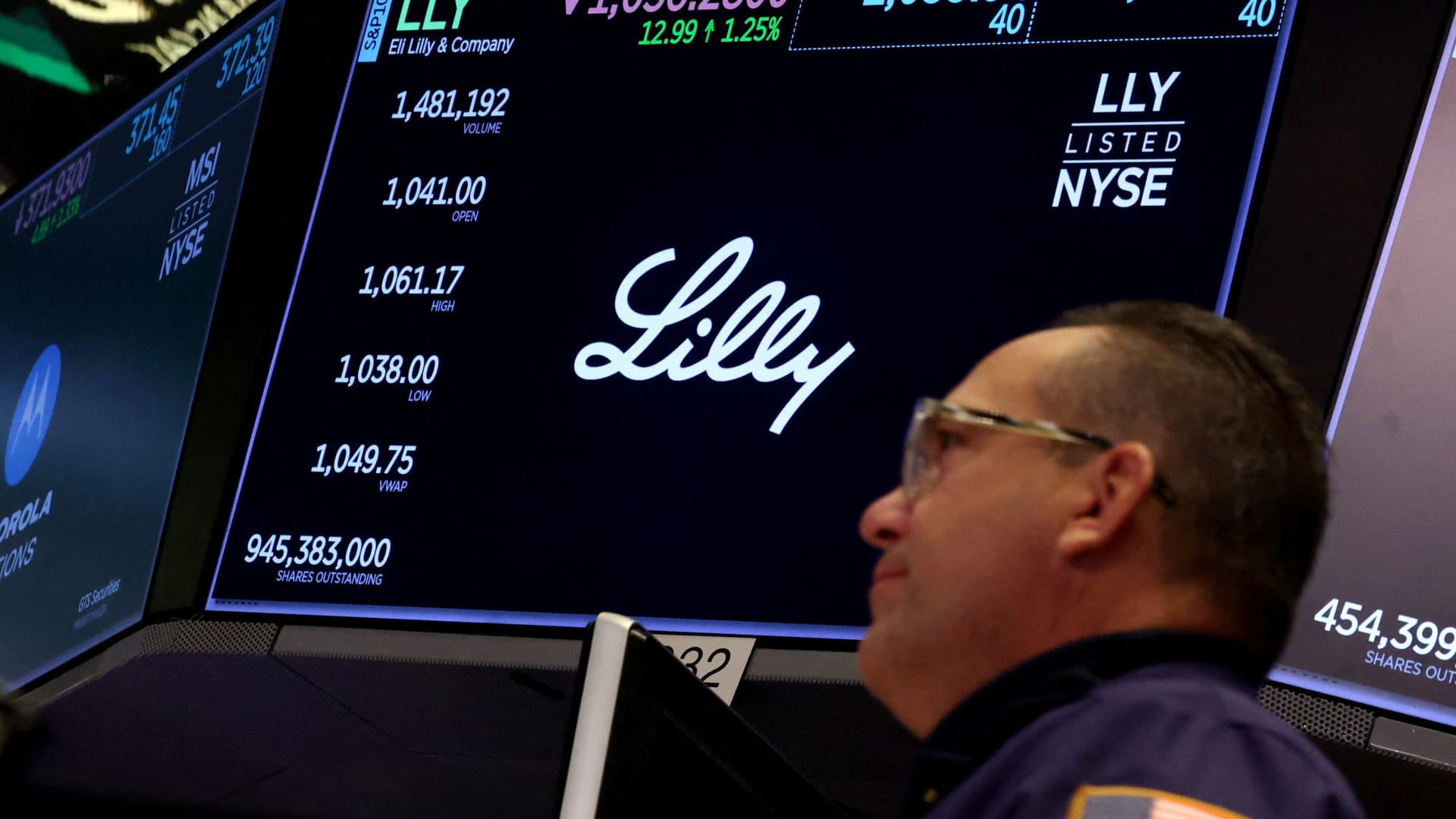
Wall Street pulled back Thursday as a jump in oil prices fed inflation concerns and drove Treasury yields higher, while the Eli Lilly retatrutide FDA timeline became a separate focus for health-care investors. CNBC Investing Club with Jim Cramer said U.S. benchmark WTI crude moved back above $90 a barrel and Brent crude topped $100 as conflict in the Middle East continued.
The move in energy prices pressured bonds, sending the 10-year Treasury yield to 4.70%, its highest level since January 2025, according to the CNBC Investing Club. Higher yields can weigh on equities by raising discount rates used to value future earnings and by making fixed-income assets more competitive against stocks.
Interest-rate expectations also shifted. The CME FedWatch tool showed markets still assigning a hold as the likely outcome at next week’s Federal Open Market Committee meeting, while pricing for a September increase rose to about 83%, up from 53% a week earlier, according to the CNBC Investing Club.
What is Eli Lilly doing with retatrutide?
Eli Lilly reported positive results from two late-stage studies of retatrutide, its next-generation obesity treatment, according to the CNBC Investing Club. The drug, also known as “triple G,” targets three hormones involved in appetite regulation whose names begin with the letter G.
The CNBC Investing Club said retatrutide produced more weight loss than Novo Nordisk’s Wegovy and Lilly’s own Zepbound. The update also showed Lilly plans to seek Food and Drug Administration approval in the first quarter of 2027, later than some market participants had expected if they were looking for a filing before year-end.
The filing route may be as significant as the date. Lilly plans to submit retatrutide through a Biologics License Application, or BLA, rather than the New Drug Application process used for tirzepatide, the active ingredient in Mounjaro and Zepbound, and for Wegovy, according to the CNBC Investing Club.
A BLA is generally used for biologic medicines, which are complex therapies made from living cells or organisms. The CNBC Investing Club said biologics can carry stronger commercial protections and are exempt from Medicare price negotiations under the Inflation Reduction Act, which applies each year to several traditional small-molecule drugs.
Lilly was able to use the BLA route for retatrutide because of an October U.S. district court decision, according to the CNBC Investing Club. The result is a potentially later market entry than some investors anticipated, paired with a regulatory structure the club said could improve the product’s commercial profile over time.
Why did Alphabet add to the pressure on stocks?
Alphabet shares fell more than 6% Thursday and were on track for their worst day of the year, according to the CNBC Investing Club. The group cited Alphabet’s negative second-quarter free cash flow and a higher full-year capital spending outlook as reasons investors questioned the returns on artificial-intelligence infrastructure spending.
The CNBC Investing Club said management teams at Alphabet and other large cloud and internet companies believe their AI investments are justified, but the market punished higher spending. The club said it was inclined to side with Alphabet because of profit growth across the business, while noting the earnings update did not reverse the broader market concern.
Investors were also awaiting Intel’s results after the closing bell, with American Express, Verizon, Charter Communications, SLB and HCA Healthcare due to report before Friday’s open, according to the CNBC Investing Club. Friday’s economic calendar includes S&P Global’s July U.S. manufacturing and services purchasing managers’ indexes and June new-home sales.
This story draws on original reporting from CNBC.


