Europe accelerates drone spending as Ukraine reshapes defence procurement
NATO, Britain and Germany have announced major drone-related commitments as European militaries adapt to lessons from Ukraine.
By Marcus V. Thorne · Markets Editor
· 3 min read
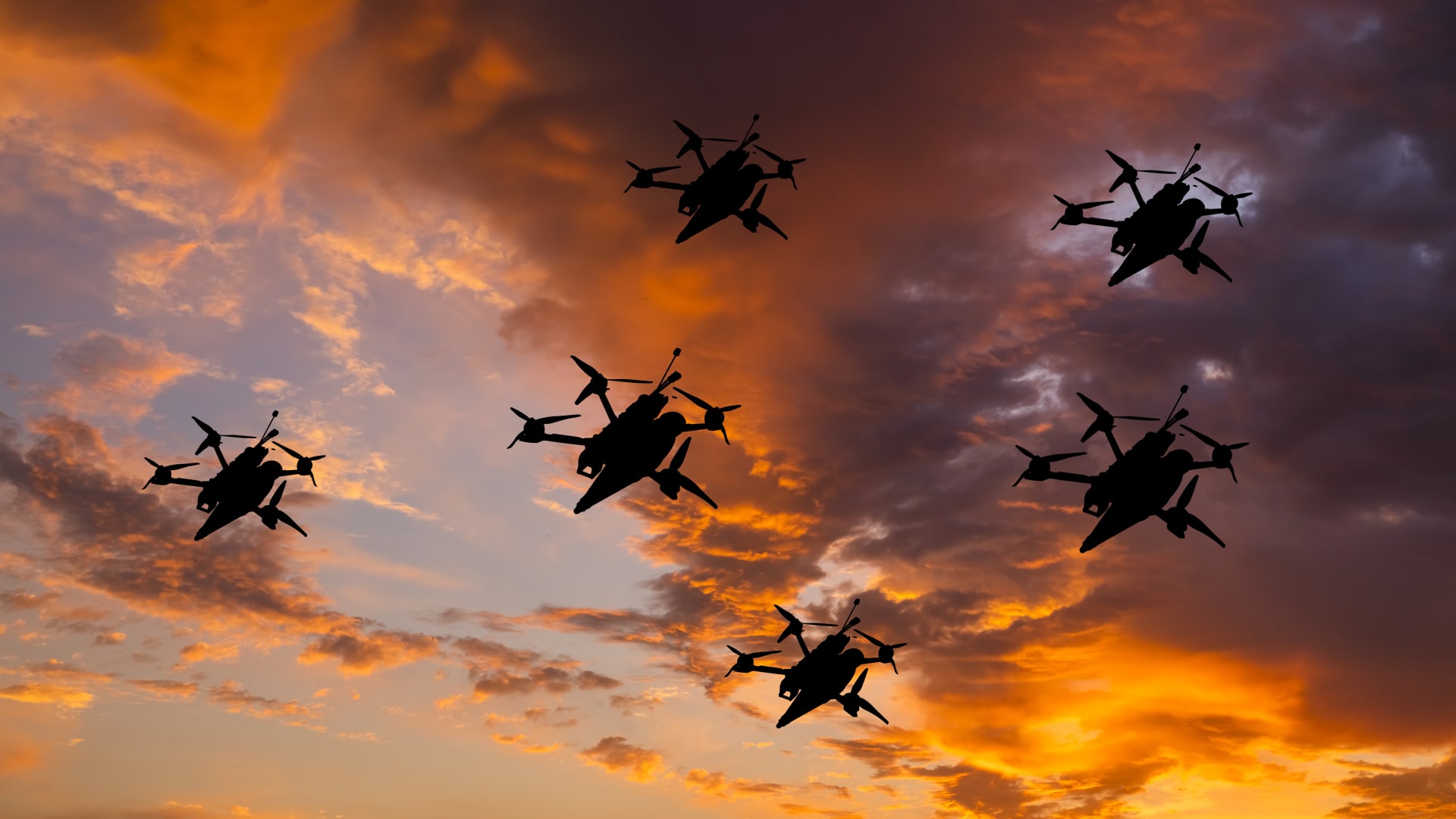
European governments are directing more defence spending toward drones, counter-drone systems and the software that supports them, with NATO, the U.K. and Germany all announcing major initiatives in recent days. The shift is broadening the market beyond airframe makers to companies in artificial intelligence, electronic warfare, secure communications and battlefield software.
CNBC reported that the recent moves include a NATO plan for allies to spend more than $40 billion on counter-drone capabilities over five years, a U.K. commitment of £5 billion, or $6.7 billion, for a drone transformation programme, and a German-backed order for 50,000 drones for Ukraine.
The procurement push reflects lessons from Ukraine’s war against Russia, where relatively low-cost unmanned systems have been used for reconnaissance, targeting and strikes. Iran’s use of Shahed drones in the Middle East has also reinforced the military value of cheaper platforms that can stretch air defences and extend the reach of conventional weapons, CNBC reported.
Procurement priorities shift
NATO Secretary General Mark Rutte said last week that the alliance would become “drone-ready” as he announced the counter-drone initiative. He said drones had “fundamentally altered” modern warfare and had become a “decisive factor” on the battlefield, citing the Russia-Ukraine war.
Britain’s Defence Investment Plan, published in late June, set aside £5 billion for a “UK drone transformation” programme aimed at strengthening the armed forces through autonomous systems and related capabilities.
Germany is also increasing support for Ukraine. Auterion, a defence software company, and Skyfall, a Ukrainian drone manufacturer, announced on Monday a €90 million order for 50,000 drones fitted with Auterion’s operating system from a European NATO member. CNBC cited a person familiar with the matter as confirming that the buyer was Germany.
Auterion Chief Executive Lorenz Meier told CNBC that the war in Ukraine was the first conflict in which drones were sufficiently widespread to play a major role. He said software is becoming a defining element of battlefield performance.
According to Meier, Auterion’s operating system helps drones continue toward targets despite electronic jamming, including in cases where a video link would previously have failed. He also said the system can support strikes below the radio horizon, such as when a drone descends into a valley. The company plans to introduce software that lets operators control coordinated swarms rather than individual aircraft, CNBC reported.
Software and autonomy draw capital
Morningstar analyst Loredana Muharremi told CNBC that future defence is moving toward a “layered battlefield” in which tanks, drones, satellites and unmanned aerial vehicles share targeting data and operate as part of a connected force.
That model increases demand for systems that allow drones and other assets to coordinate in real time. Muharremi said companies exposed to autonomy, air defence, sensors, electronic warfare, software and space capabilities are likely to capture part of future defence budgets.
European core defence spending has doubled since 2019, according to McKinsey figures cited by CNBC. Under NATO’s 3.5% target for 2035, that spending could reach about €800 billion by 2030, equal to roughly 2.9% of GDP, McKinsey said.
Private capital has also moved into the sector. McKinsey said defence technology deal volumes more than doubled year on year in 2025, while European defence tech funding rose from about €200 million in 2021 to €2.6 billion in 2025.
Munich-based Helsing is one of the most prominent examples. The company announced on Monday a funding round that valued it at $18 billion. Helsing builds drones, underwater surveillance weapons, and AI and autonomous software for military use, illustrating how European defence investment is increasingly tied to software as well as traditional hardware.
This story draws on original reporting from CNBC.


