FIFA revenue tops $9bn as expanded World Cup closes with Spain win
The 48-team tournament delivered more matches, ticket inventory and media assets as FIFA weighs further expansion for 2030.
By Sarah Jenkins · Chief Macro Economics Correspondent
· 3 min read
FIFA expects revenue of more than $9 billion from the 2026 World Cup, according to its own estimates, after the expanded tournament ended Sunday with Spain beating Argentina 1-0 in extra time. The 48-team format increased the event to 104 matches over six weeks, lifting the volume of broadcast content, ticket sales and commercial inventory available to world football’s governing body.
Spain secured its second World Cup title after Barcelona forward Ferran Torres scored the final’s only goal. Argentina finished with 10 players after Enzo Fernández received a second yellow card for a foul on Spain defender Pau Cubarsi.
The final also included the World Cup’s first halftime show, with Madonna, Justin Bieber, BTS and Shakira among the performers. The interval lasted more than 27 minutes, prompting criticism from some commentators and supporters.
Expansion raises the revenue ceiling
The tournament was the first World Cup to include 48 national teams, up from 32 at the previous edition. The larger field increased the match count from 64 to 104 and extended the event from four weeks to six.
The commercial mechanism is direct. More fixtures give broadcasters additional programming to sell around and provide sponsors with more exposure. Larger match inventory also creates more tickets for sale and more stadium events across host markets.
Ticket pricing drew scrutiny before and during the competition. TicketData put prices in a range from $60 to more than $10,000, with the median admission price above $900.
Demand held despite concerns over affordability, according to Football Benchmark. Antonio Di Cianni, the analytics provider’s director of advisory, told CNBC’s “Squawk Box Europe” that group-stage stadium use was “basically sold out, at 99%,” adding: “It showed people are willing to pay those prices.”
2030 could bring a larger field
FIFA president Gianni Infantino has already raised the prospect of a 64-team World Cup in 2030. In comments to Swiss broadcaster Blue Sport on July 10, he said: “These are all issues that we will be examining after the World Cup.”
A 64-team event would bring close to one-third of FIFA’s eligible countries into the tournament. Kieran Maguire, associate professor in football finance at the University of Liverpool, told CNBC that the structure would increase participation and could make the World Cup resemble “the Olympics of football” by opening it to more nations.
FIFA has set aside a $6 billion budget for the 2030 World Cup, which will include events tied to the competition’s 100th anniversary. FIFA has described that edition as an “even more attractive event for broadcasters.”
Politics and redistribution
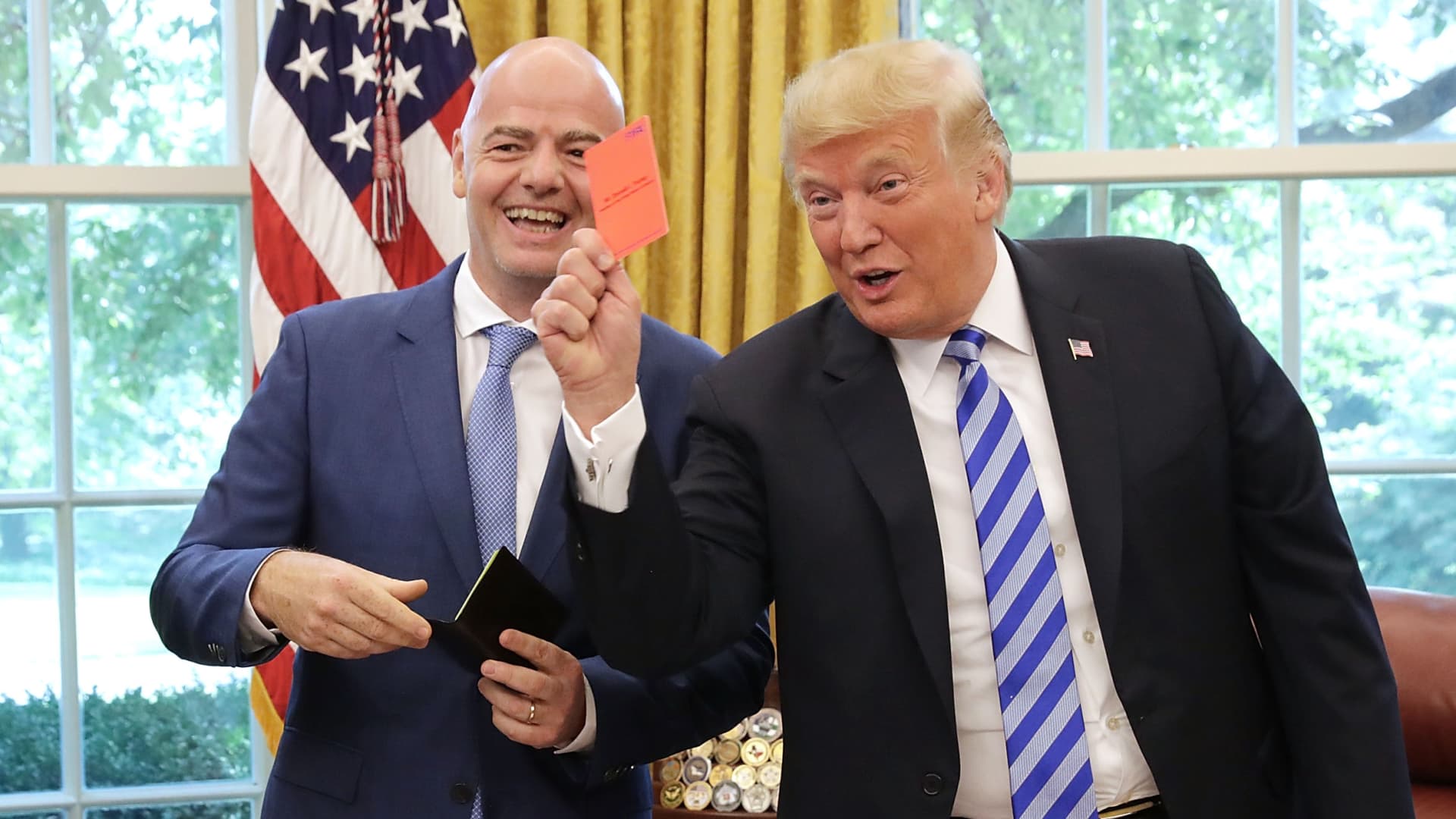
The 2026 event was co-hosted by the United States, Mexico and Canada. U.S. President Donald Trump played a prominent role in the tournament and appeared with Infantino as the World Cup trophy was presented to Spain midfielder Rodri after the final.
Trump’s ties with FIFA have attracted attention. His 2025 financial disclosure, made public last week, showed that Infantino gave him 10 tickets valued at $15,000 for last July’s FIFA Club World Cup final at MetLife Stadium in New Jersey. FIFA also awarded Trump its first peace prize last year, after he had pursued the Nobel Peace Prize and did not receive it.
Trump also said he called Infantino to request a review of a one-game suspension for U.S. men’s national team player Folarin Balogun after a red card against Belgium. The suspension was later rescinded. “I asked for a review because I didn’t think it was a foul,” Trump said. “I didn’t know what the hell a red card was.”
FIFA’s status as a nonprofit means it redistributes money to member associations for football development. Under the FIFA Forward 4.0 program, it plans to allocate $2.7 billion across its 211 member states from 2027 to 2030.
Maguire told CNBC that the funding model strengthens Infantino’s political base: “FIFA under Infantino gives lots of money to small countries, who in turn vote for him to be re-elected as president.”
This story draws on original reporting from CNBC.


