FIFA World Cup stake sale plan draws UEFA backlash
FIFA plans to raise up to $4.2 billion through a World Cup subsidiary, prompting criticism from UEFA and questions over governance.
By Marcus V. Thorne · Markets Editor
· 3 min read
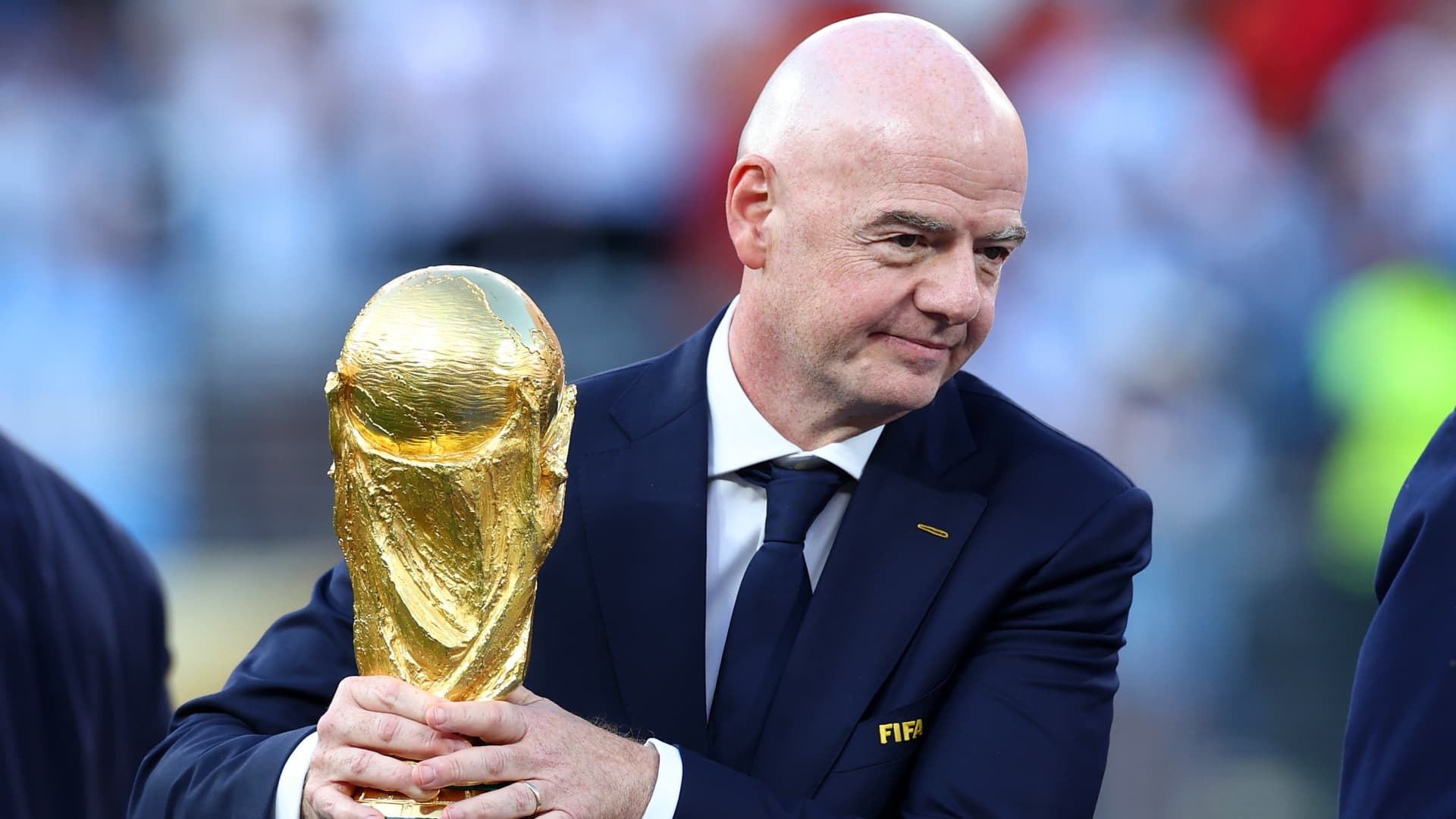
FIFA is seeking outside capital for a FIFA World Cup stake sale that would value a new tournament subsidiary at $20 billion, according to a statement from soccer’s global governing body. The plan would raise as much as $4.2 billion from third-party investors while FIFA says it would keep ultimate control, setting up a governance dispute with UEFA and other critics of private influence in the sport’s premier international competition.
The proposal, led by FIFA President Gianni Infantino, follows what FIFA described as the largest and most commercially successful World Cup. The new company, FIFA Forward Enterprises, would run the tournament’s commercial operations and allow investors to acquire stakes of up to 20% in the spinout.
FIFA said J.P. Morgan has been hired to manage the transaction. The deal is also backed by Thrive Capital, the investment firm founded by Joshua Kushner, whose brother Jared Kushner is a son-in-law of U.S. President Donald Trump.
What is FIFA proposing for the World Cup?
FIFA’s plan is to separate the World Cup’s commercial activities into a dedicated subsidiary, FIFA Forward Enterprises. In practice, that structure would let FIFA bring in outside investors at the subsidiary level while maintaining overall control of the tournament through the governing body.
In its statement, FIFA said the commercial side of soccer needs a structure designed for further growth. Infantino said parts of the sport had created “remarkable commercial value” from its popularity, adding that FIFA wanted the next phase to share that value “more and better all around the world.”
The proposed structure is significant because FIFA is a not-for-profit body whose revenues are redistributed across its member associations, including for football infrastructure. A stake sale would introduce private capital into the World Cup’s operating structure, while leaving questions over investor rights, transparency and influence to be addressed through the approval process and deal terms.
Why is UEFA opposed to the FIFA World Cup stake sale?
UEFA, European soccer’s governing body, sharply criticized the proposal and said FIFA was “crossing a line.” In a statement, UEFA said: “The soul and governance of football are not assets to trade - especially with zero transparency as to who gains financially.” It added: “None of us are the owners of football. It is not Fifa’s to sell.”
Critics argue that allowing private investors into the World Cup’s structure could give financial backers influence over how the competition is run. The dispute has also deepened the existing tension between FIFA and UEFA, which represent different power bases in global soccer.
Political opposition has emerged as well. Andy Burnham, the U.K.’s new prime minister, wrote on X that the World Cup is “not a product.”
How could the plan be approved?
The proposal would need backing from a majority of FIFA’s 211 member associations and approval from FIFA’s 37-member council. CNBC reported that UEFA and its European members are considering a boycott of the World Cup, although Europe represents a smaller share of FIFA’s voting membership than its influence in the sport might suggest.
Infantino’s plan includes offering members access to as much as $20 million in one-off capital, according to CNBC. That could help build support among national associations that rely on FIFA funding for development projects.
Football finance professor Kieran Maguire told CNBC last week that FIFA’s internal politics create a feedback loop. “FIFA under Infantino gives lots of money to small countries, who in turn vote for him to be re-elected as president,” Maguire said.
The next test for FIFA is whether it can persuade members that private capital can expand the World Cup’s commercial value without shifting control of the tournament away from the associations that formally govern the sport.
This story draws on original reporting from CNBC.