India Gen Z protests force Modi government into exam leak concessions
India’s government accepted student demands after exam leak protests, raising pressure on Modi before key state and national votes.
By Amanda Ross · Deals Correspondent
· 3 min read
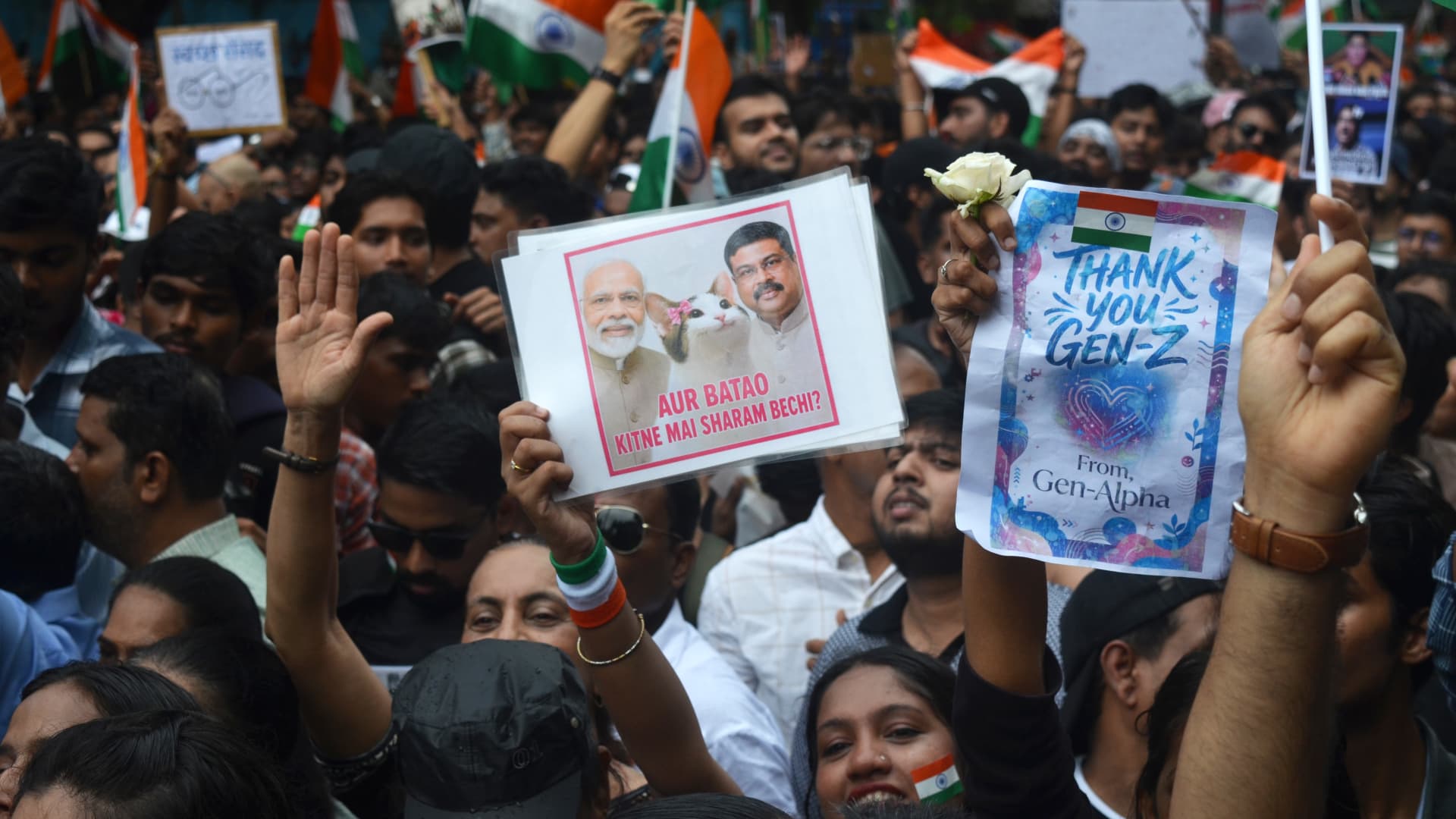
India Gen Z protests over exam paper leaks have forced Prime Minister Narendra Modi’s government into a series of concessions, including the resignation of Education Minister Dharmendra Pradhan on Saturday and a promised overhaul of examination oversight. With major state elections due in 2027 and the next general election scheduled for 2029, analysts told CNBC the student-led campaign has exposed political pressure points for a government long seen as electorally dominant.
The Cockroach Janta Party, or CJP, led the protests and had demanded Pradhan’s departure after test paper leaks in May. The government also agreed to other demands from the movement, CNBC reported, including compensation for families of students who died by suicide in connection with the leak.
Modi, 75, responded directly on Instagram, posting what CNBC described as his first reel on the platform as he sought to reach younger voters. In a subsequent post on Sunday, he said a “HIGH POWERED TASK FORCE” headed by Indian technology entrepreneur Nandan Nilekani would supervise examination reforms.
Why are India Gen Z protests pressuring Modi’s government?
The protests centered on public anger over examination paper leaks, an issue with direct consequences for young Indians competing for education and career opportunities. In a country where state examinations can shape access to jobs and higher education, a leak is seen by protesters as a failure of fairness and state capacity.
Michael Kugelman, senior fellow for South Asia at the Atlantic Council, told CNBC’s “Inside India” that the language used by demonstrators had been unusually sharp toward Modi and his government. He said the tone was notable because of the prime minister’s broad popularity.
Experts cited by CNBC said the episode points to a wider gap between the ruling Bharatiya Janata Party’s political message and the priorities of younger Indians. Modi’s appeal over much of the past decade has been tied to economic ambition, they said, but many young voters see unemployment and limited upward mobility as evidence that those promises have not been fully met.
The electoral calendar adds weight to the dispute. Several large state contests are expected in 2027, including in Uttar Pradesh, India’s most populous state and a major youth-voter battleground. By the 2029 national election, CNBC reported that Gen Z voters are expected to be among the country’s most influential blocs.
What is the Cockroach Janta Party?
The CJP was launched on May 16 by Abhijeet Dipke, a political communications strategist and Boston University student. CNBC reported that the group emerged after Chief Justice of India Surya Kant referred in court to people attacking institutions as “parasites” and compared some unemployed youths and activists to “cockroaches.”
The chief justice later said his oral remarks had been misquoted, according to ANI. By then, the CJP had gained wide visibility online, collecting more than 22 million followers in a short period, CNBC reported.
Dipke told supporters on Saturday not to turn him into a hero after Pradhan’s resignation, saying the country had suffered from elevating one person in that way, in an apparent reference to Modi, according to ANI.
The CJP initially called for a June 6 protest seeking Pradhan’s resignation. CNBC reported that the movement gained force on July 20 after Delhi Police used violence against students who crossed barricades at the protest site while attempting to march toward parliament.
Arpit Chaturvedi, South Asia adviser at Teneo, told CNBC the movement may weaken the impression that the Modi government is politically invulnerable. Kugelman said the result could encourage other civil society campaigns.
Local media reports cited by CNBC said a similar group, E20 Janta Party, is seeking the resignation of Road Transport and Highways Minister Nitin Gadkari over India’s requirement to blend 20% ethanol with petrol. Farmers are also planning protests over the U.S.-India trade deal, according to the Times of India.
This story draws on original reporting from CNBC.


