Iran missile attack on U.S. forces intercepted, Centcom says
Centcom said Iran fired multiple ballistic missiles at U.S. forces in the Middle East, with crude prices rising more than 4%.
By Marcus V. Thorne · Markets Editor
· 3 min read
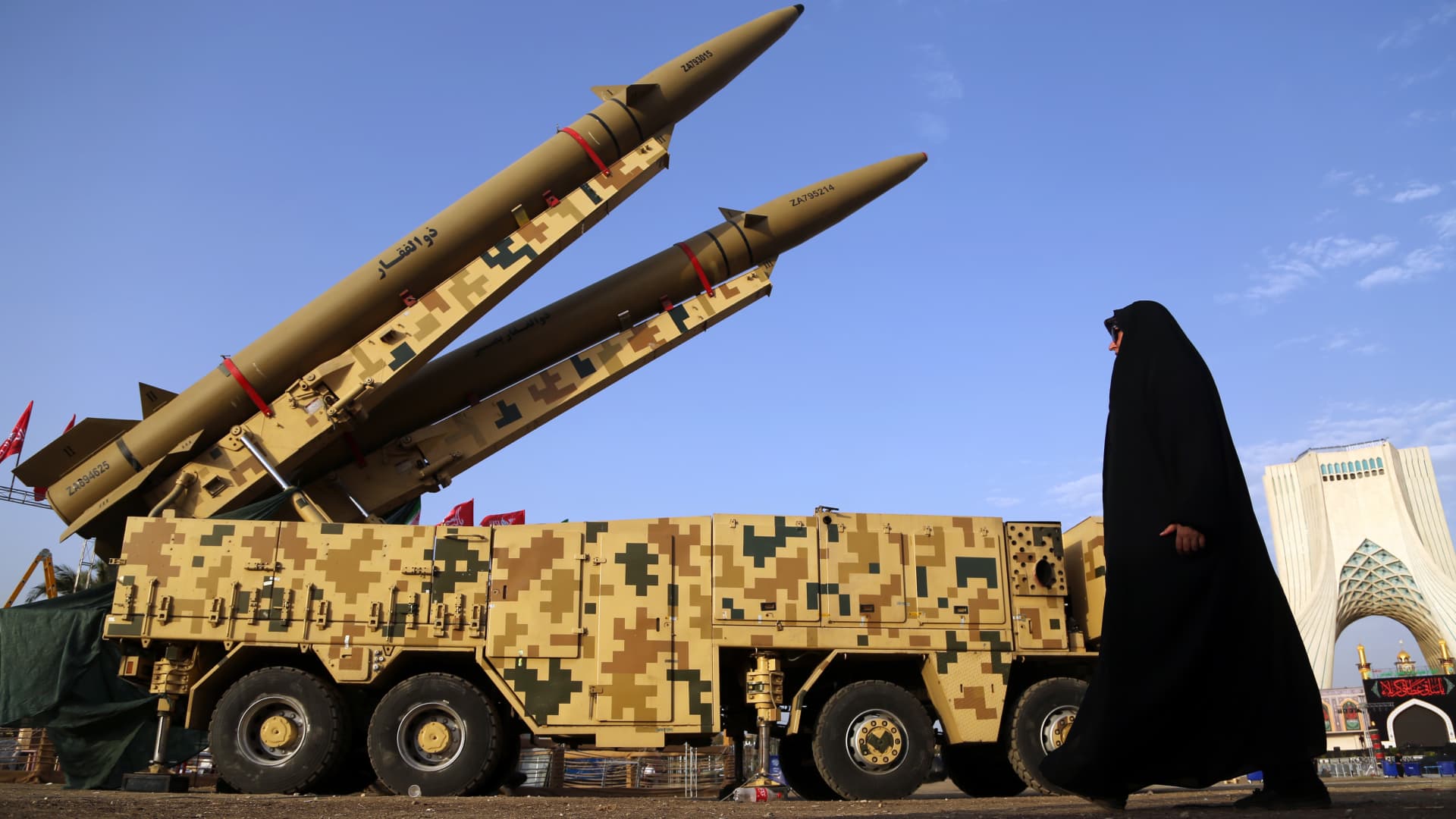
Iran missile attack on U.S. forces in the Middle East was intercepted late Tuesday U.S. time, U.S. Central Command said, after multiple ballistic missiles were launched from Iran. U.S. crude futures rose more than 4% after the report, trading at $82.5 a barrel, according to CNBC market data.
Centcom said in a post on X that the Islamic Revolutionary Guard Corps fired several ballistic missiles in what it described as an attempted surprise attack on U.S. forces based in the region. The command said all of the missiles were intercepted.
Centcom did not say which U.S. positions were targeted. Axios reported, citing U.S. officials, that the missiles were aimed at a U.S. base in Jordan.
What happened in the Iran missile attack on U.S. forces?
According to Centcom, ballistic missiles were launched from Iran toward U.S. forces in the Middle East, but none reached their target because they were intercepted. The military command did not provide further operational details, including the number of missiles, the defensive systems involved or whether there were casualties.
A ballistic missile is a weapon launched on a high-speed trajectory toward a target. An interception in this context means defensive forces stopped the incoming missiles before they struck, though Centcom did not disclose how that was done.
The reported attack adds pressure to an already strained regional security situation. CNBC reported that the missile launch followed a brief pause in hostilities in the Middle East.
Red Sea incident adds to security concerns
The U.K. Maritime Trade Operations Centre separately reported suspicious activity in the Red Sea. In an advisory, UKMTO said the master of a tanker heard an explosion while the vessel was transiting the southern Red Sea.
UKMTO said the incident was reported on Monday and the advisory was issued on Tuesday. The agency did not provide additional details in the notice cited by CNBC.
There was no confirmation that the Red Sea incident was carried out by Houthi rebels. CNBC reported that Houthi forces had claimed responsibility for attacks on two Saudi oil tankers in the area last week, and that Saudi Arabia later retaliated against Houthi targets.
The Red Sea is a key route for global shipping and energy flows. Security reports involving tankers in the area can affect freight decisions, insurance costs and oil-market sentiment, particularly when they coincide with military activity involving Iran and U.S. forces.
Oil market reaction
Crude prices moved higher after the reports. U.S. crude futures were up more than 4% and traded at $82.5 per barrel, CNBC reported.
Oil traders often respond to Middle East security events because the region is central to global crude production and shipping. The market reaction reported by CNBC reflected concern over the potential for wider disruption, though the available reports did not confirm damage to energy infrastructure or shipping from the missile launch.
Centcom’s statement was the main official U.S. account available. The command said the missiles originated in Iran and that all were intercepted.
This story draws on original reporting from CNBC.