Japan’s AI trade lifts makers of toilets, glass fiber and seasonings
Toto, Nittobo and Ajinomoto have posted sharp share gains as specialist materials businesses tied to semiconductor demand expand.
By Sarah Jenkins · Chief Macro Economics Correspondent
· 3 min read
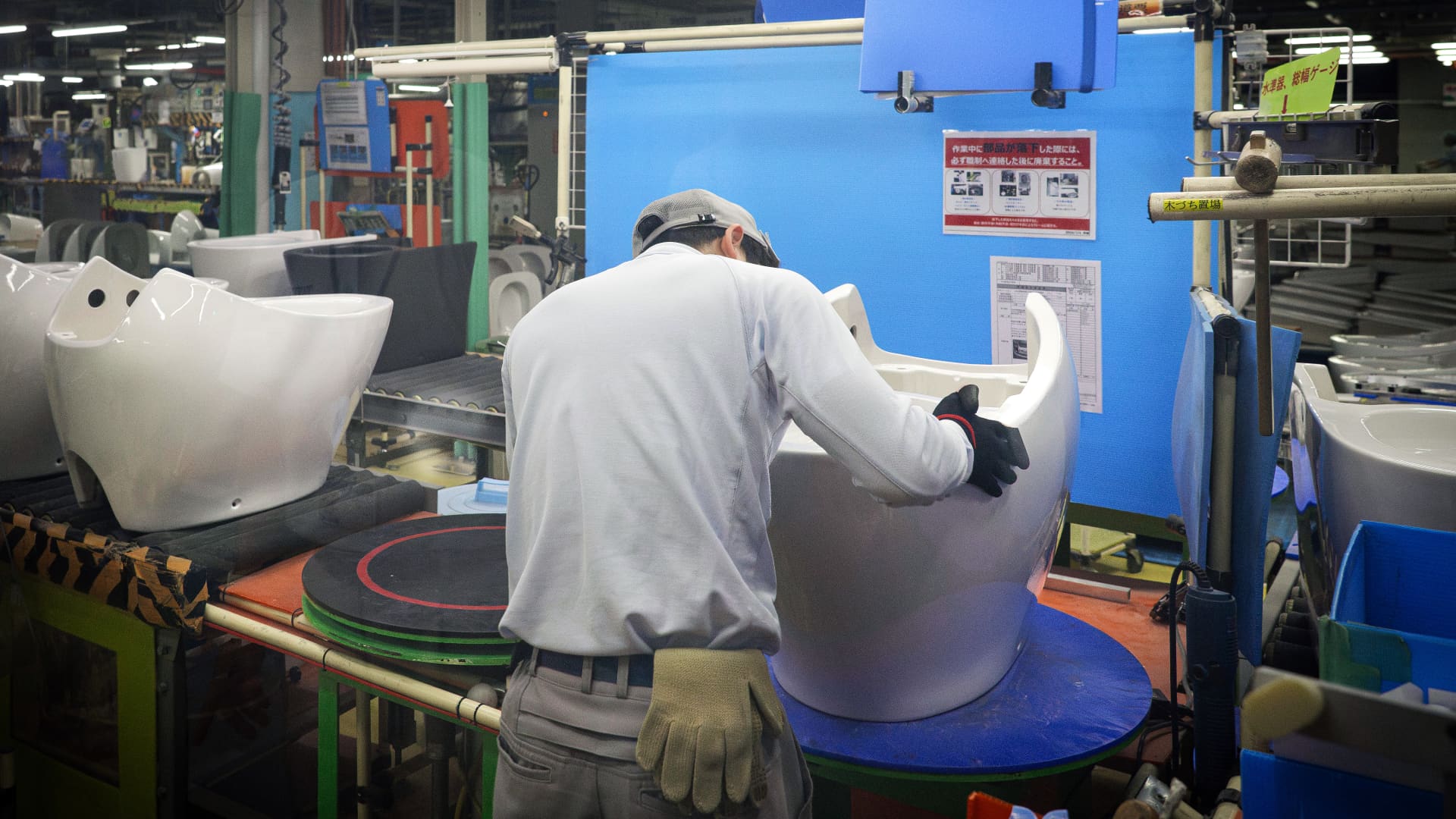
Three Japanese companies better known for bathrooms, textiles and food ingredients have become notable equity beneficiaries of artificial intelligence-related semiconductor spending. Shares of Toto, Nittobo and Ajinomoto have risen 78%, 63% and 61%, respectively, this year, according to CNBC, as investor attention broadens beyond chip designers and manufacturers to suppliers of materials and production components.
The link is in the semiconductor supply chain. Toto produces ceramic electrostatic chucks used in chipmaking equipment, Nittobo supplies advanced glass fiber for package substrates, and Ajinomoto makes Ajinomoto Build-up Film, or ABF, an insulating material used in packaging for high-performance computing and data-center servers.
Specialist materials carry more weight
Toto’s main business remains housing equipment, including its high-end toilets, but its advanced ceramics operation has become a growth driver. In full-year results for the financial year ended March 31, 2026, the company reported weaker sales and profit in its century-old housing equipment division, while the advanced ceramics business recorded a 34% rise in annual revenue and a 42% increase in operating profit.
The company began making electronic chucks for semiconductor manufacturing equipment in 1988, drawing on its ceramics expertise. These components secure silicon wafers during the etching stage inside production tools. Toto says its ceramics help improve yield in the manufacture of advanced chips.
In an email to CNBC, Toto said it did not regard one division as better than the other. The company said its advanced ceramics business had endured long loss-making periods over four decades before reaching its current position. Toto said it has “absolutely no plans” to move away from housing equipment, which it described as a stable base for its balance sheet, while the semiconductor sector remains volatile.
Nittobo’s glass fiber business shifts toward electronics
Nittobo, historically associated with textiles and glass fiber, said electronic materials are now central to its business. Its T-glass product, introduced in 1984, is used in printed circuit boards and electronic components.
The company told CNBC that T-glass and other electronic materials are “the pillar” of its growth for the next decade. It also said AI-related semiconductor demand is affecting how it assigns capital expenditure, research and development spending, and staff.
In its full-year results, Nittobo said demand connected to AI servers and strong sales of “Special Glass” lifted revenue and profit in electronic materials. Net sales in that division rose 20.4% from a year earlier, while operating profit increased 39.7%. CNBC calculated that the segment accounted for roughly 91% of Nittobo’s net sales increase in the financial year, with profit in the division rising by 5.5 billion yen, or about $34 million, compared with a 4.4 billion yen increase in overall operating profit.
Nittobo said in its results release that it expects strong demand for Special Glass in electronic materials, especially for data-center servers, network equipment and semiconductor package substrates, and plans to expand production capacity to meet that demand.
Ajinomoto’s film business benefits from packaging demand
Ajinomoto remains primarily a food company, known globally for monosodium glutamate seasoning, but its materials business has gained from the complexity of chip packaging. According to the company’s website, a byproduct from MSG production helped lead to technologies that produced ABF, which was commercialized in 1999 and is used in high-performance semiconductors including CPUs.
Ajinomoto does not report ABF as a separate segment. In its full-year results, the company said revenue in its “Healthcare and Others” segment, which includes ABF, increased about 4%, while business profit rose 45.1% year on year, partly because of higher electronic materials revenue. That segment generated more than a third of company profit for the financial year and exceeded the frozen foods segment in both revenue and profit.
In an investor presentation, Ajinomoto said it expects continued growth centered on ABF products in higher-value and advanced fields. The company also said it aims to reach a one-to-one balance between its food business and its AminoScience business, with ABF contributing to the latter.
This story draws on original reporting from CNBC.