Kalshi says World Cup brought 3 million new users to its platform
Kalshi told CNBC its World Cup markets drew 3 million new users and more than $1.2 billion in trading on the tournament winner contract.
By Marcus V. Thorne · Markets Editor
· 3 min read
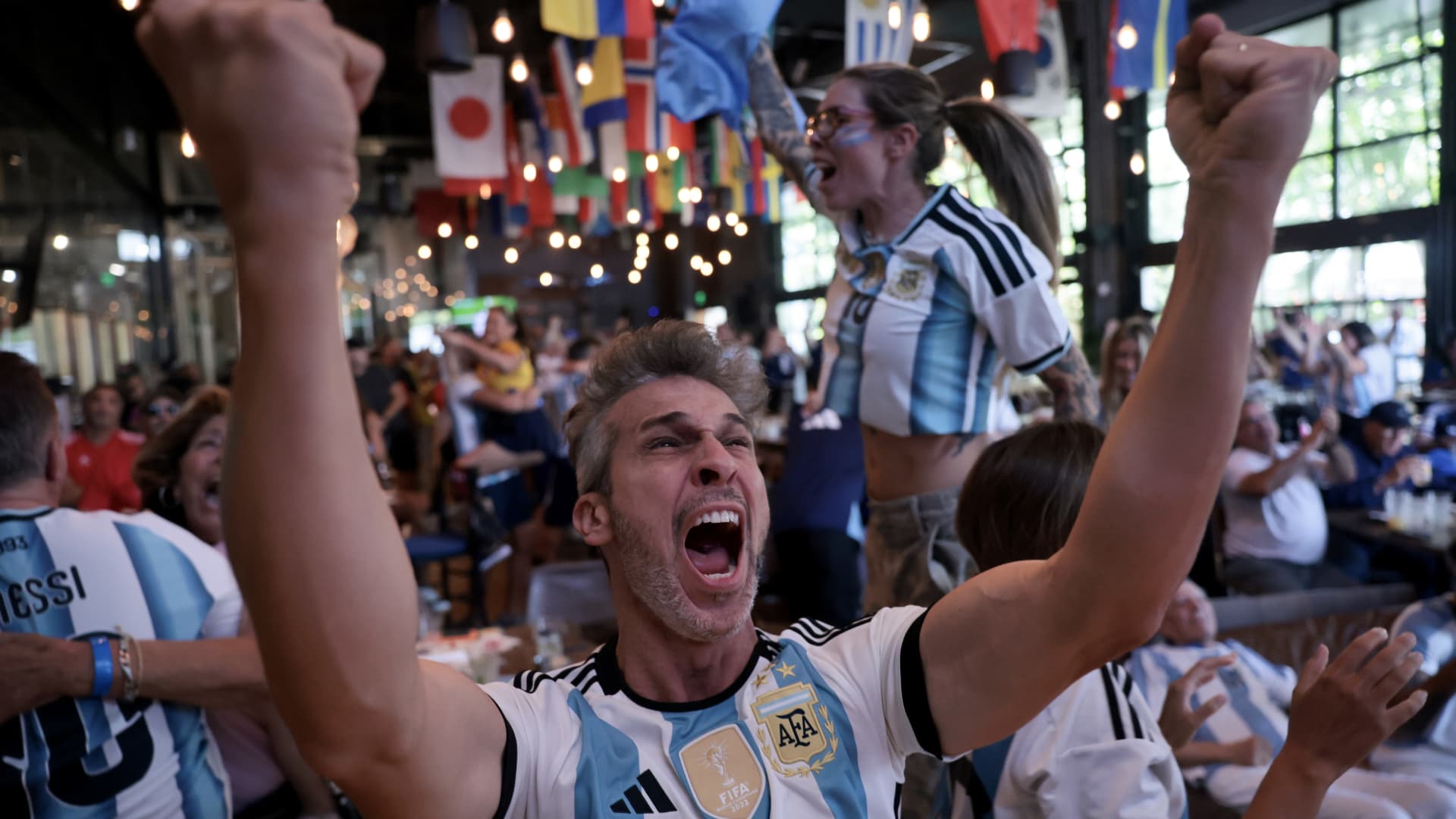
Kalshi added 3 million users during the 2026 FIFA World Cup, the company told CNBC, as the tournament drove a surge in activity across prediction-market platforms. The company said more than $1.2 billion changed hands on its contract tied to the eventual World Cup winner, making it a record single market for Kalshi.
The contract is scheduled to close Sunday after Spain and Argentina play the final. Prediction-market contracts allow traders to take positions on defined future events, in this case the tournament champion, with prices reflecting the market’s assessment of the outcome as trading develops.
The World Cup has given Kalshi a broad consumer event around which to market a product that is still fighting for legal and political definition in the United States. Sports-related event contracts are being scrutinized in a dispute over whether they fall under federal derivatives oversight or state gambling authority.
World Cup audience lifts trading activity
Vijay Viswanathan, an associate dean of integrated marketing communications at Northwestern University, told CNBC that soccer’s global audience makes the World Cup difficult for other sporting events to match. “It’s played in about every country in the world,” he said, adding that “there’s really nothing that comes close to the FIFA World Cup” in terms of potential market size.
Kalshi used the tournament to expand its brand visibility. CNBC reported that the company partnered with ADI Predictstreet, the official prediction market sponsor of the World Cup, to place co-branded advertising in stadiums. Kalshi also struck a partnership with OpenAI under which its contract odds appeared when users searched ChatGPT for information about tournament games, according to CNBC.
The company also ran soccer-linked advertising featuring Croatian player Luka Modric, former Real Madrid coach José Mourinho and the Argentina national team. CNBC reported that the Argentina partnership included visibility in an Instagram post by Lionel Messi.
Kalshi CEO Tarek Mansour, who CNBC said plays a central role in the company’s marketing, linked the campaign to the pace of news around the tournament. “Our volumes are where the news is at,” Mansour told CNBC. He said one advertisement involving former professional soccer players was created and released within 24 hours.
Regulatory fight remains unresolved
Kalshi’s push into sports event contracts comes as state governments argue that such products resemble sports betting, an area they regulate. Kalshi supports the federal government’s position that the Commodity Futures Trading Commission, which oversees swaps and derivatives, has sole authority over prediction markets, according to CNBC.
Mansour rejected concerns about the sports contracts in comments to CNBC, saying pressure was coming from gambling companies worried about protecting existing market positions.
Brian Sung, a partner in the derivatives and digital assets practice groups at Haynes Boone, told CNBC that advertising is unlikely to determine how courts rule, but it can shape public and political views of the sector. “They are trying to push against this idea that they’re really only about sports,” Sung said. “I mean, that is where the bulk of their activity is.”
The next test for Kalshi is whether the users drawn in by the World Cup continue trading after the final. CNBC reported that volumes on non-match days have been significantly below days when games were played.
Mansour told CNBC that Kalshi has seen similar cycles before, with major events lifting activity, followed by a pullback and then renewed interest around later news. CNBC disclosed that it has a commercial relationship with Kalshi that includes customer acquisition and a minority investment.
This story draws on original reporting from CNBC.


