Lucid midsize vehicle delay extends launch target to second half of 2027
Lucid is deferring its midsize EV as it seeks $1.4bn of 2026 cash-flow improvements after second-quarter revenue missed estimates.
By Sarah Jenkins · Chief Macro Economics Correspondent
· 2 min read
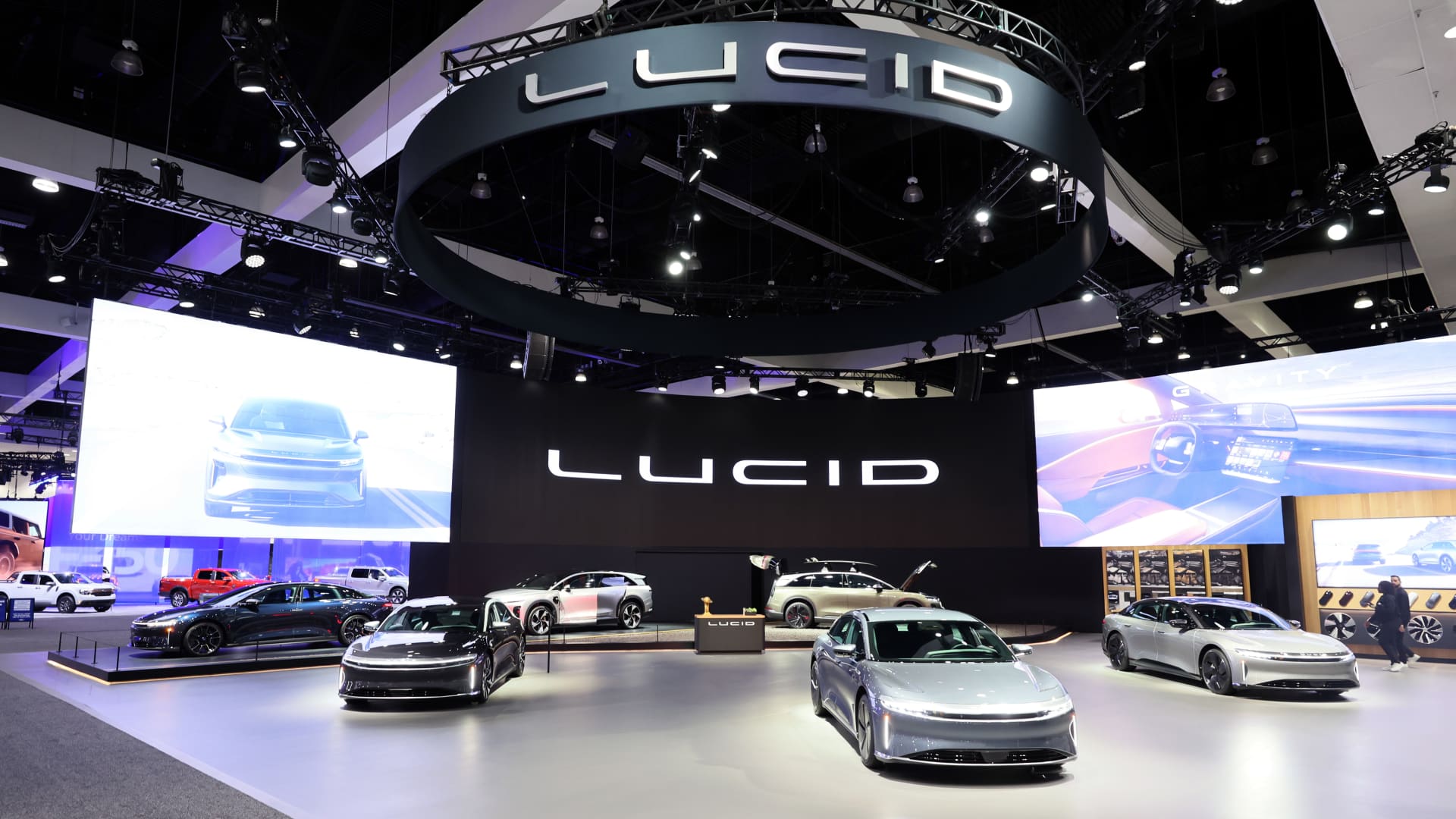
Lucid’s midsize vehicle delay will push the planned launch from late 2026 to most likely the second half of 2027, chief executive Silvio Napoli told CNBC. The electric-vehicle maker also outlined an operational reset targeting $1.4 billion of cash-flow improvement opportunities in 2026 after second-quarter revenue of $405 million fell below the $416 million analyst consensus compiled by LSEG, according to CNBC and Reuters.
Shares fell about 8% in after-hours trading following the results and announcements, CNBC reported. Lucid’s revenue nonetheless rose 56% from a year earlier, Reuters said.
Napoli, who became chief executive on June 1, said the company wanted to avoid releasing vehicles before they were ready. Lucid had previously expected its midsize model to arrive by the end of 2026, CNBC reported.
Why is Lucid delaying its midsize vehicle?
The delay forms part of a broader review of Lucid’s operations, spending and production plans. The company has not issued revised 2026 guidance; Napoli told CNBC it was not ready to do so while management reset investor expectations and assembled a new leadership team.
Lucid had already suspended its 2026 production outlook and reduced its Arizona factory from two shifts to one in June, CNBC reported. Reuters said the company had deliberately lowered production to bring output closer to anticipated demand.
How Lucid plans to improve cash flow
Lucid described the $1.4 billion figure as opportunities it aims to identify this year, rather than savings already achieved. The plan comprises an estimated $600 million to $800 million related to vehicle inventory, about $500 million in lower capital expenditure and $200 million in operating-expense reductions, according to the company’s disclosures reported by CNBC and Reuters.
- Inventory: $600 million to $800 million of potential reduction.
- Capital expenditure: about $500 million of planned reductions.
- Operating expenses: about $200 million of planned reductions.
The programme also covers customer and quality measures, as well as organisational changes, CNBC reported. Lucid said it had $3 billion in total liquidity at the end of the second quarter and expects recent financing and its operational actions to extend its liquidity runway well into 2027. That is the company’s projection, not a guarantee of future funding needs.
Management is placing particular emphasis on a robotaxi initiative with Uber and Nuro. Lucid called the project a top priority and said it expects to provide about 100 preproduction Gravity SUV-based vehicles to partners by year-end, with non-prototype production expected to begin early next year, according to CNBC.
Lucid’s largest shareholder is Saudi Arabia’s Public Investment Fund, a sovereign wealth fund. The company currently sells the Air sedan and Gravity SUV, CNBC reported.
This story draws on original reporting from CNBC.