Nvidia $500 billion financing plan targets AI data-centre buildout
Nvidia has signed MOUs with six finance groups to seek more than $500 billion for AI infrastructure, without disclosing binding commitments or terms.
By Sarah Jenkins · Chief Macro Economics Correspondent
· 3 min read
Nvidia $500 billion financing initiative took shape through memorandums of understanding with Apollo Global Management, Blackstone, BlackRock, Brookfield Asset Management, Goldman Sachs and KKR, CNBC reported. The arrangements aim to mobilise more than $500 billion in third-party capital for customers building AI data centres and buying Nvidia hardware, rather than representing a completed funding round or a disclosed pool of committed capital.
According to CNBC, the proposed financing platforms would serve hyperscalers, frontier AI laboratories and other enterprises. Institutional credit, insurance funds and private capital could provide funding for graphics processing units and data-centre assets, potentially allowing customers to obtain financing without drawing as heavily on their own balance sheets.
The announcement brings large alternative asset managers and investment firms closer to the expansion of computing capacity needed for artificial intelligence. It also seeks to establish a financing model in which the hardware itself, alongside the facilities that house it, can support borrowing.
What is Nvidia’s $500 billion financing plan?
The plan is an effort to create financing platforms for Nvidia customers, not a promise that $500 billion has already been lent or invested. The firms have signed MOUs, and CNBC’s report did not set out capital commitments by each partner, customer names, loan pricing, maturities, guarantees, collateral arrangements or a deployment timetable.
Private credit generally involves non-bank investors making negotiated loans outside the public bond market. In the approach described by CNBC, lenders and capital providers would assess whether AI compute and related data-centre assets can produce sufficient income and retain sufficient value to support financing.
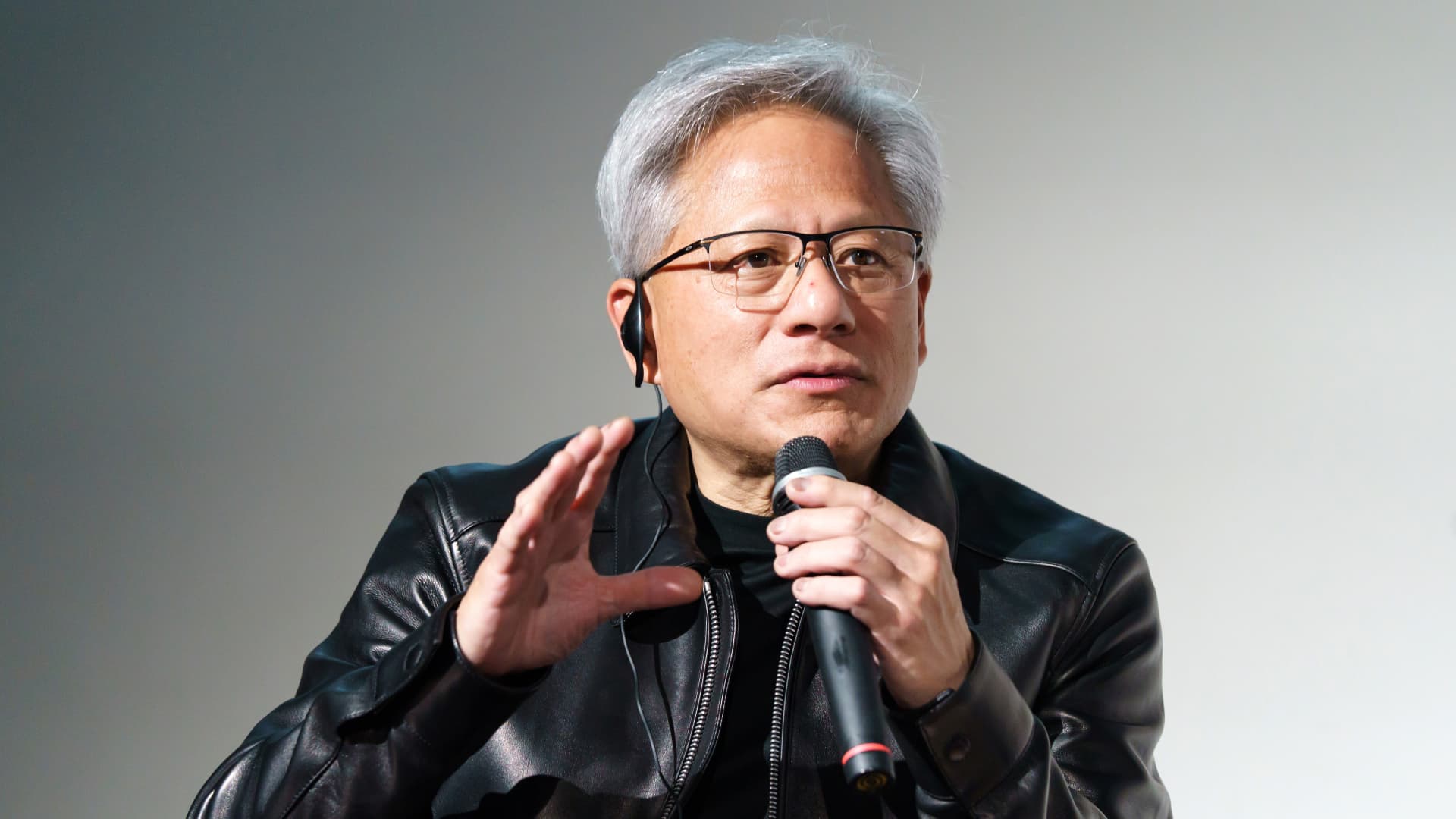
Jensen Huang, Nvidia’s chief executive, told CNBC that technology chips had become an “investable asset class.” He described Nvidia compute as revenue-generating, productive, long-lived, fungible and flexible. Huang said the company’s broad adoption and the potential to transfer hardware between customers could give lenders grounds to underwrite it as an asset with an extended useful life.
Can AI chips be used as financing collateral?
That proposition remains a central test for the programme. CNBC noted that GPUs have traditionally been treated as hardware that depreciates rapidly. New chip generations could affect the resale value and useful life of existing equipment, complicating efforts to treat compute capacity in a similar way to long-lived infrastructure.
The financing effort arrives as investors scrutinise the returns on large AI capital-spending programmes. CNBC reported that, after a July decline in global markets, investors questioned whether major technology companies’ AI outlays would generate sufficient returns. It also reported that Moody’s had warned heavy AI expenditure was putting pressure on free cash flow and contributing to higher debt loads at large technology groups.
For now, the MOUs establish the partners’ stated intent to develop a market for financing Nvidia customers’ compute expansion. Whether that produces lending at the targeted scale will depend on deal structures and credit terms that have not been disclosed.
This story draws on original reporting from CNBC.


