Oil rises as US-Iran threats deepen Hormuz supply concerns
Brent and WTI climbed after President Donald Trump threatened strikes on Iranian infrastructure over attacks on ships in the Strait of Hormuz.
By Marcus V. Thorne · Markets Editor
· 3 min read
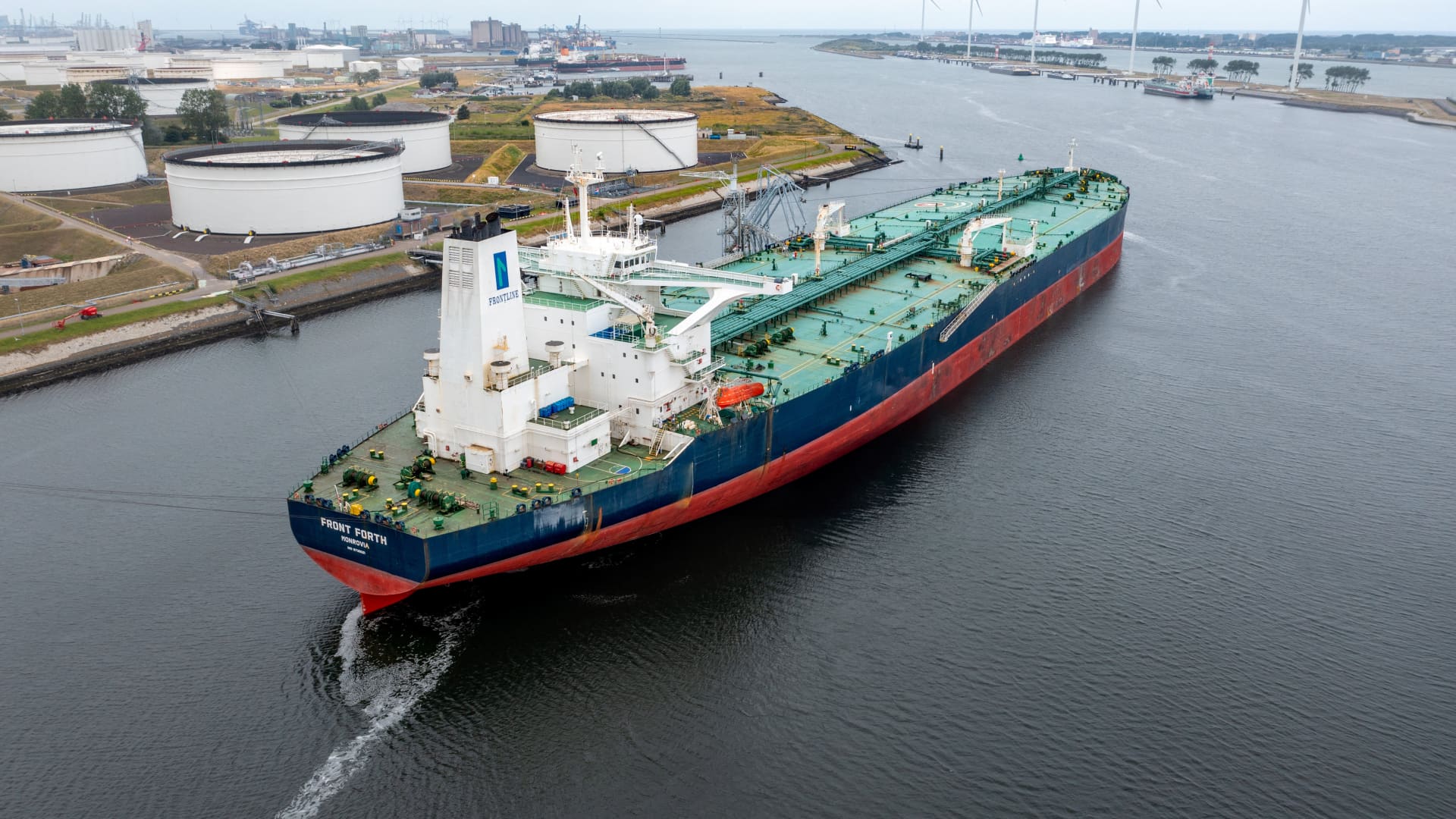
Oil futures advanced Thursday as a new exchange of threats between Washington and Tehran increased concern over shipping through the Strait of Hormuz, a route already affected by attacks on vessels. Brent crude for September delivery rose 2% to $95.99 a barrel, while U.S. West Texas Intermediate gained about 1.7% to $88.27 a barrel, according to CNBC.
The move followed a warning from U.S. President Donald Trump that the United States would hit Iranian infrastructure if Iran fired on ships using the strait. Oil futures price barrels for delivery at a later date, so perceived risks to transport routes or production can quickly feed into benchmark prices, particularly when traders see a higher probability of supply delays or disruption.
Trump said Wednesday that, from that point on, any Iranian attack on a ship in the Strait of Hormuz using a missile, rocket, drone or other weapon would lead the United States to “bomb and destroy ONE BRIDGE OR POWER PLANT.” His statement tied U.S. military action directly to future attacks on commercial shipping.
Iran responded with its own warning. An unnamed Iranian military source told the state-run Tasnim News Agency that if the United States targeted a bridge or power plant in Iran, Tehran would strike infrastructure and bridges elsewhere in the region, including energy facilities in which the United States has interests.
Diplomacy under strain
The latest price increase came as U.S. officials signalled limited progress in talks with Iran. Secretary of State Marco Rubio said Wednesday that Iran was not being “serious” about reaching an agreement with Washington, while also saying the United States remained “committed to diplomacy” in the Middle East.
HSBC said in a note late Wednesday that the recent rise in oil prices reflected fresh concern over the Strait of Hormuz after a U.S.-Iran ceasefire broke down. The bank said the next phase for prices and flows depended on whether diplomacy could restore more predictable vessel movement through the area.
Kim Fustier, HSBC’s senior global oil and gas analyst, said the ceasefire had weakened since July 7 and 8 as Iranian attacks on vessels passing through the Strait of Hormuz prompted U.S. retaliatory strikes. Fustier said the central dispute concerned who administers passage through the strait.
Fustier added that increased traffic through a U.S.-managed Omani lane appeared to have worked against Iran’s preferences. In her assessment, the question of control over transit remains unresolved, leaving oil markets exposed to further shifts in the security situation.
The Strait of Hormuz has become the focal point for the latest escalation because attacks there directly affect the movement of crude and other energy cargoes. Market participants are watching whether the threats translate into further military action, renewed attacks on ships or a diplomatic effort that stabilises transit.
This story draws on original reporting from CNBC.