Oil tanker attacks widen across Red Sea, Hormuz and Black Sea
Oil tanker attacks are disrupting key routes as Brent tops $100 and analysts warn of tighter crude and fuel markets.
By Marcus V. Thorne · Markets Editor
· 4 min read
Oil tanker attacks are spreading across the Red Sea, the Strait of Hormuz and the Black Sea, putting several of the world’s most important energy routes under pressure at the same time. Brent crude rose above $100 a barrel on Thursday for the first time since May after gaining more than 30% in July, CNBC reported, as shipping risks intensified in the Middle East and Europe.
The pressure is concentrated around two Middle East chokepoints, Hormuz and Bab el-Mandeb, while Ukraine has increased strikes on vessels linked to Russia in the Black Sea and Sea of Azov. Helima Croft, head of global commodity strategy at RBC Capital Markets, told CNBC’s “Power Lunch” that the oil market is now facing wars on several fronts.
Why are oil tanker attacks affecting oil prices?
Oil markets respond to attacks on tankers because these ships carry crude and refined fuels through narrow sea passages that have limited alternatives. When security risks rise, traffic can slow, insurance and freight costs can increase, and buyers may worry that physical supplies will be delayed or reduced.
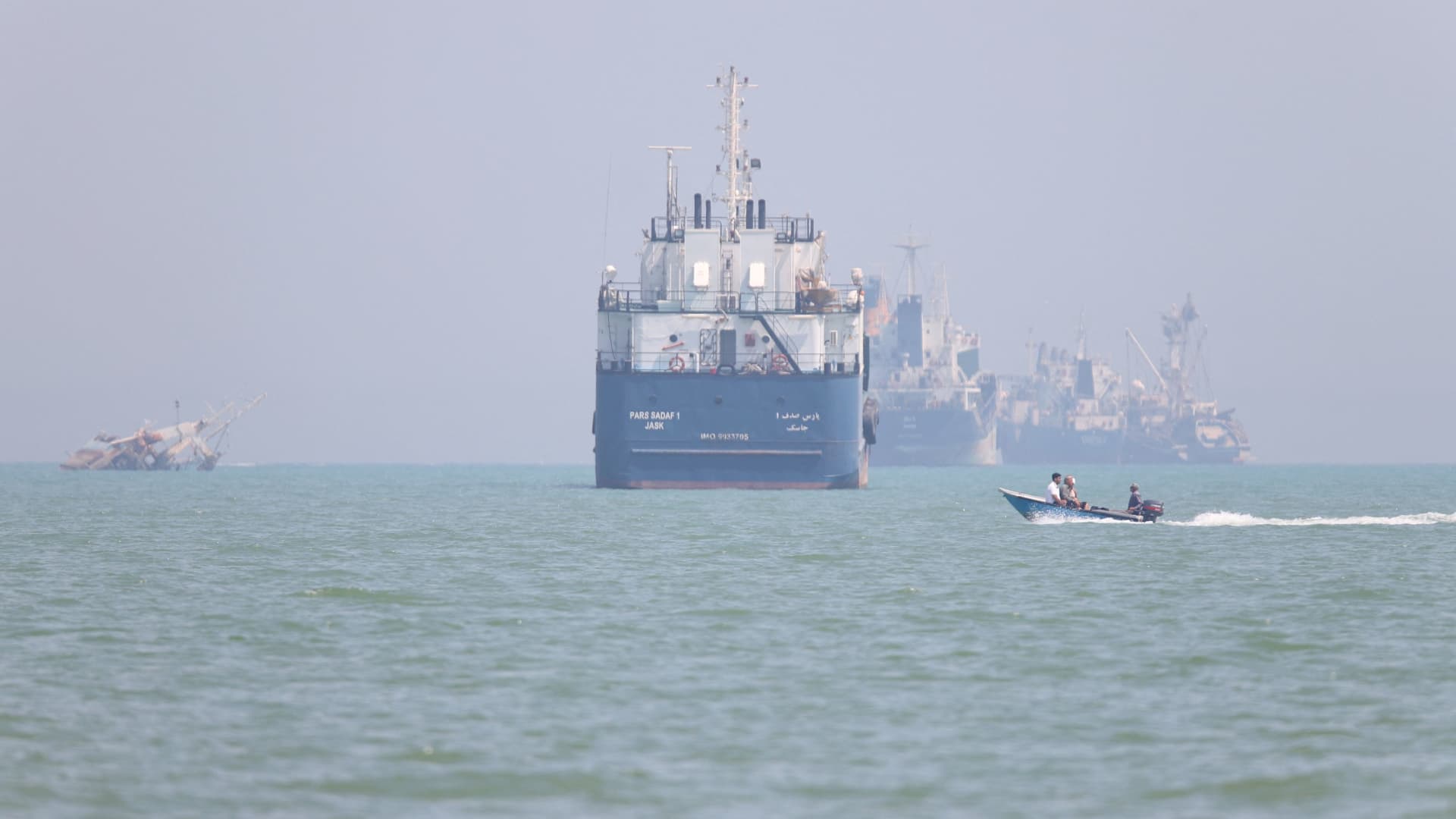
In and around the Strait of Hormuz, Iran has increased attacks this month as Tehran seeks greater control over the corridor, according to CNBC. Ship traffic through Hormuz fell after recovering in the weeks following a June 17 memorandum of understanding between the U.S. and Iran that was intended to reopen the strait.
Dimitris Maniatis, chief executive of Athens-based maritime risk service Marisks, told CNBC that the collapse of that memorandum had brought merchant shipping into “the worst phase of this conflict.” He said Iran’s aim was to assert more authority over activity in the Strait of Hormuz.
Since March 1, 61 commercial vessels have been attacked in the Persian Gulf, Strait of Hormuz and Gulf of Oman, according to the International Maritime Organization, a United Nations agency. The IMO data cited by CNBC show at least 17 seafarers killed and dozens injured. At least 12 tankers have been hit this month in and around Hormuz, with at least two seafarers killed, according to the same data.
A second Middle East risk has opened in the Red Sea. Yemen’s Houthis, allied with Iran, fired on two Saudi tankers this week after announcing a maritime embargo against Saudi Arabia, CNBC reported. That threatens Saudi crude that had been redirected by pipeline to the kingdom’s western coast because of insecurity near Hormuz. Those exports still need to move through Bab el-Mandeb, the strait linking the Red Sea and the Gulf of Aden.
Maniatis told CNBC that Iran and the Houthis were delivering a blow to U.S. interests, U.S. oil companies and Saudi Arabia, while adding that exports had not been fully choked off. Houthi attacks on shipping from 2023 to 2025, launched in response to Israel’s war in Gaza, had already cut traffic through Bab el-Mandeb, and shipping through the route had not fully recovered, according to CNBC.
Matt Smith, director of commodity research at Kpler, told CNBC that Saudi Arabia has some capacity to reroute oil through a pipeline across Egypt from the Red Sea to the Mediterranean, but the process is complicated. Supertankers cannot pass through the Suez Canal fully loaded because the channel is too shallow, Smith said, so cargo would have to be partly unloaded, piped across Egypt, and then reloaded after the vessel transits the canal.
The Black Sea is adding another constraint. Ukraine says it has attacked more than 150 tankers, cargo vessels and other ships linked to Russia’s shadow fleet in the Sea of Azov and Black Sea, according to the Kyiv Post. The Caspian Pipeline Consortium has suspended tanker loadings at Russia’s Novorossiysk port after attacks on vessels, Reuters reported.
Croft said in a client note cited by CNBC that Kazakhstan exports about 80% of its crude through that pipeline and has limited alternatives. She said Kazakhstan’s June production of about 1.7 million barrels per day could face shut-ins if the disruption persists.
Ukraine has also struck Russian refineries, taking more than 50% of the country’s refining capacity offline, Croft told CNBC. She said Russia’s export ban on refined products and refinery outages were tightening both refined fuel and crude markets. Croft said Brent could rise beyond its 2022 high of $128 a barrel if the Middle East escalation worsens, and could exceed the 2008 peak of $148 in a full-scale regional war scenario.
This story draws on original reporting from CNBC.