Property tax cuts move to state ballots in midterm fiscal test
Voters in 13 states will decide 26 tax measures, with property-tax rollbacks raising questions over household relief and local budgets.
By Sarah Jenkins · Chief Macro Economics Correspondent
· 4 min read
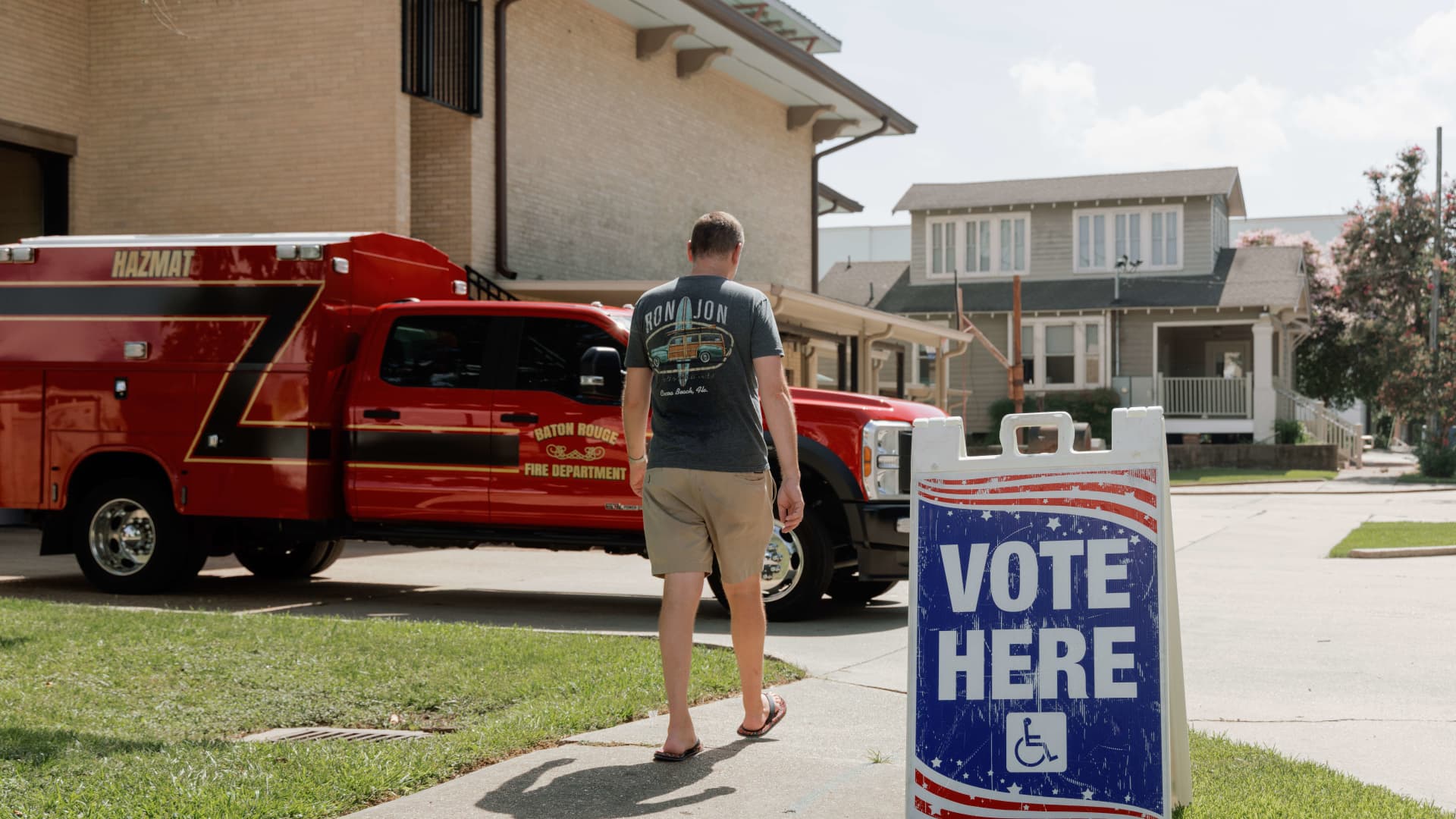
Voters across 13 U.S. states will decide 26 tax-related ballot initiatives in the November midterm elections, according to CNBC, putting fiscal policy directly before electorates that include 128 million Americans. Several measures target property taxes, a revenue stream central to local government finance and a recurring cost for homeowners.
California’s Proposition 40, a proposed one-time 5% wealth tax on billionaire residents, has drawn national attention. Yet many of the tax questions elsewhere would reduce existing levies rather than expand them, with property-tax proposals on ballots in Florida, Georgia, Louisiana, Oklahoma, North Carolina, Tennessee and Wyoming.
Property taxes are generally levied by local governments, which set rates by reference to assessed market values and budget needs. Ballot measures can lower bills by raising exemption thresholds, creating new exemptions for particular groups such as seniors, or limiting the ability of governments to increase levies. Tennessee’s Amendment 2 would bar a state property tax, although Tennessee has not had one since 1949.
Local budgets face potential losses
Revenue estimates attached to some measures show the scale of the fiscal trade-off. Florida’s Amendment 3, which would raise the maximum property assessment eligible for the state’s homestead exemption from $150,000 to $250,000, is estimated to reduce revenue by about $46 billion by 2032, according to analysis cited by CNBC.
A separate Florida measure exempting tangible personal property used for agriculture or agritourism from property taxes is estimated at $96.9 million in revenue losses by 2030, according to state revenue impact documents. Wyoming’s primary-residence exemption initiative is estimated to cost at least $188 million by 2030, according to Wyoming materials cited by CNBC. Some Louisiana measures have not received full cost appraisals, although legislative documents project local revenue reductions.
Jacksonville Mayor Donna Deegan said Florida’s Amendment 3 would cut about one-third of the city budget. “A $300 million hit is not a small hit,” Deegan said, warning that roads, libraries, parks, public safety response times, housing affordability and homelessness could be affected.
The local-government exposure is large. State and local government spending reached $4.3 trillion in the first quarter of 2026, according to U.S. Bureau of Economic Analysis data published through FRED.
Supporters frame the votes as household relief
Republican officials backing reductions argue that property-tax bills have risen beyond what many households can bear. North Carolina Treasurer Brad Briner told CNBC that some municipalities in his state had overtaxed residents and said that relying on property taxes to cover financial mismanagement was unfair to homeowners and prospective buyers.
Wake County Board of Commissioners Chair Don Mial took the opposite view, saying property tax is the county’s largest and most stable revenue source. Mial said it funds about 75% of Wake County’s annual budget and supports schools, libraries, fire stations and infrastructure.
Florida Gov. Ron DeSantis has been one of the most visible critics of property taxes. At a May roundtable, he pointed to projected local-government revenue growth from $32 billion to $83 billion over a 12- or 13-year period and argued that basic services could be funded at a lower level. DeSantis has also said the Legislature’s Amendment 3 was narrower than his original proposal, which would have gone further in reducing taxes on primary homes.
Recent votes show a mixed electorate
Florida constitutional amendments require 60% voter approval. Other states with property-tax measures generally require a simple majority, according to CNBC.
Recent tax votes point in different directions. Oregon voters rejected a fuel-tax and public-transportation payroll-tax increase in May. Louisiana voters also rejected, by a 2-to-1 margin, an amendment allowing local governments to exempt business inventory from property taxes. By contrast, Texas voters in 2025 approved Proposition 13, raising the homestead exemption from $100,000 to $140,000, with nearly 80% support. Georgia’s 2024 Referendum A, which raised a personal-property tax exemption from $7,500 to $20,000, passed with more than 64% support.
Polling in Florida suggests support may depend on how fiscal consequences are presented. The University of North Florida Public Opinion Research Lab found 61% support for Amendment 3 when described as phasing out taxes on homestead property other than school taxes. After respondents were told about projected city and county budget gaps, support fell to 45% and opposition rose to 47%.
This story draws on original reporting from CNBC.


