Rivian’s R2 puts Tesla’s Model Y dominance under sharper scrutiny
CNBC Options Action framed Rivian’s R2 launch and Tesla’s rich valuation as a new contest in mid-market electric SUVs.
By Sarah Jenkins · Chief Macro Economics Correspondent
· 3 min read
Tesla reported second-quarter vehicle deliveries of 480,126, 18% above the consensus estimate of 406,600, while producing 451,758 vehicles, according to CNBC. The strong operating data did not translate into a clear positive stock reaction, which CNBC Options Action commentary linked to Tesla’s demanding valuation and investor expectations already embedded in the shares.
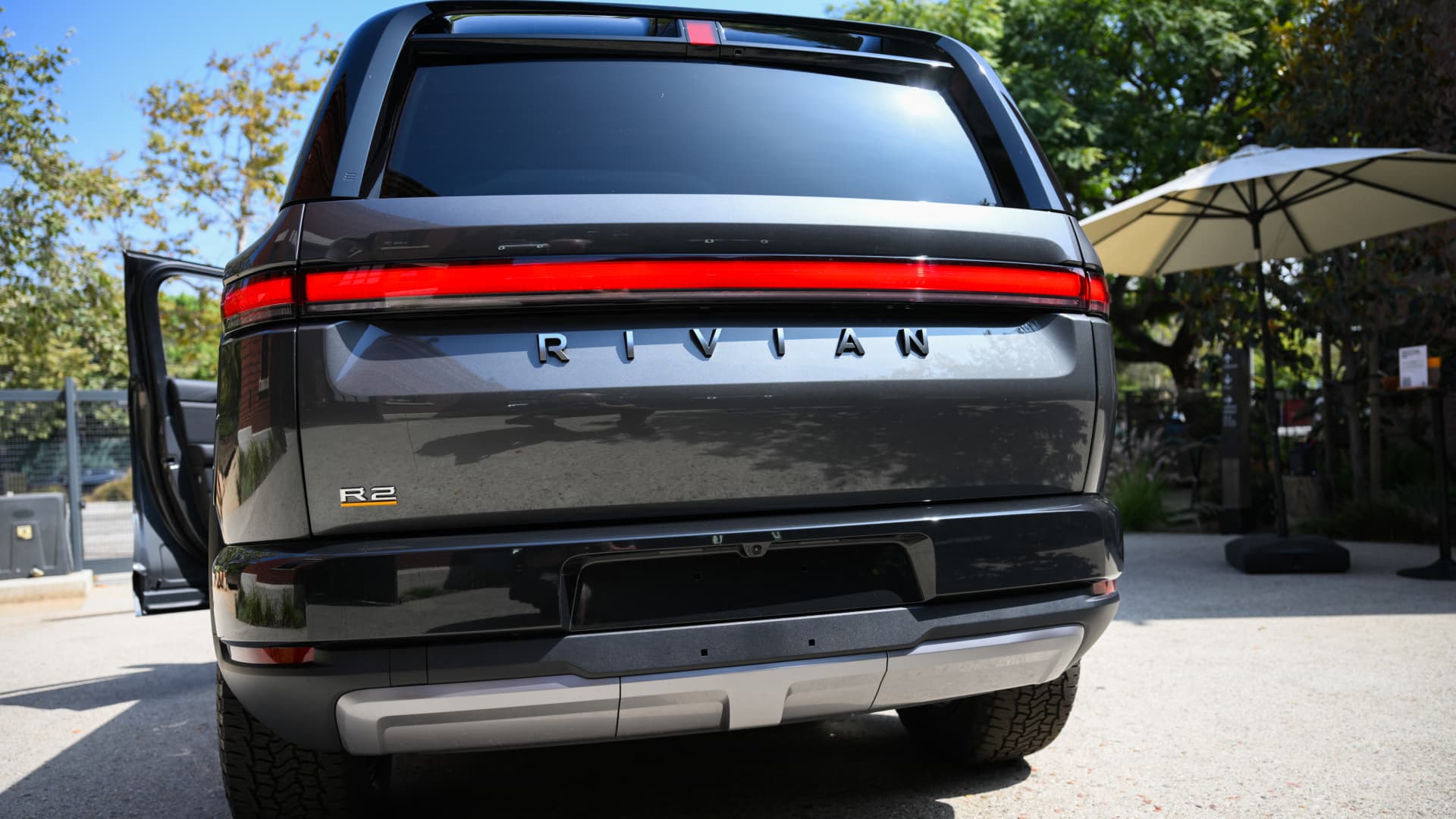
The comparison with Rivian has become more pointed after Rivian introduced the R2, a mid-market electric SUV aimed at the segment where Tesla’s Model Y has been the leading product, according to CNBC. Tesla’s market value was cited at $1.48 trillion, versus $23.5 billion for Rivian, underscoring the gap investors are assessing as the smaller company attempts to broaden its addressable market.
CNBC reported that Tesla sold nearly 1.64 million vehicles in 2025, while Rivian sold 42,247. Tesla’s mix also remains highly concentrated: 96.9% of its sales last year came from the Model 3 and Model Y, with the Model S, Model X and Cybertruck accounting for the remaining 3.1%, according to the commentary.
Rivian moves into a larger segment
Rivian’s existing consumer lineup had largely placed it in higher-priced categories. CNBC described the R1S as a vehicle priced above $100,000 and broadly comparable with Tesla’s Model X, while the R1T pickup has been closest in market target to Tesla’s Cybertruck. The R2 changes that positioning by putting Rivian into the mid-market SUV category, where the Model Y has dominated electric-vehicle demand.
The CNBC Options Action commentator also pointed to a personal consumer-tracking gauge called the “Holly Index,” based on his wife’s purchasing preferences, as anecdotal evidence of shifting brand interest. He said the index had previously favored companies including Lululemon, Starbucks, Costco, Apple, Nike and Tesla, but had since changed in several areas, with Vuori replacing Lululemon, ON Holding replacing Nike, and Equator and Blue Bottle displacing Starbucks.
In the most recent shift, the commentator said his wife, after owning two Teslas in succession, placed a reservation for a Rivian R2 for year-end delivery. He characterized the move as a sign that Rivian’s new model may compete not only with electric mid-size SUVs, but also with internal-combustion mid-size SUVs.
Balance sheet and options structures
The same commentary described Rivian’s near-term share trend as favorable but highlighted financial constraints. Rivian is not yet profitable, is viewed by the commentator as unlikely to reach net profitability before 2030, and had about $4.8 billion of cash on hand in its most recent quarterly report. Consensus expectations cited by CNBC indicated roughly $9 billion of cash burn before Rivian becomes cash-flow positive, creating a potential need for debt or equity financing over the medium term.
Against that backdrop, the commentary described two premium-collection options structures rather than outright stock purchases. For Rivian, it cited selling August 21 $16 puts at 85 cents per contract, a strategy that collects option premium upfront and could result in owning the shares at an effective $15.15 if assigned, according to the terms described.
For Tesla, CNBC cited selling a July 31 $420/$425 call spread for a $1.35 credit. A short call spread collects premium and has defined risk because the higher-strike call caps the seller’s exposure; the commentary said the structure would reach maximum profit if Tesla stayed below $420 through expiration.
This story draws on original reporting from CNBC.