Rounds backs Warsh’s inflation focus after Fed testimony
The South Dakota Republican said Warsh was right to hold rates steady in June and supported an independent Fed focused on inflation.
By Amanda Ross · Deals Correspondent
· 3 min read
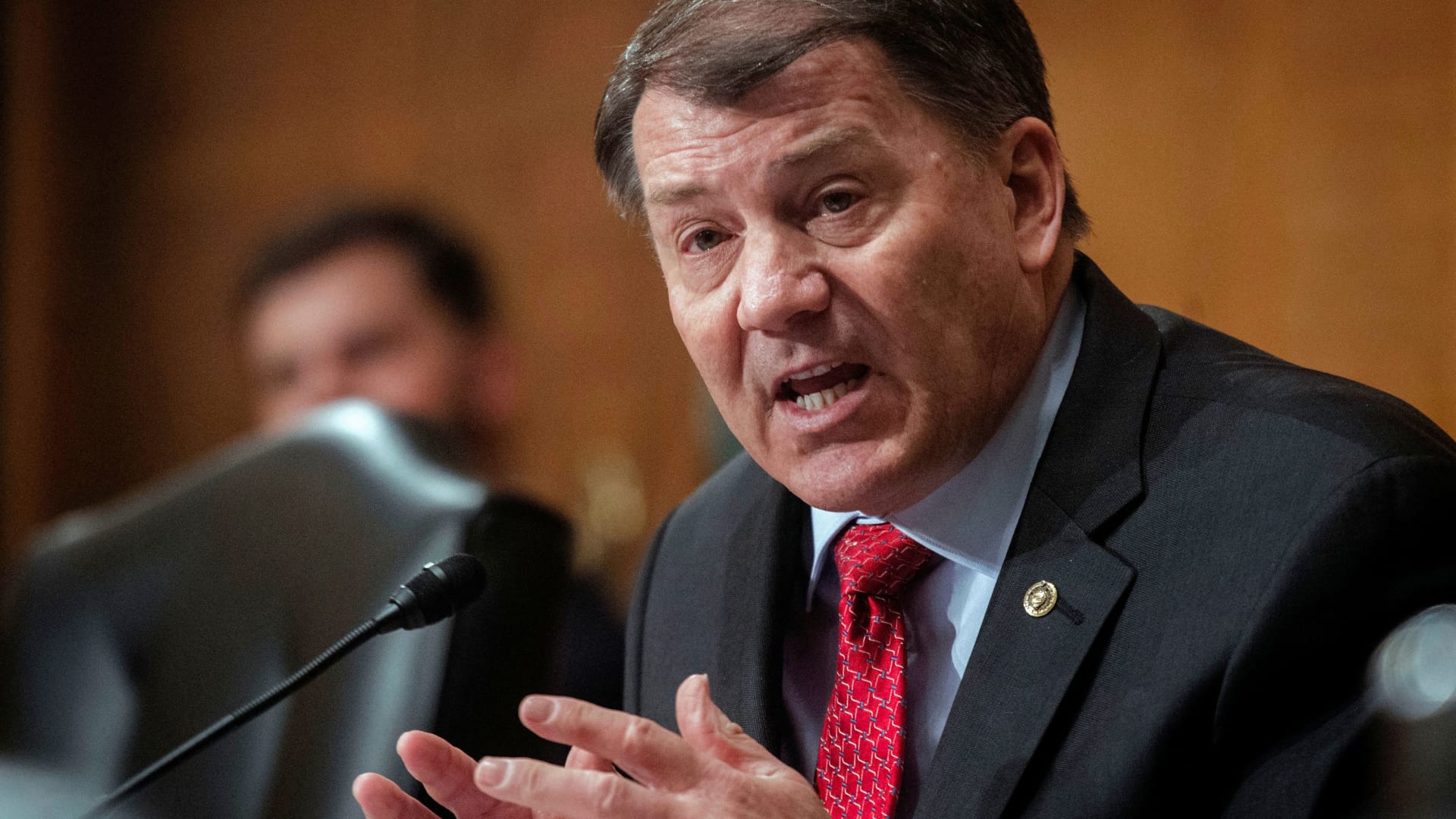
Sen. Mike Rounds said Federal Reserve Chairman Kevin Warsh set an appropriate tone on inflation and central bank independence after two days of congressional testimony this week. Warsh, who became Fed chair in May after replacing Jerome Powell, oversaw a June meeting at which the central bank kept interest rates unchanged, a decision Rounds told CNBC he viewed as correct.
Rounds, a South Dakota Republican who sits on the Senate Banking Committee, made the comments Thursday on CNBC’s “Squawk Box.” He said Warsh’s message to lawmakers aligned with his view that the Fed should concentrate on bringing inflation under control while retaining its ability to make rate decisions without direction from the White House.
“I think his message was a good message,” Rounds told CNBC, referring to Warsh’s comments on inflation and the Fed’s priorities. Rounds added that he believed lawmakers and the Fed chair were “on the same playing field” on the need to address price pressures.
First testimony as Fed chair
Warsh appeared before the House on Tuesday and the Senate Banking Committee on Wednesday, CNBC reported. The hearings gave lawmakers their first extended opportunity to question him since he took over the central bank in May.
The testimony centered on inflation, interest rates and the Fed’s independence, according to CNBC. Those issues have carried added political weight after President Donald Trump spent months pressing Powell to cut rates before appointing Warsh as his successor.
The Fed’s rate decisions affect financial conditions by setting the central bank’s policy stance. A decision to hold rates steady leaves that stance unchanged rather than moving to lower borrowing costs, a choice that can matter for households seeking credit and for investors assessing the path of monetary policy.
Rounds said he would like to see inflation and borrowing costs decline, including rates on 30-year mortgages. He told CNBC that lower mortgage rates were “critical,” while describing the task as a longer-term process. He said the Fed was right to maintain rates at Warsh’s first meeting as chair.
Independence under scrutiny
Warsh used the testimony to stress his independence from the White House, CNBC reported. The issue had drawn attention because Trump criticized Powell over interest rates, threatened to remove him if he did not leave office voluntarily and his administration began a criminal investigation into the then Fed chair, according to CNBC.
Rounds said he supported a Federal Reserve that makes its own judgments. “I want the Federal Reserve to be independent. I want them to make the decisions based on what they believe is right,” he told CNBC.
Rounds also connected Warsh’s focus on inflation with recent work by Congress aimed at lowering consumer costs. CNBC reported that he pointed to a broad housing package intended to reduce costs for homebuyers and renters and limit the role of institutional investors in owning rental homes.
The exchange underscored how Warsh’s early tenure is being assessed by lawmakers on two fronts: whether the central bank can keep inflation at the center of policy and whether its chair can withstand political pressure over rates. Rounds’ comments placed him in support of the Fed’s June decision and Warsh’s stated emphasis on independence.
This story draws on original reporting from CNBC.