Lopes urges development policy to shift from sectors to ecosystems
Carlos Lopes says AI, clean energy and geopolitical fragmentation require a broader model for industrialisation, especially in Africa.
By David L. Chen · Senior Columnist
· 3 min read
Development economist Carlos Lopes argued that developing countries should redesign industrial policy around productive ecosystems rather than treat manufacturing or services as separate growth engines. In a July 16 Project Syndicate commentary, he said the shift affects how governments try to capture value from technology, minerals, low-carbon industries and digital infrastructure.
Lopes was responding to economist Dani Rodrik, who has argued that developing economies should give greater attention to services that raise productivity. Lopes said Rodrik’s intervention usefully challenges the long-standing view that manufacturing is the main route to development, while adding that the larger issue is how economies build capabilities across firms, institutions and technologies.
From sector shifts to capability building
According to Lopes, development economics has for decades treated structural transformation as the movement of labour and capital from low-productivity activities into higher-productivity ones. He cited W. Arthur Lewis, Raúl Prebisch, Albert Hirschman and Nicholas Kaldor as economists whose work placed manufacturing near the centre of that process because factories supported scale, technical learning and productivity gains.
Lopes said the goals of development remain productivity, learning and economic complexity. What has changed, in his account, is the setting in which those gains occur. Artificial intelligence is changing the link between labour and output, geopolitical fragmentation has revived industrial policy, and the clean-energy transition is reorganising production around new technologies, critical minerals and lower-carbon sectors.
That combination, Lopes argued, means value is increasingly produced through networks that cut across conventional categories. Manufacturing relies on software, logistics, finance and digital platforms, while agriculture uses biotechnology, satellite data and precision engineering. Some services now perform functions once associated mainly with manufacturing, including technical learning, innovation and export growth, he wrote.
Battery supply chains as a test case
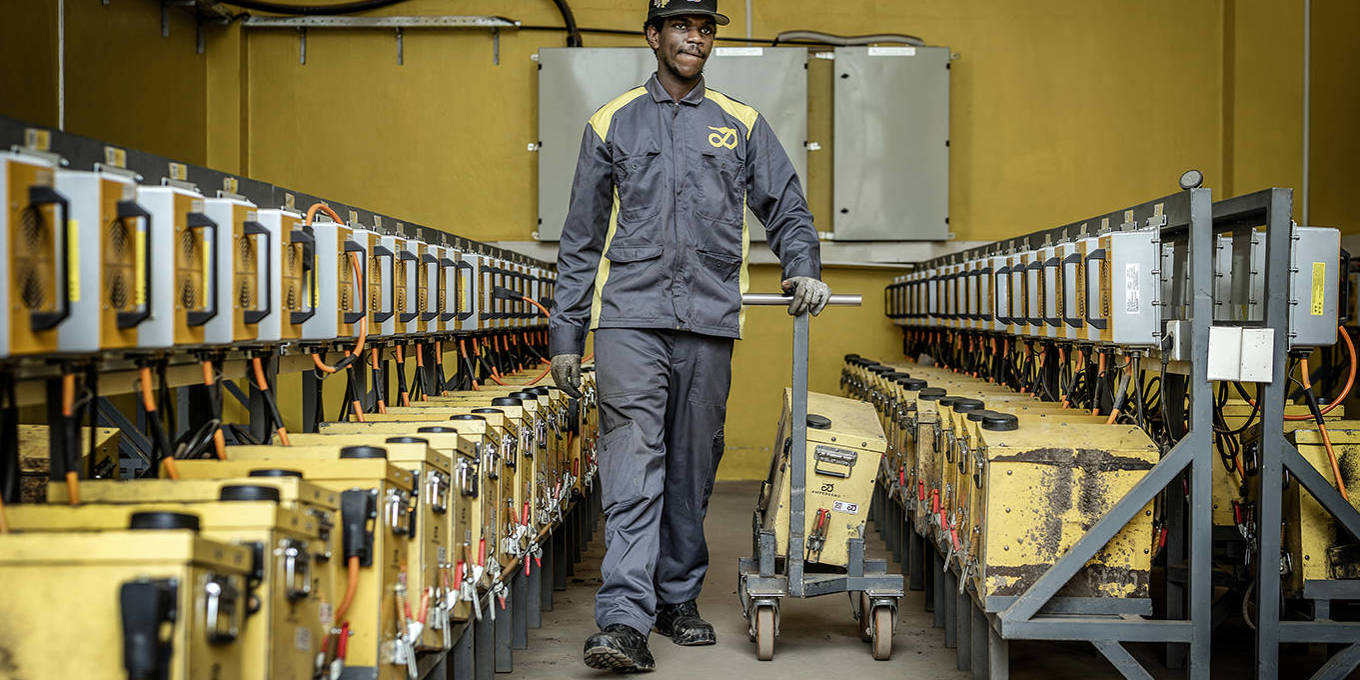
Lopes used electric-vehicle batteries to show how value can escape countries that focus only on processing raw materials or assembling goods. He said traditional industrial policy would encourage the Democratic Republic of the Congo to process cobalt at home instead of exporting ore. Yet he warned that domestic production of battery inputs, or batteries, would not by itself secure the most valuable parts of the chain.
In Lopes’s account, value would still accrue elsewhere if design, specialised machinery, software, technical standards and distribution networks remained in foreign hands. He pointed to China as an example of a country whose advantage rests not only on manufacturing scale, but also on control over technologies, know-how, intellectual property and the wider industrial systems in which factories operate.
Africa’s industrial policy challenge
For Africa, Lopes said the argument strengthens rather than weakens the case for industrialisation. Manufacturing remains a means of building skills and technology, he wrote, while AI and productive services increase the need for countries to develop broader capabilities.
He said African economies are industrialising as demographic change, climate policy and digital technology alter development options. Citing United Nations population projections, Lopes noted that Africa is expected to account for much of the growth in the world’s working-age population and consumer demand as advanced economies age.
Lopes argued that African countries can build renewable power systems, low-carbon industries and digitally connected infrastructure without first relying on older, carbon-intensive production systems. He said success will depend on institutions that support learning, innovation, finance, enforceable contracts, formal markets, logistics and reliable data.
Digital payments, identity systems, interoperable public platforms and AI could, if properly governed, help countries formalise activity, reduce transaction costs, improve tax collection, expand finance and strengthen state capacity, Lopes wrote. His conclusion was that development strategy should focus on the ownership and renewal of productive capacity across an ecosystem, rather than on reproducing the industrial path followed by earlier economies.
This story draws on original reporting from Project Syndicate.