Russia and Ukraine trade heavy strikes as NATO warns Moscow on Baltics
Russian attacks killed at least eight in Ukraine, while Ukrainian drones hit sites inside Russia, sharpening security and oil-market concerns.
By Marcus V. Thorne · Markets Editor
· 3 min read
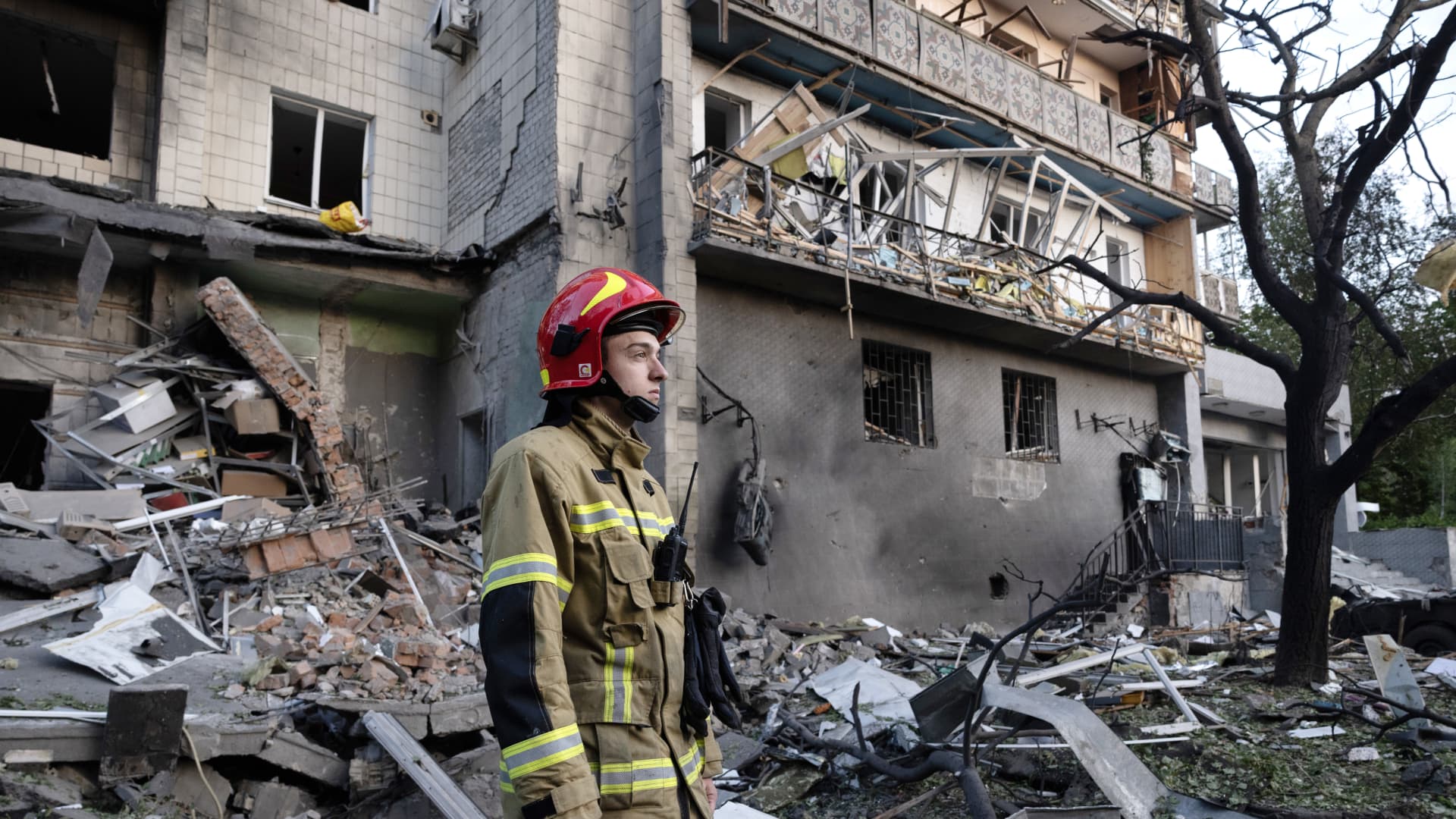
Russia carried out a large wave of ballistic missile and drone attacks on Ukraine, killing at least eight people and wounding dozens, according to Ukrainian officials. The escalation coincided with Ukrainian strikes on warehouses and an oil depot inside Russia, adding to concerns over energy supply risks as Brent crude futures moved above $90 a barrel on Monday amid broader strains linked to the U.S.-Iran conflict and the Strait of Hormuz.
Kyiv Mayor Vitali Klitschko said on Telegram that at least one person was killed and 15 were injured in the capital, where residential buildings, warehouses, a supermarket and a dormitory were damaged. Ukrainian President Volodymyr Zelenskyy described the attack on Kyiv as one of the largest ballistic missile assaults since Russia began its full-scale invasion in 2022.
Ukraine’s Air Force said it intercepted 18 missiles and 108 of 126 drones launched by Russia. The barrage included 25 ballistic missiles, the Air Force said. Three more people were reported killed in Russian strikes in the northeastern Kharkiv region on Sunday.
Strikes inside Russia
The Russian attacks followed Ukrainian drone strikes on Saturday that hit two warehouses owned by Wildberries, Russia’s largest online retailer, and an oil depot. Reuters reported that the warehouse attacks killed seven workers, while Deutsche Welle reported at least nine deaths and more than 80 injuries across the strikes. CNN described the attacks as the deadliest Ukrainian strikes inside Russia in more than two years.
Russia’s Defense Ministry said 379 drones were shot down across 19 regions. Zelenskyy said the facilities targeted were used by Russia to supply sanctioned components for drone production and navigation equipment.
Ukraine has increasingly targeted Russia’s energy infrastructure and logistics. Ukrainian naval drones hit two large Russia-linked crude tankers, the Louise 1 and Banda, in the Black Sea last week, according to Ukraine’s security service. The Black Sea handles more than 20% of Russia’s seaborne crude flows.
NATO signals deterrence on eastern flank
Giuseppe Cavo Dragone, chair of NATO’s Military Committee, told the Kyiv Independent in an interview published Saturday that the alliance was ready for any Russian move against its eastern flank, including actions involving Poland or the Baltic states. He said Moscow would lose far more than it could gain by touching those countries.
Poland, Lithuania, Latvia and Estonia have increased protection of critical infrastructure and transport systems as officials warn about possible Russian threats. Cavo Dragone said NATO’s first objective remained a ceasefire and negotiations toward a durable peace for Ukraine. He also acknowledged pressure on allied stockpiles and pointed to joint projects with Ukraine’s defense industry as one way to maintain support.
Kyiv has continued to seek more air-defense systems. Zelenskyy said protection against ballistic missiles was Ukraine’s top priority and that interceptors were needed daily. He said last week that the U.S. and Ukraine had reached a political agreement on licenses to produce Patriot interceptor missiles, with Kyiv hoping production could start by year-end.
Oil analysts have warned that any interruption to Russian crude exports could add to a market already affected by Gulf tensions. Andy Lipow, president of Lipow Oil Associates, told CNBC last week that a reduction in Russian crude exports could push prices well above $100 a barrel.
This story draws on original reporting from CNBC.