Samsung sets out smart glasses features in challenge to Meta
Samsung’s planned smart glasses will include a camera, phone tethering and AI-assisted summaries as it enters a market led by Meta.
By Marcus V. Thorne · Markets Editor
· 3 min read
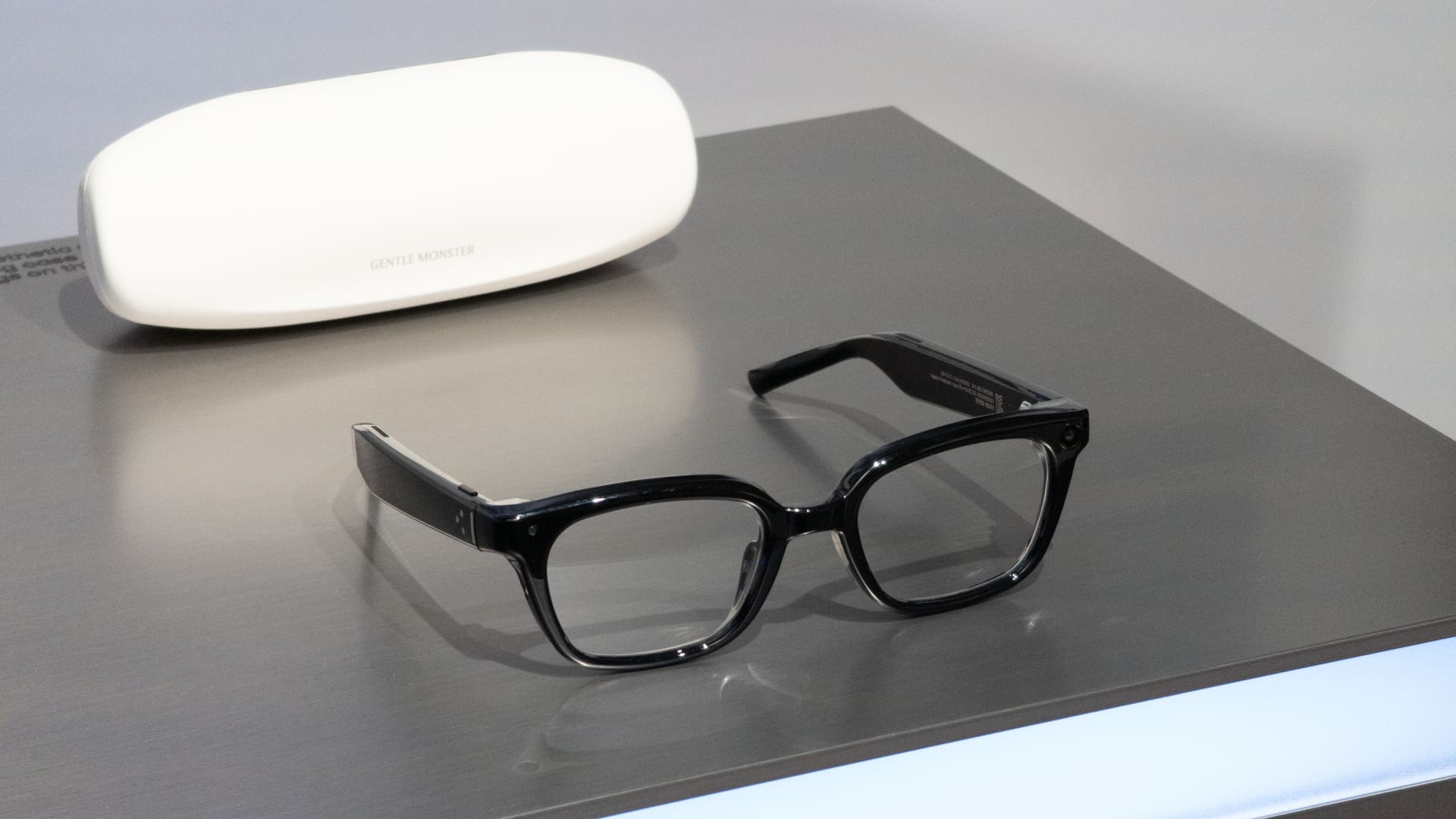
Samsung outlined new details of its forthcoming smart glasses on Wednesday, setting up its first direct challenge in a category where Meta held 69.2% of the market in the first quarter of 2026, according to IDC. The device will include a built-in camera, smartphone tethering and audio features, while Samsung described the product as premium but did not disclose a price.
The South Korean electronics group showed the glasses at its Galaxy Unpacked event after giving an initial look at what it called intelligent eyewear at Google I/O in May. Samsung has designed versions with partners Gentle Monster and Warby Parker, and said more designs and colours will be available when the product launches in the fall, James Choi, executive vice-president at Samsung and head of the research and development division behind the glasses, told CNBC.
The glasses are built around a camera that can record what the wearer sees, Samsung said. The company said the device can also read material such as a whiteboard or presentation and turn key information into notes. It can summarize lengthy messages received on a user’s smartphone, with the summary delivered through speakers built into the glasses.
Samsung said the glasses use Qualcomm’s Snapdragon AR1 Gen1 chip and must be connected to a smartphone to operate. The device will also come with a portable charging case.
Gesture controls under test
Choi said Samsung is testing controls that would use its smartwatches. Under that system, a person wearing a Samsung watch could make a hand movement to trigger a function on the glasses. Choi also said users could potentially use gestures through Samsung’s Galaxy Ring, which the company launched in 2024.
The approach reflects Samsung’s effort to tie the glasses to its wider device portfolio. For users, the phone connection means the glasses act as an accessory to an existing handset rather than a standalone computer. The camera, speakers and companion device together provide the route for capturing visual information, processing or organizing it, and playing back audio responses.
Pricing remains undisclosed
Choi declined to give a price, but said Samsung wants to position the glasses as a premium product and sell them through partner sales channels. He told CNBC the company wants to make the product reasonable, while adding that it would not sit at the lower end of the market.
Meta has led the category since 2021 with smart glasses including its Ray-Ban range. The company has broadened its lineup recently, launching a $299 entry-level set last month and introducing the $799 Meta Ray-Ban Display glasses in 2025, which include a built-in display.
Paolo Pescatore, founder of PP Foresight, told CNBC that Samsung’s entry represents a serious challenge to Meta, though he said success is not assured. He cited Ray-Ban Meta’s existing brand awareness and adoption, and said Samsung has previously had difficulty converting its smartphone users into buyers of complementary Galaxy devices.
Francisco Jeronimo, an IDC analyst, told CNBC he would not be surprised if Samsung priced the glasses between $600 and $700 to reinforce its premium positioning. He also said a high price could be difficult if Samsung does not offer more than Meta’s Ray-Ban products.
Choi said Samsung has only just entered the smart glasses category and expects it to remain a niche market that will not reach 100 million units in sales. He did not provide Samsung’s own sales targets.
This story draws on original reporting from CNBC.