Senate Democrats seek crypto hearings tied to Trump disclosures
Five senior Senate Democrats asked GOP-led committees to examine whether Trump family crypto ventures present national security concerns.
By Marcus V. Thorne · Markets Editor
· 4 min read
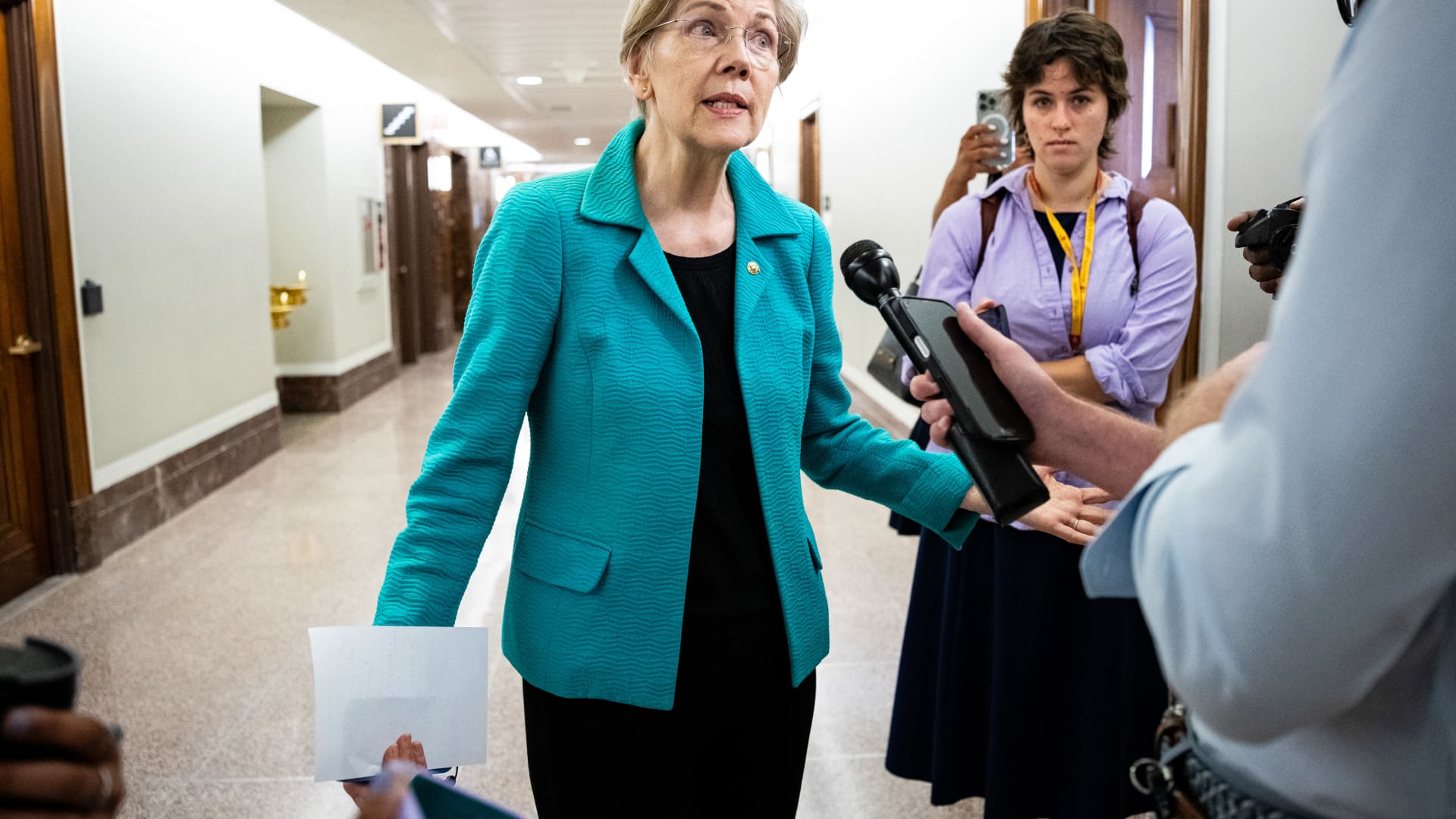
Five senior Senate Democrats asked Republican-led committees to hold hearings on whether President Donald Trump’s cryptocurrency interests create national security risks, citing his 2025 financial disclosure and questions about foreign and undisclosed investors. CNBC reported that Trump disclosed at least $2.24 billion in revenue for 2025, including more than $580 million from crypto-related sources.
The request was made Friday by Sens. Elizabeth Warren of Massachusetts, Richard Blumenthal of Connecticut, Gary Peters of Michigan, Dick Durbin of Illinois and Ron Wyden of Oregon. Each serves as the top Democrat on a Senate committee with potential jurisdiction over finance, oversight, intelligence, judiciary or tax matters.
In a letter, the senators said Trump’s latest disclosures showed that crypto ventures connected to his family produced “about $1.4 billion in the first year of his second term alone.” They asked the committees’ Republican chairs to investigate whether financial backers of those ventures, including foreign-linked investors, could have affected administration policy.
World Liberty Financial under scrutiny
The Democrats focused on World Liberty Financial, a crypto business affiliated with the Trump family. CNBC said Trump’s annual disclosure, released publicly on June 30, listed about $515 million from World Liberty token sales and $65 million from sales of equity in its holding company.
Tokens can function as digital assets issued by a crypto project, often giving holders economic exposure, governance rights or access to a platform depending on the terms set by the issuer. Equity sales, by contrast, involve ownership interests in the company or holding structure behind the venture. The senators’ concerns involve both the scale of the reported income and the identity of investors behind the business.
The letter referred to reporting that a group connected to Sheikh Tahnoon bin Zayed Al Nahyan, the United Arab Emirates’ national security adviser, bought a 49% stake in World Liberty Financial. The senators also cited Trump’s disclosure references to unidentified “Third Parties” and asked for an examination of whether the UAE or other backers influenced U.S. policy decisions.
The White House and World Liberty Financial did not immediately respond to CNBC’s requests for comment on the senators’ letter.
Trump says assets are managed separately
Trump defended his business activities in a CNBC interview at the White House last week, saying there was “nothing illegal” or “wrong” with them. He said his son Eric Trump oversees his assets and that outside firms manage his investments.
“I tell my kids, stay away from as much as you can stay away from, but they also have a life,” Trump told CNBC.
The White House has said in prior statements that Trump’s assets are held in a trust managed by his children and that his business interests do not create conflicts.
CNBC’s review of Trump’s 927-page annual financial disclosure also found $635 million in royalties from “Celebration Coins,” which CNBC said have been linked to his memecoin business. The filing covers revenue, which is not the same as profit, and does not by itself determine whether a conflict or legal violation exists.
Earlier Democratic inquiries
The Senate request follows earlier Democratic efforts to investigate World Liberty Financial’s foreign ties. Rep. Ro Khanna, a California Democrat, opened a House inquiry in February into the reported UAE investment, seeking records on the transaction and any link to changes in U.S. restrictions on advanced artificial intelligence chip exports. World Liberty Financial at the time called Khanna’s inquiry politically motivated, according to CNBC.
Democratic senators also sought hearings in June after reports that UAE officials paid $218 million to entities tied to the Trump family and to the family of Steve Witkoff, the U.S. special envoy to the Middle East. They questioned whether the arrangement had any connection to later administration decisions involving AI chips and arms sales to the UAE.
Republicans control both chambers of Congress and the Senate committees that would decide whether to hold the hearings. CNBC reported that Republicans did not schedule hearings in response to the earlier Democratic requests.
This story draws on original reporting from CNBC.


