Situational Awareness hedge fund unwind exposes leverage risk, Cramer says
Jim Cramer said Situational Awareness’ forced unwind shows how leverage amplified AI-stock losses and may ease selling pressure.
By Amanda Ross · Deals Correspondent
· 3 min read
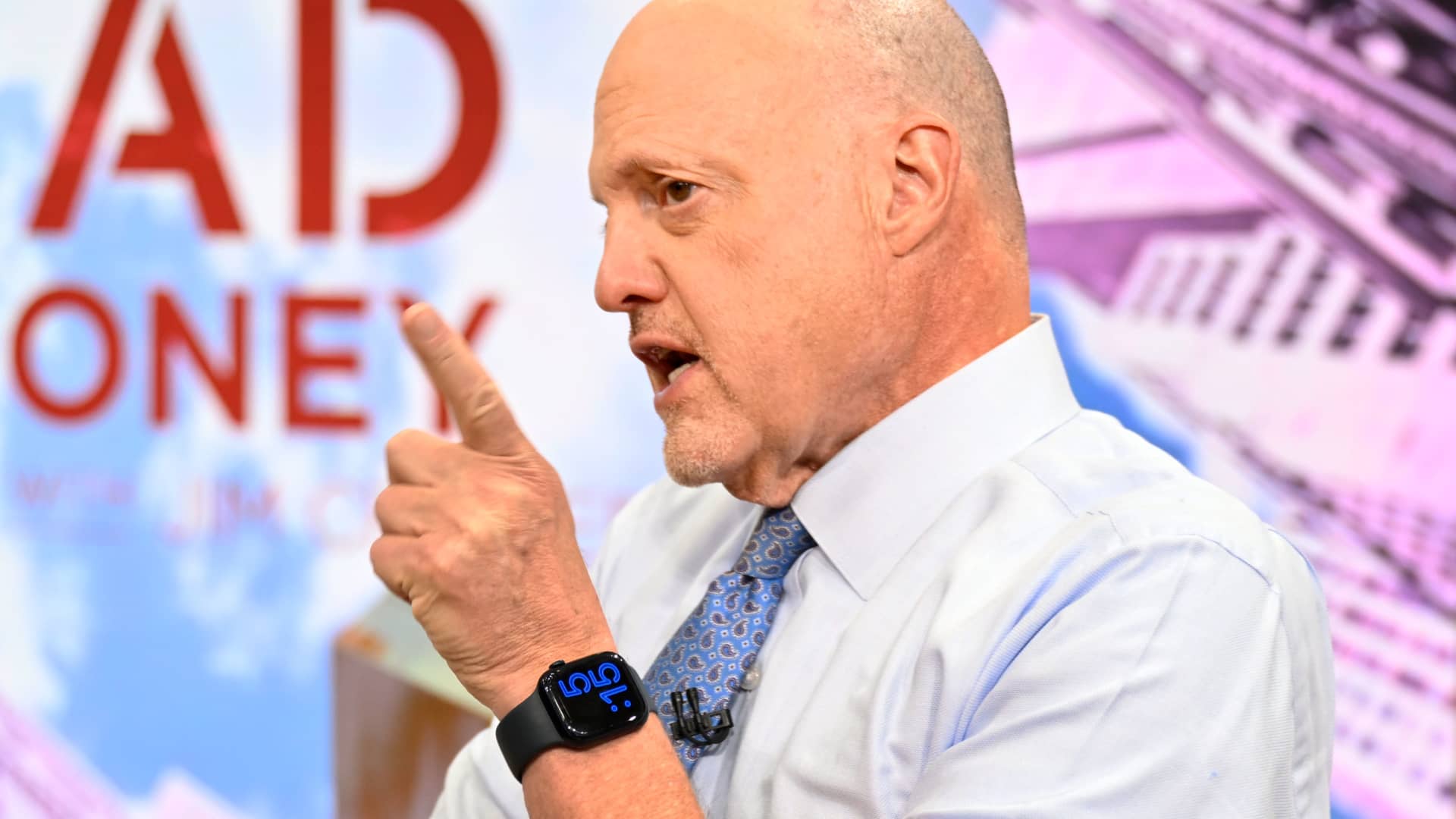
CNBC’s Jim Cramer said the Situational Awareness hedge fund unwind offers a warning about leverage after the AI-focused fund was forced to sell public stock positions following sharp losses. On Thursday’s “Mad Money,” Cramer said borrowed money can turn a reversal in a popular trade into compulsory selling that weighs on stocks beyond the fund itself.
Situational Awareness, founded by former OpenAI researcher Leopold Aschenbrenner, had made highly leveraged wagers tied to artificial intelligence, CNBC reported. The fund used a “long hardware, short software” approach, according to CNBC, betting on AI infrastructure companies including Micron while shorting software names seen as exposed to AI disruption.
Cramer said the reversal of that trade led to a margin call and liquidation. In his account, the pressure did not reflect a sudden deterioration in the businesses at the center of the trade, but rather the mechanics of a leveraged portfolio being forced to reduce risk.
What happened to the Situational Awareness hedge fund?
CNBC reported that Situational Awareness was forced to unwind its heavily leveraged public equity bets after recent losses. Cramer said the episode showed why he had been warning viewers for two weeks to stay away from margin, saying he did not want individual investors caught in the same kind of forced selling.
Buying on margin means using borrowed money to hold investments. If the value of the portfolio falls, the lender can require more collateral; if the investor cannot meet that demand, positions may be sold to repay the loan. That process can magnify losses and add selling pressure to shares even when company fundamentals have not changed in the same proportion.
The market moves around the trade were sharp. CNBC said Micron had fallen 39% from its June 25 record high through Wednesday’s close, while Adobe had risen 36% over the comparable period. On Thursday, those moves began to unwind, with Micron up 18% and Adobe down 6%.
Cramer argued that the forced selling had helped explain the weakness in AI infrastructure stocks in recent weeks. He said the liquidation could become a clearing event for the AI trade by removing a large seller from the market, although that view remains his interpretation of the trading action rather than a confirmed assessment from the fund.
The episode also underscores how crowded trades can become vulnerable when investors use borrowed money. A long-short strategy can aim to profit from one group of stocks rising while another falls, but leverage raises the stakes if both sides move against the fund or if losses force positions to be closed at unfavorable prices.
Cramer’s message to retail investors was narrower than a market call: he said they should avoid using margin because investing is difficult enough without adding the risk of forced liquidation. CNBC attributed the fund’s unwind to steep losses and the need to meet margin requirements.
This story draws on original reporting from CNBC.


