South Korea property bubble fears rise as Lee cites Japan crash
President Lee Jae Myung used Japan’s 1990s bust to press housing reforms, while economists say lending rules limit systemic risk.
By Marcus V. Thorne · Markets Editor
· 3 min read
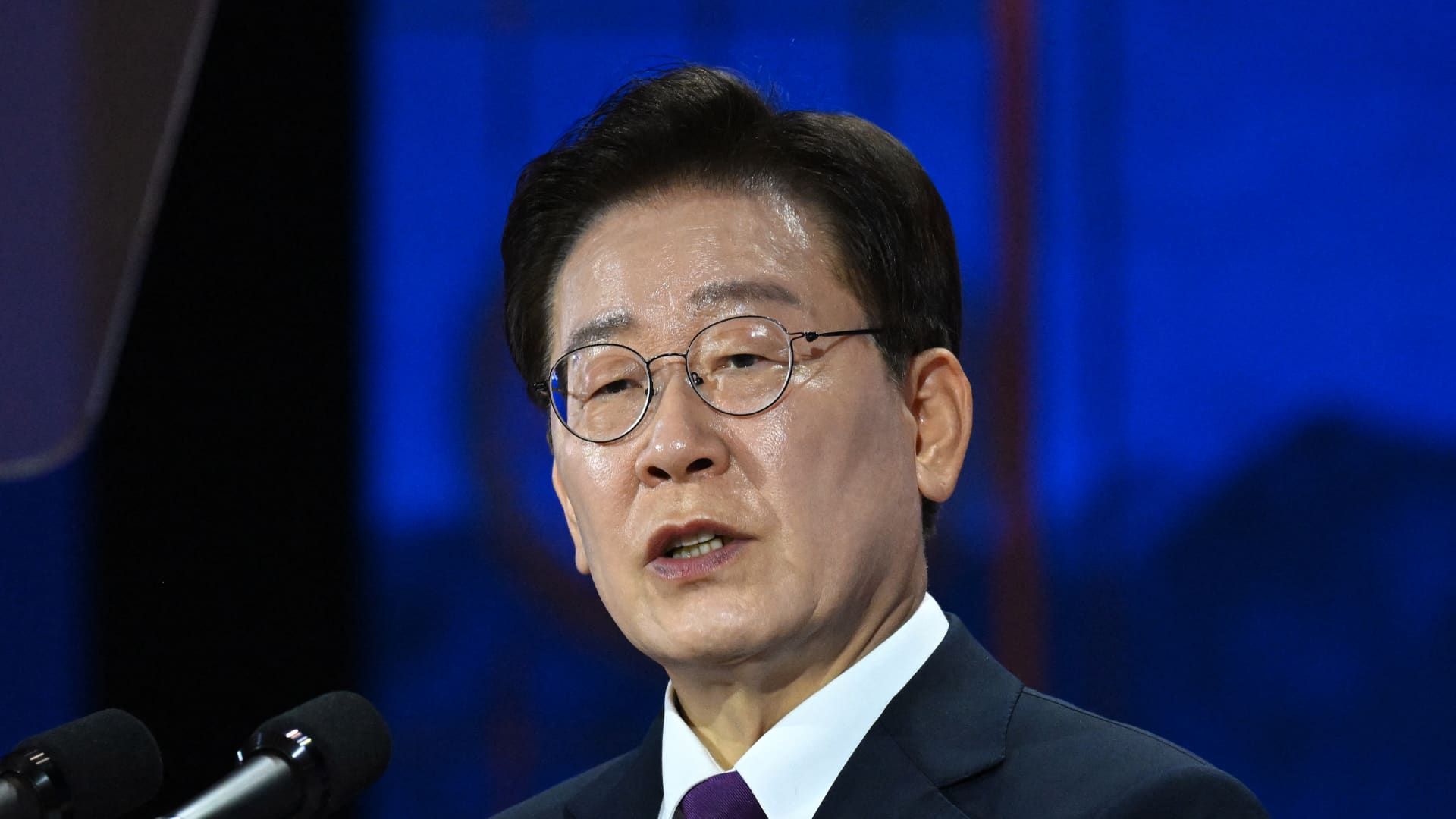
South Korea property bubble concerns moved to the center of Seoul’s policy debate after President Lee Jae Myung pointed to Japan’s early-1990s real estate collapse while preparing tax changes aimed at cooling the housing market. The debate comes as real assets made up 75.8% of Korean household assets at the end of March 2025, compared with 24.2% for financial assets, according to data cited by Lee.
At a public discussion on real estate policy Thursday, Lee said many people worry South Korea could experience a prolonged slowdown like Japan’s “lost decades,” according to a CNBC translation. He described Japan’s housing market as having burst in the early 1990s and used the comparison to argue that South Korea’s property market has overheated.
Lee has also sought to shift household wealth away from property and toward financial markets. That effort has had mixed results: the Kospi index, which he had pledged during the 2025 presidential campaign to lift toward 5,000 by addressing the “Korea discount,” briefly crossed that level in January 2026, helped by the AI-driven chip cycle. CNBC reported that the benchmark now trades around 6,700, with volatility tied to heavy index weightings in Samsung Electronics and SK Hynix.
Could South Korea face a Japan-style property crash?
Economists cited by CNBC said the risk of a nationwide crash similar to Japan’s appears limited, even though housing affordability and household balance sheets remain central policy concerns. Their assessment rests on tighter credit rules, large required down payments and a decline in household leverage from its 2021 peak.
Kang Min Joo, senior economist for South Korea and Japan at ING, told CNBC that a Korean real-asset bubble burst looks unlikely under current conditions. She pointed to years of tight mortgage lending standards and official limits on loan-to-value and debt-to-income ratios. Loan-to-value rules determine how much a buyer can borrow against a home’s price, while debt-to-income rules cap borrowing relative to income.
Kang said the loan-to-value ratio, which had once been as high as 80%, has fallen below 40% and lower in the Seoul area. South Korea’s household debt-to-GDP ratio stood at 90.14 in 2024, according to International Monetary Fund data cited by CNBC, down from a record 98.67 in 2021 but still the second highest in Asia after Australia.
Gareth Leather, senior economist for Asia at Capital Economics, also told CNBC that bubble concerns appear overstated. He said Seoul prices are rising quickly, but are only 10% above their January 2022 level, while prices in cities such as Busan have fallen to almost 80% of their January 2022 level.
Leather said large down payments reduce the chance that borrowers fall into negative equity, a condition in which the mortgage exceeds the property’s value. That lowers the risk that falling house prices would quickly strain bank balance sheets.
How South Korea differs from Japan before the bust
Economists said South Korea shares some features with late-1980s Japan, including high credit relative to GDP and large stock market capitalization. Ma Tieying, senior economist at DBS Group Research, told CNBC those characteristics can leave an economy exposed to higher rates, tighter credit and external shocks.
Ma also noted differences. South Korea is not seeing the large capital inflows or sustained currency appreciation that Japan experienced before its asset bubble burst, which gives the Bank of Korea more room to adjust policy. She said the Korean central bank has acted earlier against inflation and financial imbalances than Japan did before its collapse.
Japan’s boom in property and equities unraveled after the Bank of Japan began raising interest rates in December 1989, following years of speculation. The subsequent crash weighed on growth for decades, a precedent Lee is now using to frame South Korea’s housing policy choices.
This story draws on original reporting from CNBC.


