S&P 500 industrials AI rally lifts valuations toward tech levels
Industrials trade above 30 times forward earnings as AI data centers, power grids and defense spending draw ETF inflows.
By Sarah Jenkins · Chief Macro Economics Correspondent
· 3 min read
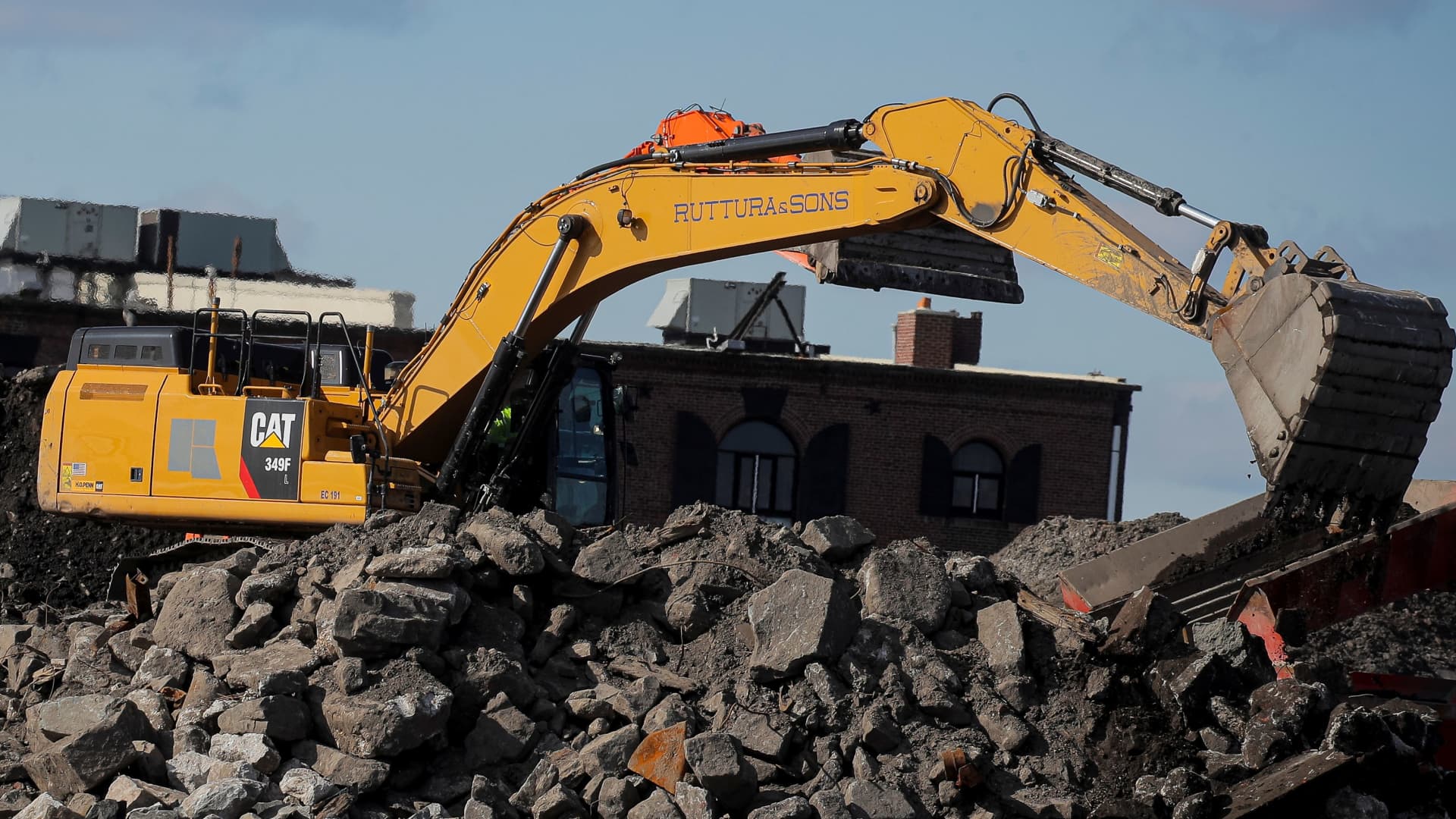
The S&P 500 industrials AI trade has pushed one of the market’s traditional sectors to a forward price-to-earnings ratio above 30, compared with a long-run average closer to 20, according to CNBC. The move reflects investor demand for companies tied to data centers, electricity infrastructure, aerospace and defense, giving industrials valuations more often associated with technology shares.
Cinthia Murphy, director of research at VettaFi, said on CNBC’s “ETF Edge” that the Industrial Select Sector SPDR ETF, known by its ticker XLI, is trading at elevated levels relative to the broader S&P 500. Murphy said the sector’s valuation is “as high as tech,” reflecting the attention it has drawn from investors.
Why are S&P 500 industrials rising with AI?
AI services require physical infrastructure: data centers, substations, power generation, backup equipment, fiber connections, construction machinery and energy-management systems. Industrial companies supply much of that equipment, so the buildout has broadened the AI trade beyond semiconductor and software firms.
Alphabet raised its 2026 capital expenditure forecast with its latest earnings report, CNBC reported, guiding to $195 billion to $205 billion for the year versus earlier guidance of $180 billion to $190 billion. The company also warned that spending could rise further in 2027.
McKinsey & Company has estimated that global data-center spending could approach $8 trillion by 2030, with most of the outlay going to infrastructure and IT equipment. Nvidia chief executive Jensen Huang wrote in a March blog post that “trillions of dollars of infrastructure still need to be built,” describing the AI buildout as becoming the largest infrastructure project in history.
The industrial impact is visible inside XLI. CNBC reported that machinery and electrical equipment companies account for 20.89% and 14.16% of the ETF’s holdings, respectively. Caterpillar, the fund’s largest holding, and GE Vernova, the third-largest industrials-index holding, are both up more than 50% this year. Caterpillar has risen nearly 160% over two years.
GE Vernova has benefited from orders linked to AI infrastructure, according to CNBC, although weakness in wind power weighed on its renewable energy business and contributed to a post-earnings selloff. The company reported a $176 billion business backlog at the end of the second quarter.
How are ETF flows reflecting the industrials rally?
Murphy said in an email to CNBC that more than 60 ETFs fall under the industrials category and have collectively attracted about $23 billion of net inflows year to date. She linked the demand to investor interest in AI infrastructure, aerospace and defense.
- iShares Defense Industrials Active ETF: $4.4 billion of year-to-date net flows, according to ETFdb.com data cited by CNBC.
- Industrial Select Sector SPDR ETF: $3.6 billion.
- Global X Defense Tech ETF: $2.6 billion.
- First Trust RBA American Industrial Renaissance ETF: $2.5 billion.
- Tema Space Innovators ETF: $2 billion.
Defense and aerospace are also supporting the sector. CNBC reported that aerospace and defense make up 25% of XLI’s allocation. Lockheed Martin, a top-20 holding in the industrials index, rose more than 10% after reporting quarterly earnings and revenue ahead of expectations. Lockheed and RTX, the fourth-largest XLI holding, are each up about 35% over the past year.
Jon Maier, J.P. Morgan’s chief ETF strategist, told CNBC that security and resilience are becoming more prominent as the economy digitizes, linking defense demand with AI infrastructure. He also said industrials flows have been strong at $17 billion, with 34% of the flows actively managed.
The rally has not been uniform across every industrial niche. CNBC reported that the Tema Space Innovators ETF, which had drawn $2 billion of year-to-date net flows, is down close to 20% over the past month.
This story draws on original reporting from CNBC.