SpaceX options stay call-heavy before Nasdaq-100 entry
ThinkOrSwim data showed heavy call demand in SpaceX options as the stock prepared to join the Nasdaq-100 with an expected weighting of about 1%.
By Sarah Jenkins · Chief Macro Economics Correspondent
· 3 min read
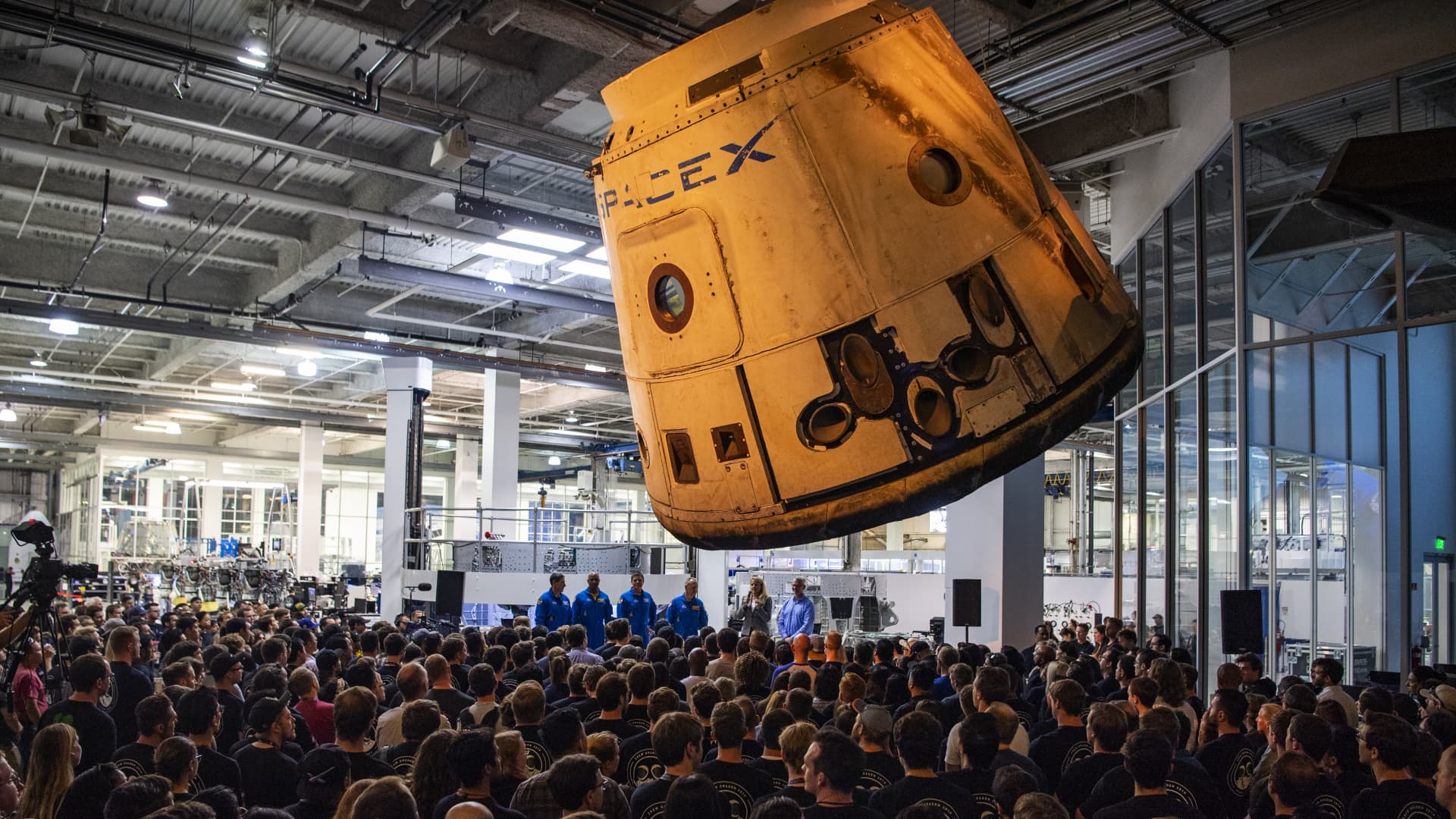
SpaceX options trading remained strongly tilted toward bullish contracts on Monday, a day before the stock’s accelerated addition to the Nasdaq-100, according to CNBC and ThinkOrSwim data. The company is expected to receive a weighting of roughly 1% in the technology-heavy benchmark, which underpins the Invesco QQQ fund with about $500 billion in assets, CNBC reported.
By midday Monday, about 500,000 SpaceX options contracts had changed hands, slightly below the stock’s average since options trading began but enough to rank it as the fifth-most active single stock in the options market, according to ThinkOrSwim data cited by CNBC. More than 300,000 call contracts traded, compared with fewer than 130,000 puts. The data also showed nearly five times as many calls bought as puts.
Call options give holders the right to buy shares at a preset price before expiration, while puts give holders the right to sell. Heavy call buying can signal demand for upside exposure, although options activity can also reflect hedging, income strategies or market-making flows rather than a single directional view.
The pattern echoes persistent activity in Tesla options, CNBC noted. Tesla, Elon Musk’s other trillion-dollar company, is routinely among the most heavily traded names in the U.S. options market.
Index impact expected to be limited
Nasdaq’s decision to include SpaceX could, in theory, add some volatility to the Nasdaq-100 because of the stock’s sharp trading swings, CNBC reported. The effect is expected to be limited by Nasdaq rules that cap the influence of companies with relatively low public float.
Float matters because index providers and passive funds track investable shares rather than a company’s total theoretical value. When a stock has a limited amount of freely tradable equity, index rules can restrict its weight, reducing the extent to which daily moves in that company affect the benchmark.
CNBC reported that SpaceX options had an implied volatility reading of 92, about 3.5 times the level of QQQ. Implied volatility reflects the options market’s estimate of how much a stock may move over a given period. Higher implied volatility generally makes options premiums more expensive, all else equal, because the chance of a large move increases the value of both calls and puts.
QQQ itself is trading with unusually high volatility relative to the S&P 500, at the widest comparison in almost 20 years, CNBC reported. Over time, broader ownership through index funds could reduce SpaceX volatility if long-term investors buy and hold the fund and its components. CNBC also noted a countervailing possibility: index investors may use SpaceX options to hedge the new exposure, supporting demand for puts.
High implied volatility can also draw call sellers seeking premium income, which may lift options volume. CNBC reported that strong demand for calls has persisted in several large winners during the bull market despite expensive premiums.
Short-dated calls dominate volume
SpaceX shares traded below $160 on Monday after a rebound on Thursday and an 8% decline last Wednesday, according to CNBC market data. The stock was quoted at $156.40, down $5.60, or 3.46%, at 2:27 p.m. EDT.
All of the 10 most active SpaceX options contracts by volume on Monday were calls, CNBC reported. The busiest contract was the July 17 call with a $450 strike price, which traded at 15 cents and would require a roughly 180% share-price increase by the end of next week to break even. Larger traders concentrated on the $180 strike call expiring Friday, according to CNBC.
This story draws on original reporting from CNBC.