SpaceX Starship test flight follows IPO as rocket deploys V3 satellites
SpaceX launched Starship’s 13th test flight from Texas, deploying 20 Starlink V3 satellites as investors track the rocket’s progress.
By Amanda Ross · Deals Correspondent
· 3 min read
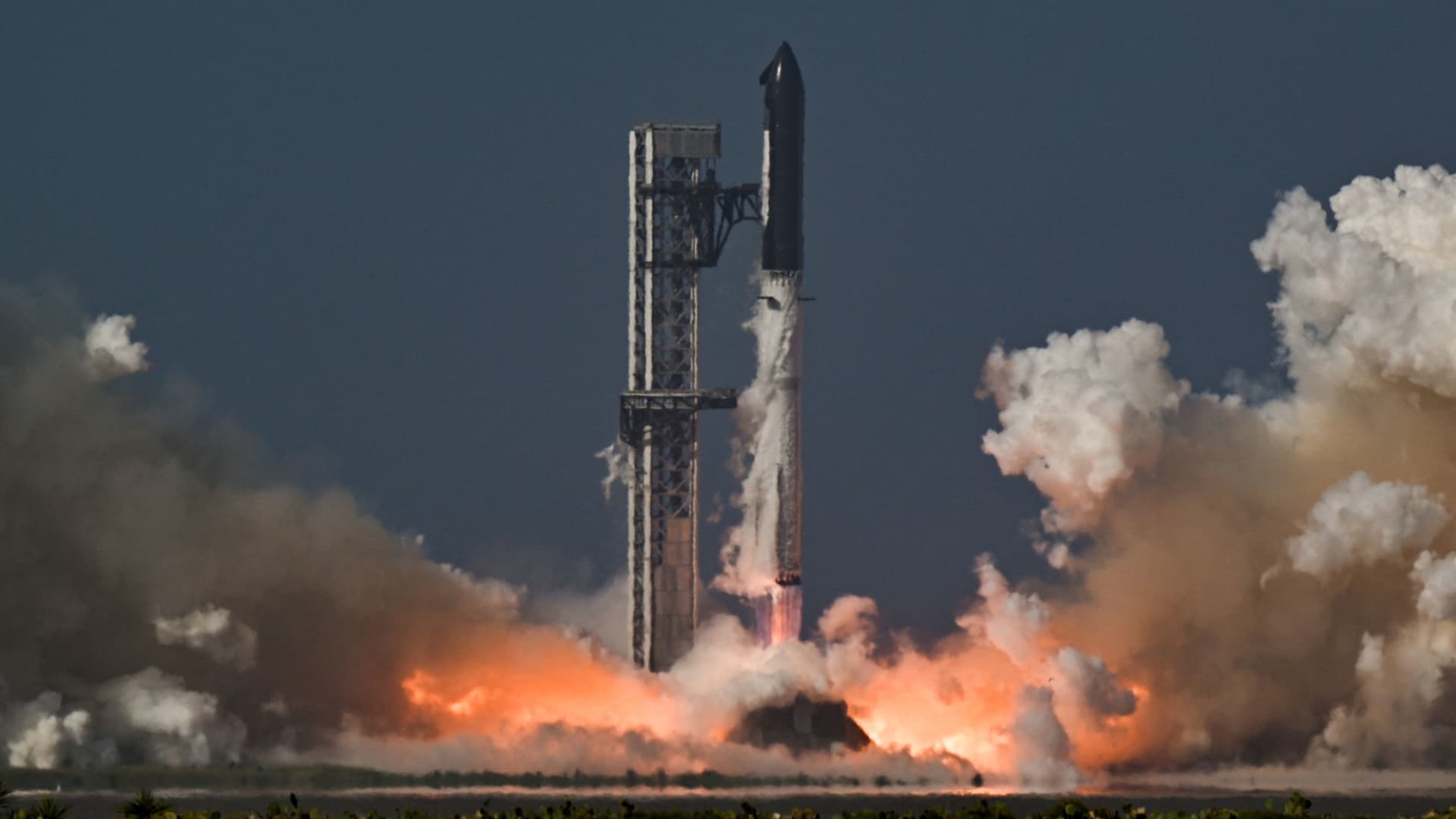
SpaceX launched a SpaceX Starship test flight from Starbase, Texas, on Friday evening, sending the company’s largest rocket system into its 13th trial mission after weather and technical delays, CNBC reported. The flight was the first since SpaceX’s record initial public offering last month and came as its shares have fallen 43% from a June 16 peak close, according to CNBC.
The Starship spacecraft and its Super Heavy booster lifted off from SpaceX’s company town and launch site in South Texas. About two minutes into flight, the booster separated from the upper-stage spacecraft and carried out a controlled splashdown in the Gulf, according to CNBC’s account of the mission.
SpaceX was aiming for a separate controlled splashdown by the Starship upper stage in the Indian Ocean. The company has designed Starship as a fully reusable launch system intended to carry more cargo to orbit at lower cost than conventional rockets, according to CNBC.
Why does Starship matter for SpaceX?
Starship is central to SpaceX’s plan to expand Starlink, its satellite internet network, because the vehicle is intended to lift larger payloads into orbit. Reusability is the mechanism SpaceX is pursuing to reduce launch costs: both the booster and spacecraft are meant to fly again after returning from missions, rather than being discarded after a single use.
About 18 minutes after liftoff, SpaceX began deploying 20 Starlink V3 satellites, CNBC reported. The mission gave the company its first in-flight test of the new satellite model, and all 20 were successfully released, with the satellites intended to leave orbit and burn up within roughly 20 minutes.
The Starlink V3 spacecraft are produced at a SpaceX facility in Redmond, Washington. A SpaceX business analyst said during the company’s livestream that the new satellites are larger and more powerful than earlier Starlink models, and that their solar arrays generate twice as much power as prior generations, CNBC reported.
Friday’s mission was also the second test flight of Starship V3, the latest version of the rocket. SpaceX is also developing Starmind satellites, which the company plans to launch and later use as orbital data centers, according to CNBC.
What delayed the launch?
SpaceX said in a post on X that a planned Thursday test flight was delayed because of weather. The company had earlier scrubbed a July 16 attempt after the booster triggered a hold and shut down its engines just as they were beginning to ignite, a SpaceX employee said during a livestream cited by CNBC.
Beyond Starlink, SpaceX is preparing Starship for NASA-related lunar work. The company wants to use the rocket to help return U.S. astronauts to the moon’s surface and, over a longer horizon, support crewed missions to Mars. SpaceX is preparing Starship for a major NASA test flight next year, CNBC reported.
Investors are tracking the test campaign because Starship’s development is tied to SpaceX’s ability to scale its satellite internet business and pursue government spaceflight contracts. CNBC reported that SpaceX shares have declined in four of the past five weeks, leaving the stock below its recent peak after the company’s public-market debut.
This story draws on original reporting from CNBC.


