Supreme Court approval poll falls to record low as GOP support drops
Gallup says 33% of Americans approve of the Supreme Court, with Republican support falling after rulings on Trump tariffs and citizenship.
By Amanda Ross · Deals Correspondent
· 3 min read
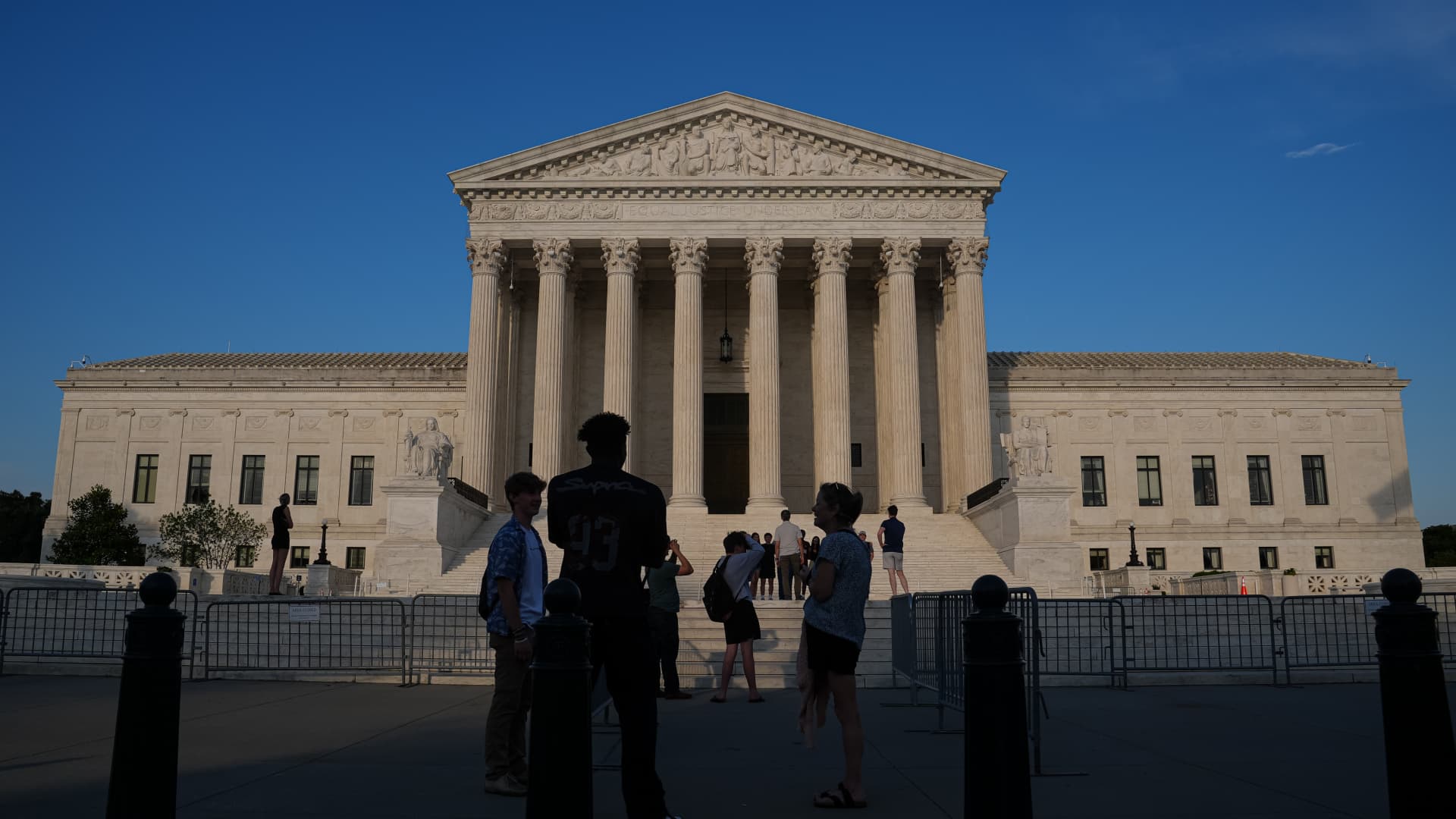
The latest Supreme Court approval poll from Gallup shows public support for the court at the lowest level in the firm’s 26-year trend, with 33% of Americans approving of its work. The decline follows a term that included decisions on tariffs, birthright citizenship, Federal Reserve governance and presidential control over independent agencies, issues with direct consequences for U.S. economic policy and executive power.
Gallup said 61% of Americans now disapprove of the court, also a record in its polling. The approval figure is down from 39% in July 2025, which had been the previous low, while disapproval is up from 52% last September.
The steepest recent shift came among Republicans. Gallup said Republican approval dropped to 58% from 79% in its prior measurement in September, leaving GOP support for the court at its lowest point in nearly three years.
Views among Democrats and independents changed little from September 2025, according to Gallup. The poll found 12% of Democrats and 35% of independents approve of the court’s performance.
Why did Supreme Court approval fall?
Gallup said the Republican decline may reflect conservative voters’ reaction to rulings that went against President Donald Trump’s administration, including cases involving tariffs and birthright citizenship. The polling firm said those losses may have carried more weight for Republicans than decisions in which Trump and the GOP prevailed.
In the term that recently ended, the court ruled that Trump lacked authority under the International Emergency Economic Powers Act to impose broad tariffs on imports from most countries. Tariff authority is closely watched by companies and governments because it affects import costs, supply chains and trade negotiations.
The justices also invalidated a Trump executive order that would have sharply limited the constitutional right to citizenship by birth. In another case, the court rejected Trump’s effort to remove Federal Reserve Governor Lisa Cook immediately while litigation over her dismissal continues.
Trump’s administration also secured notable victories. Gallup cited a ruling allowing a president to dismiss members of government agencies described as independent, a decision that bears on how much insulation regulators have from White House control.
How Gallup measured Supreme Court approval
Gallup said it surveyed 1,200 adults by telephone from July 1 through July 19. The poll has a margin of sampling error of 4 percentage points.
The firm asks Americans about the Supreme Court each July, after the court completes its term, and again in September, shortly before the justices begin hearing cases in October. That schedule makes the July reading a measure of public reaction after a full slate of major decisions.
Gallup noted that Democratic approval over the past five years ranks among the lowest readings for any party group in its Supreme Court trend. That period coincides with the court’s 6-3 conservative majority.
The figures point to broad distrust across the electorate, though for different reasons by party. Republicans remain more supportive of the court than Democrats, but their drop was large enough to push overall approval to a new low in Gallup’s series.
This story draws on original reporting from CNBC.