Trump EU tariff threat targets bloc over fines on U.S. tech companies
Trump said a U.S. trade probe into EU tech fines could lead to a substantial tariff on the 27-member bloc.
By Marcus V. Thorne · Markets Editor
· 3 min read
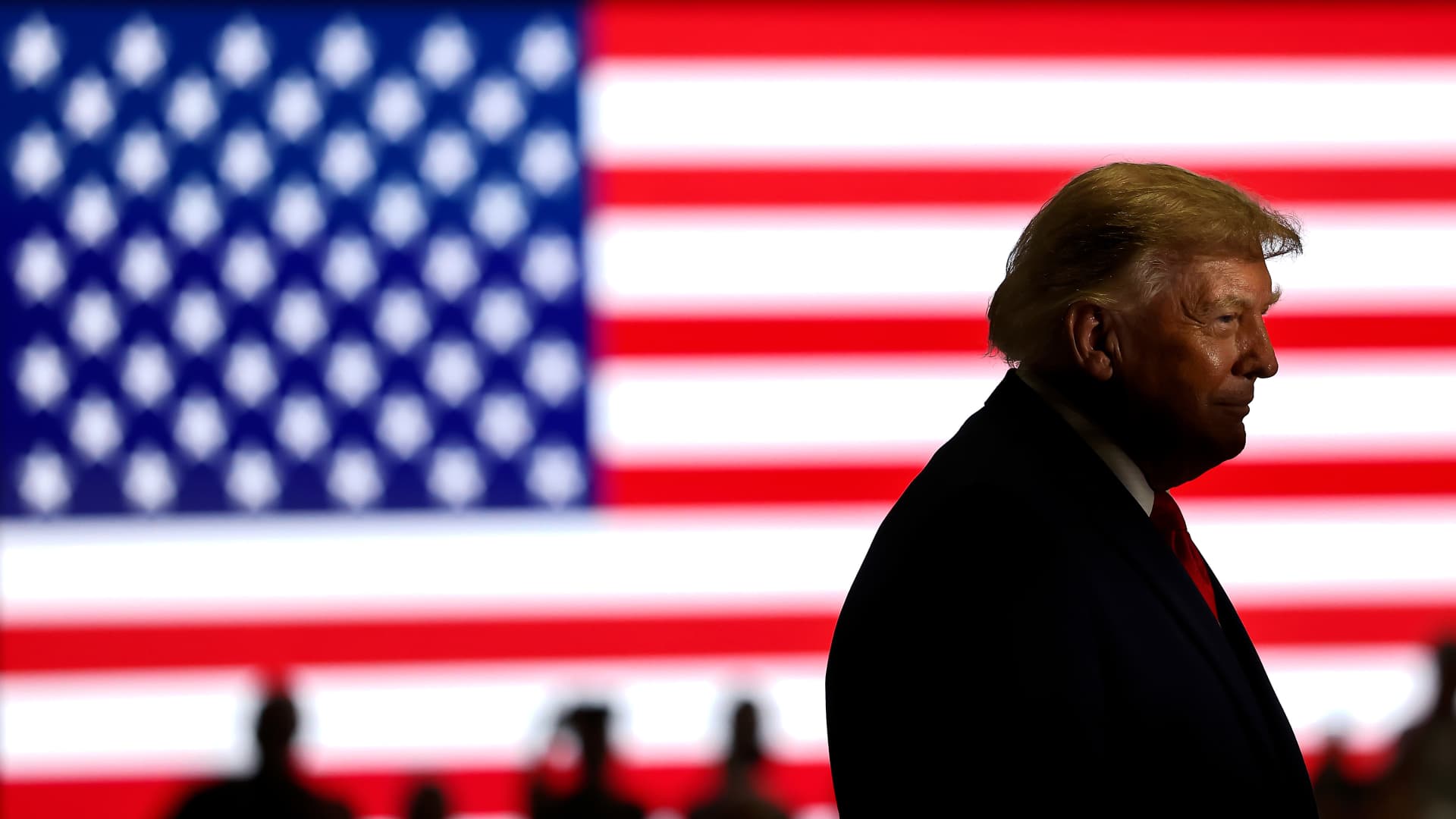
President Donald Trump said Friday his administration would open a trade investigation into the European Union over penalties imposed on U.S. technology companies, raising the prospect of a Trump EU tariff on the 27-member bloc. Trump said the probe would cancel large EU fines against American tech groups and would likely lead to what he called a “substantial” tariff.
Trump accused the EU of “robbing” U.S. technology companies, according to his statement. The remarks put digital regulation and transatlantic trade back at the center of U.S.-EU economic tensions, with potential implications for companies exposed to European enforcement actions and for importers that could face higher duties if tariffs are imposed.
Why is Trump threatening the EU with tariffs?
Trump linked the threatened tariff action to EU fines on U.S. technology companies. He said the planned trade probe would be used to cancel those fines and would probably result in a tariff against the EU, though no additional details were provided on the size, timing or legal route for such a measure.
A tariff is a tax on imported goods. Governments can use tariffs to raise revenue, protect domestic industries or apply pressure in trade disputes, but the immediate cost is generally borne by importers and can affect prices, margins or supply chains depending on how companies respond.
A trade probe is an administrative inquiry into whether another country’s rules or practices harm domestic commercial interests. Such investigations can provide a formal basis for negotiations, retaliatory tariffs or other trade measures, subject to the procedures used by the government conducting the inquiry.
Trump did not specify how a U.S. investigation would overturn fines imposed by EU authorities. The European Union has its own legal and regulatory processes, and the available account of Trump’s remarks did not include an EU response.
What is at stake for U.S.-EU trade?
The European Union is one of the world’s largest trading blocs, and a tariff threat against all 27 member states would carry broader economic significance than a dispute with a single national government. Any tariff action could affect companies that import EU goods into the United States, as well as firms whose operations depend on stable transatlantic rules.
The dispute also highlights the growing link between technology regulation and trade policy. European penalties against U.S. technology companies have become a recurring point of friction in transatlantic relations, while Washington has at times treated foreign regulation of American firms as a trade issue rather than only a competition or consumer-protection matter.
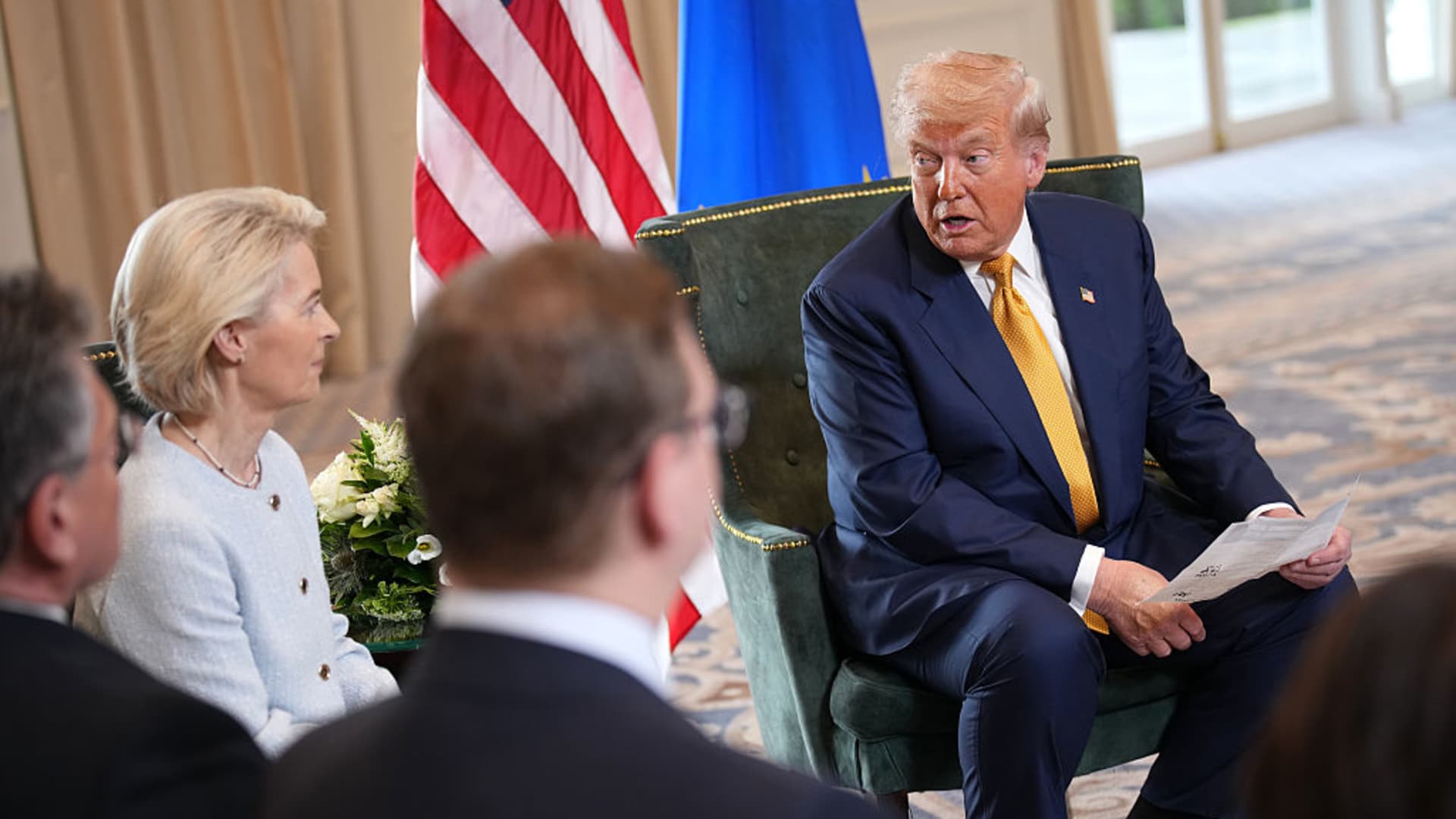
The warning came after Trump and European Commission President Ursula von der Leyen announced a U.S.-EU trade deal at Trump Turnberry in Scotland on July 27, 2025, according to a Getty Images caption accompanying coverage of the episode. Friday’s comments suggest that enforcement actions against U.S. technology companies remain a potential flashpoint despite prior efforts to frame the commercial relationship through negotiated agreements.
Further details on the planned investigation, including which U.S. agency would lead it, which EU penalties it would target and when any tariff decision could be made, were not included in the initial account. Until those details are released, the immediate market relevance rests on the prospect of a new trade dispute involving U.S. technology companies and the EU’s regulatory regime.
This story draws on original reporting from CNBC.