Trump investment portfolio tied to JPMorgan, Schwab, UBS and Stephens
CNBC traced at least four of Donald Trump’s eight investment accounts to major financial firms, with disclosed assets of at least $858 million.
By Marcus V. Thorne · Markets Editor
· 4 min read
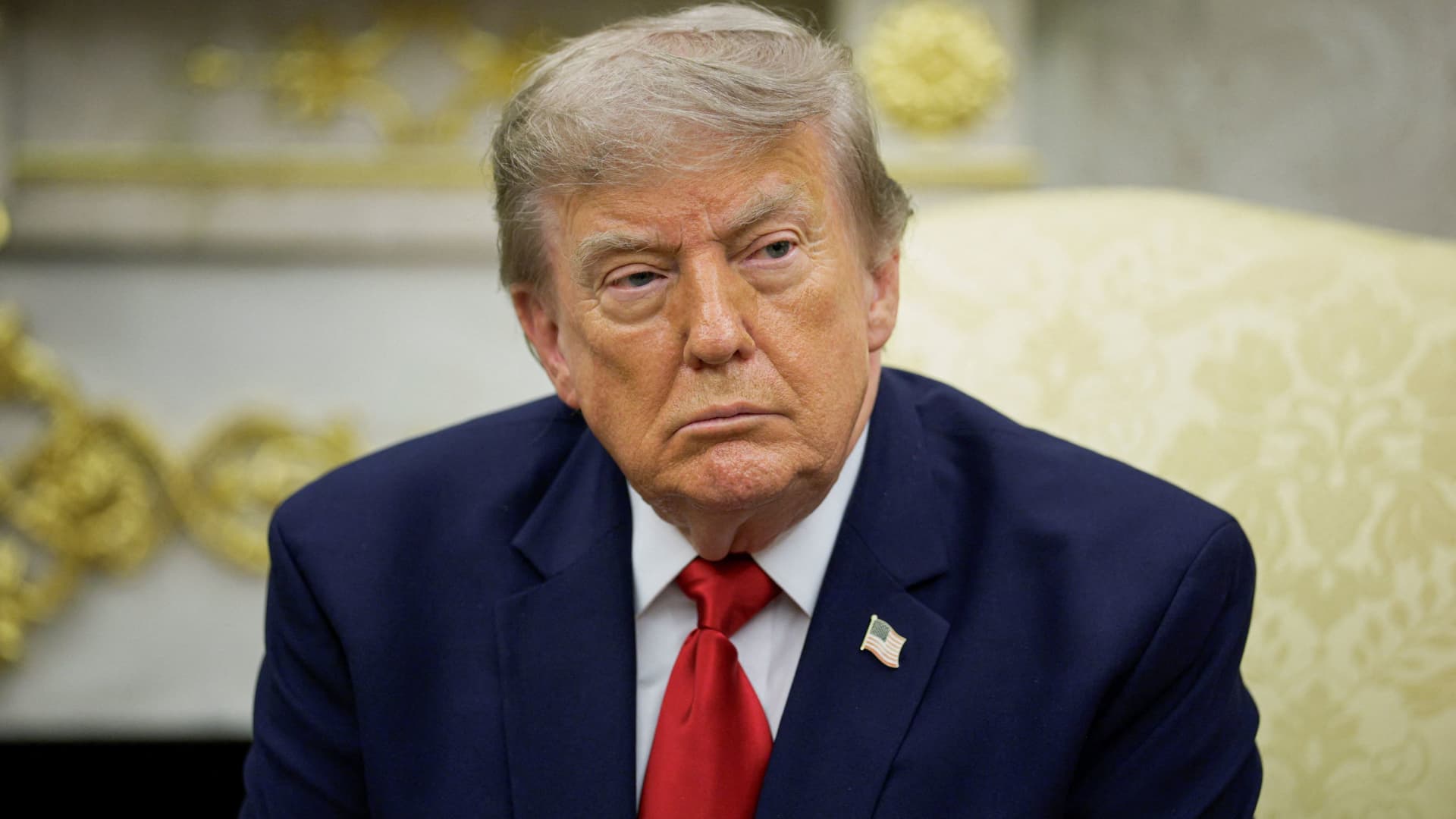
Donald Trump’s investment portfolio included at least $858 million in disclosed assets and more than 21,000 trades in 2025, CNBC reported after reviewing his annual financial disclosure filed with the Office of Government Ethics. The analysis linked JPMorgan Chase, Charles Schwab, UBS and Stephens Inc. to at least four of the president’s eight numbered investment accounts, sharpening public scrutiny of how major financial firms handle the personal wealth of a sitting president.
CNBC said it connected the firms to the accounts through firm-specific funds, deposit programs and credit arrangements listed in the disclosure. Three financial-industry experts, speaking anonymously to CNBC because of the sensitivity of the holdings, reviewed the material separately and corroborated the findings, the network reported.
The disclosure does not consistently state whether each firm acted as manager, broker, custodian or in another role. CNBC said it found no evidence that the relationships affected government action or that Trump personally ordered any individual transaction.
Who manages Trump's investment portfolio?
CNBC linked JPMorgan Chase, Charles Schwab, UBS and Stephens to Account Nos. 3, 5, 6 and 8. The Wall Street Journal reported that Schwab manages Account No. 7, though CNBC said it had not independently confirmed that relationship.
Across the accounts identified by CNBC, Schwab appeared to have the largest role by account value and trading volume. CNBC tied Schwab to Account No. 6, which held at least $163 million. The Journal reported that Account No. 7 held about $302 million, and Trump’s disclosure showed that account generated 10,311 trades in 2025, nearly half the total.
Schwab spokesperson Mayura Hooper told CNBC the firm has strict policies on client privacy and does not comment on current or former clients. UBS told CNBC it had no comment on client matters. JPMorgan did not respond to CNBC’s detailed requests, while Stephens declined to comment, CNBC reported.
Trump’s disclosure also showed that Schwab extended a pledged-asset line of credit of more than $50 million to his trust. Such credit lines let borrowers borrow against securities without selling them, and the proceeds generally cannot be used to buy more securities, CNBC reported.
How are the trades controlled?
The Trump Organization told CNBC that outside financial institutions, not Trump, made the individual investment decisions. A spokesperson said the assets were placed in fully discretionary accounts and relied heavily on automated strategies intended to reduce potential conflicts.
Trump told CNBC on July 2 that his children run the trust and that he lets outside people invest the money without speaking to them. Eric Trump wrote on X in May that the financial firms have sole authority over investment decisions, including asset allocation, trading, rebalancing and portfolio management.
The Trump Organization said the portfolio relies heavily on direct indexing. In that strategy, an investor owns individual stocks chosen to track a benchmark such as the S&P 500, rather than buying a single index fund. Software can rebalance holdings and sell declining stocks to realize tax losses while maintaining broad market exposure.
Larry Harris, a former chief economist at the Securities and Exchange Commission and now a finance professor at the University of Southern California, told CNBC that this kind of computer-driven trading can explain high transaction counts in large portfolios. Harris also said Schwab would not be an unusual choice for an ultrawealthy investor.
What are the ethics and compliance issues?
Much of Trump’s wealth remains in a revocable trust for which he is the sole beneficiary, according to SEC filings cited by CNBC. Donald Trump Jr. serves as trustee and holds sole voting power over certain assets, according to an SEC filing. A revocable trust can generally be changed or dissolved by its creator, while a blind trust used under federal ethics rules must be controlled by an independent trustee and sharply limit communications with the beneficiary.
The White House rejected conflict concerns. “There are no conflicts of interest,” spokesperson Anna Kelly told CNBC.
Ross Delston, a former FDIC banking regulator and anti-money-laundering lawyer, told CNBC that institutions handling a sitting president’s money face elevated compliance and reputational risks because a president has broad influence over banking policy and regulation. He said banks would generally treat a sitting president as a politically exposed person, requiring enhanced scrutiny and ongoing monitoring for suspicious activity.
CNBC said it could not determine how much the firms earned from Trump’s accounts.
This story draws on original reporting from CNBC.