Trump tariffs lawsuit challenges new Section 301 duties
Two small businesses sued after new Trump tariffs hit imports from more than 80 countries, setting up another test of trade powers.
By Amanda Ross · Deals Correspondent
· 4 min read
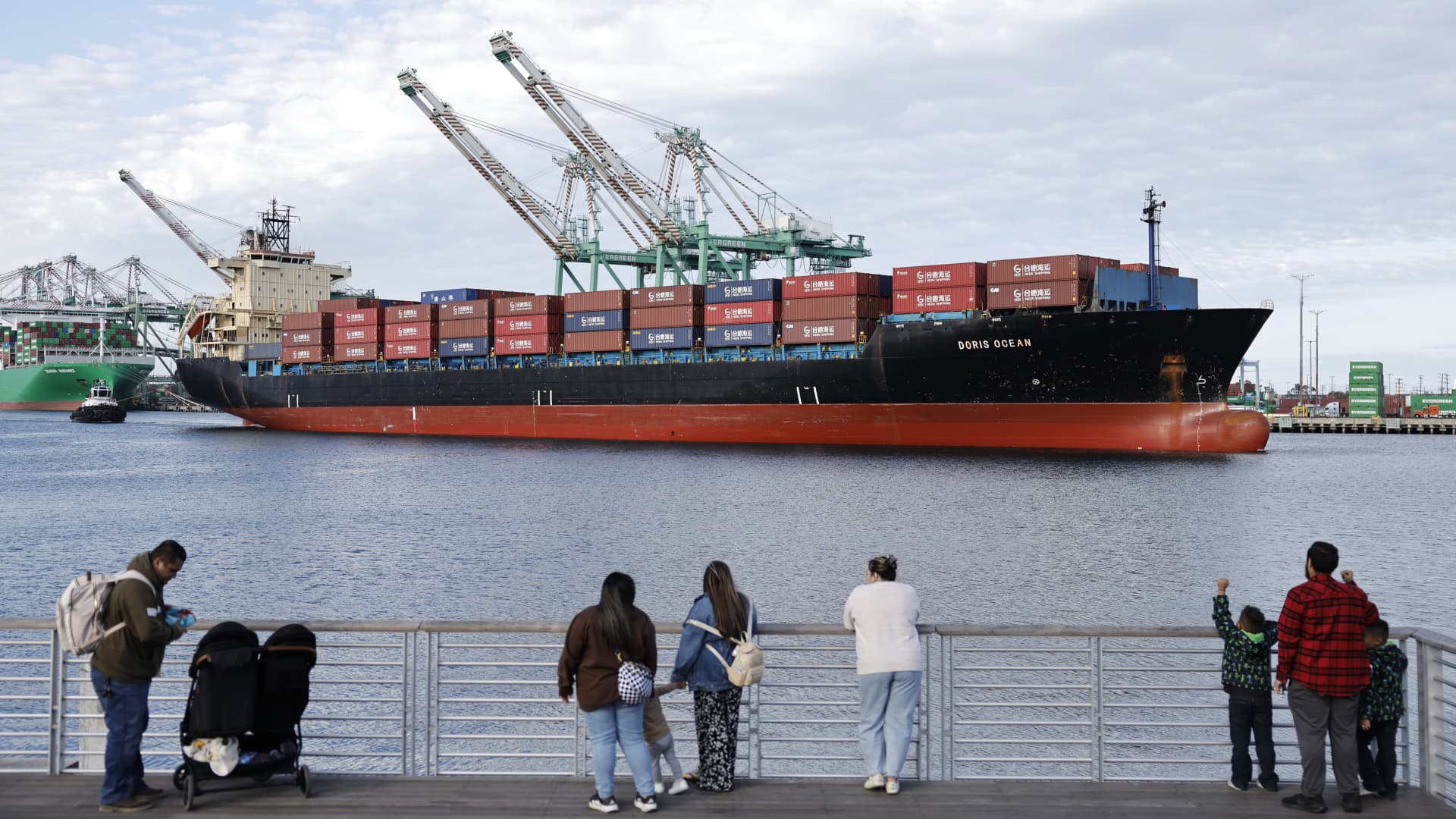
A Trump tariffs lawsuit was filed hours after the administration imposed new duties on goods from more than 80 countries, creating fresh legal uncertainty for importers exposed to higher border costs. The tariffs cover trading partners representing 99.4% of U.S. trade, according to the administration’s action, and were justified as a response to alleged failures to curb forced labor practices.
The duties were imposed under Section 301 of the Trade Act of 1974, a statute that allows Washington to respond to unfair foreign trade practices with measures including tariffs. The law has been used by several administrations and was a central tool in President Donald Trump’s first-term tariff campaign against China.
What is the Trump tariffs lawsuit about?
Two small businesses sued Trump and his administration in the U.S. Court of International Trade, arguing that the government is using Section 301 to recreate a broad global tariff program that courts previously rejected. The case was brought by the Liberty Justice Center, the legal nonprofit that represented plaintiffs in the successful challenge to Trump’s use of the International Emergency Economic Powers Act, or IEEPA, for earlier global tariffs.
The complaint says the new duties are presented as a forced-labor measure but are designed to preserve substantially the same tariff structure that the Court of International Trade and the Supreme Court held Congress had not authorized. It argues that Section 301 does not give the president open-ended authority to tax most imports from most trading partners at rates chosen to mirror the invalidated IEEPA program.
The lawsuit notes that the Section 301 tariffs began as another set of duties expired. Those earlier tariffs were imposed under Section 122 of the 1974 trade law after the Supreme Court struck down Trump’s global IEEPA tariffs on Feb. 20, and that authority carried a fixed end date.
How Section 301 works
Section 301 allows the U.S. trade representative to investigate foreign acts, policies or practices and, if they are found to burden U.S. commerce, recommend trade responses. The mechanism is more targeted than a general tariff schedule: it is meant to link a U.S. response to an identified foreign practice.
Peter Harrell, a visiting scholar at Georgetown University Law Center’s Institute of International Economic Law, told CNBC that Trump is using the statute in a substantially different manner from its intended role. Harrell said Section 301 was not designed to let a president broadly rewrite tariff rates across the world, and said the new approach could be struck down in court.
The administration disputes the view that the duties are an attempt to revive Trump’s earlier “liberation day” tariffs. A senior administration official told reporters that combating forced labor has been a priority for Trump for years, and said the timing was chosen to avoid complexity. A spokesperson for the Office of the U.S. Trade Representative did not immediately respond to CNBC’s request for comment on the lawsuit.
Legal views are split
Kimberly Clausing, a UCLA School of Law tax professor and senior fellow at the Peterson Institute for International Economics, told CNBC by email that she views the Section 301 tariffs as clearly unlawful. She said the forced-labor rationale is a pretext for recreating the IEEPA tariff regime and said she sees no evidence linking this type of measure to the stated policy goal.
Alan Wolff, another Peterson Institute senior fellow, wrote in a blog post that the Supreme Court would likely reject the forced-labor tariffs. He said Section 301 requires a finding that a country’s practices burden U.S. commerce, and that requirement is not clearly met for the targeted countries, which he said account for nearly all U.S. imports and 90% of world trade.
Other trade lawyers see a more difficult challenge. Greta Peisch, a former general counsel for the Office of the U.S. Trade Representative and a partner at Wiley Rein, told CNBC that the administration has followed Section 301 procedures and that the statute gives the government significant flexibility. Andrew Siciliano, global and U.S. head of trade and customs at KPMG, told CNBC that Section 301’s long record may make the new tariffs harder to unwind, meaning companies may need to account for the duties now in effect while the litigation proceeds.
This story draws on original reporting from CNBC.