Trump backs Warsh while pressing Fed for lower interest rates
Trump praised Fed Chair Kevin Warsh and said rates should fall, days before a decision that markets expect will keep policy on hold.
By Amanda Ross · Deals Correspondent
· 3 min read
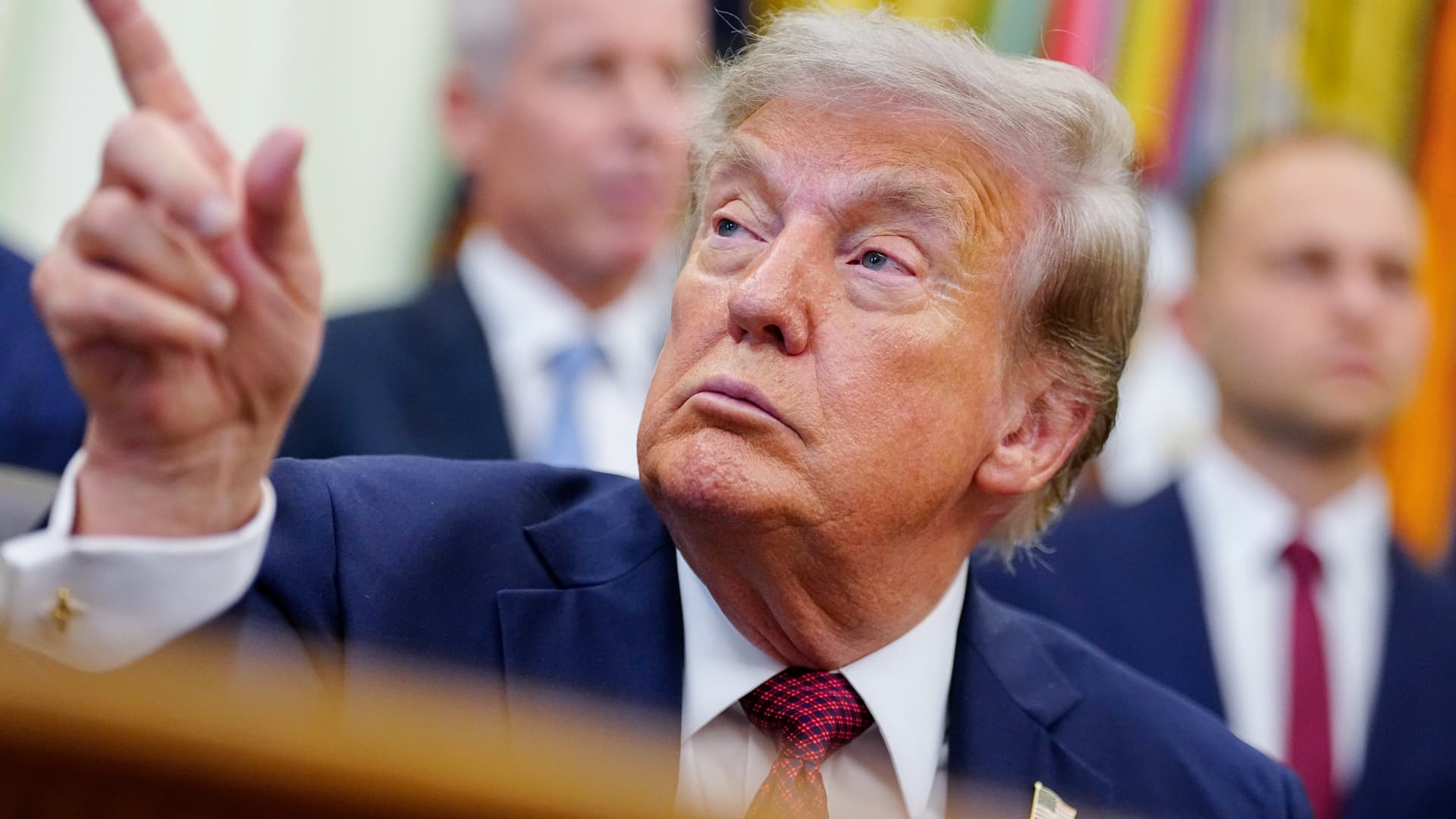
President Donald Trump’s remarks on Warsh and interest rates put fresh political pressure on the Federal Reserve two days before its next policy decision, as he praised Fed Chairman Kevin Warsh and argued the U.S. should have the world’s lowest borrowing costs. The central bank’s benchmark overnight rate is currently set at 3.5% to 3.75%, according to CNBC.
Speaking to reporters aboard Air Force One on Monday, Trump said Warsh was “fantastic” while criticizing other Fed officials as political. “He wants to do the right thing. I know what he wants to do,” Trump said, according to CNBC.
The comments came ahead of the Federal Open Market Committee’s next rate announcement. The FOMC sets the target range for the Fed’s benchmark overnight borrowing rate, a policy lever closely watched by markets because it anchors short-term funding costs across the financial system.
Markets expect the Fed to leave rates unchanged, according to CME Group’s FedWatch tool cited by CNBC. The same gauge shows traders are still assigning roughly a one-in-three chance to a quarter-percentage-point increase.
What did Trump say about Warsh and interest rates?
Trump said Warsh was constrained by other Fed officials, whom he accused of having possible ulterior motives. “You need the consent of some people that have perhaps bad intentions. Rates should be lowered,” Trump said, according to CNBC.
Trump also said the U.S. economy could grow at annual rates of 8%, 9%, 10% or 12%, and argued that the country should have “the lowest interest rate in the world,” as he said it did 30 years ago.
The president’s criticism placed Warsh apart from other Fed policymakers in Trump’s account. CNBC reported that Trump said the Fed board members were “very political,” while saying Warsh wanted to act correctly.
Why is the Fed divided on rates?
Several Fed officials have recently expressed concern that inflation remains too high, CNBC reported. Dallas Fed President Lorie Logan, who is a voting member of the FOMC this year, has called for tighter policy and said benchmark rates should be “modestly higher.”
That position contrasts with Trump’s call for lower rates. Higher rates are used to restrain borrowing and demand when inflation is a concern, while lower rates reduce the cost of short-term money and can support credit activity. The Fed’s decision this week will show whether policymakers are prepared to hold steady again or respond to inflation concerns with another increase.
The current target range has been in place since the Fed reduced rates by three-quarters of a percentage point in the second half of 2025, according to CNBC. The central bank has kept rates on hold throughout this year.
By international comparison, the U.S. rate range is roughly in line with the Bank of England’s policy setting, CNBC reported. It remains above the European Central Bank’s 2.25% rate, Japan’s 1% rate and China’s 3% rate.
For investors and businesses, the decision will matter less for any single political comment than for what it signals about the Fed’s inflation assessment and tolerance for tighter financial conditions. CME pricing cited by CNBC indicates markets see a hold as the more likely outcome, while leaving room for a rate increase if policymakers judge inflation pressures to be persistent.
This story draws on original reporting from CNBC.