TSMC’s US expansion pressures margins as Washington pushes local chip output
The Taiwanese foundry has pledged $200 billion to US manufacturing as higher overseas fab costs begin to weigh on its margin outlook.
By Sarah Jenkins · Chief Macro Economics Correspondent
· 3 min read
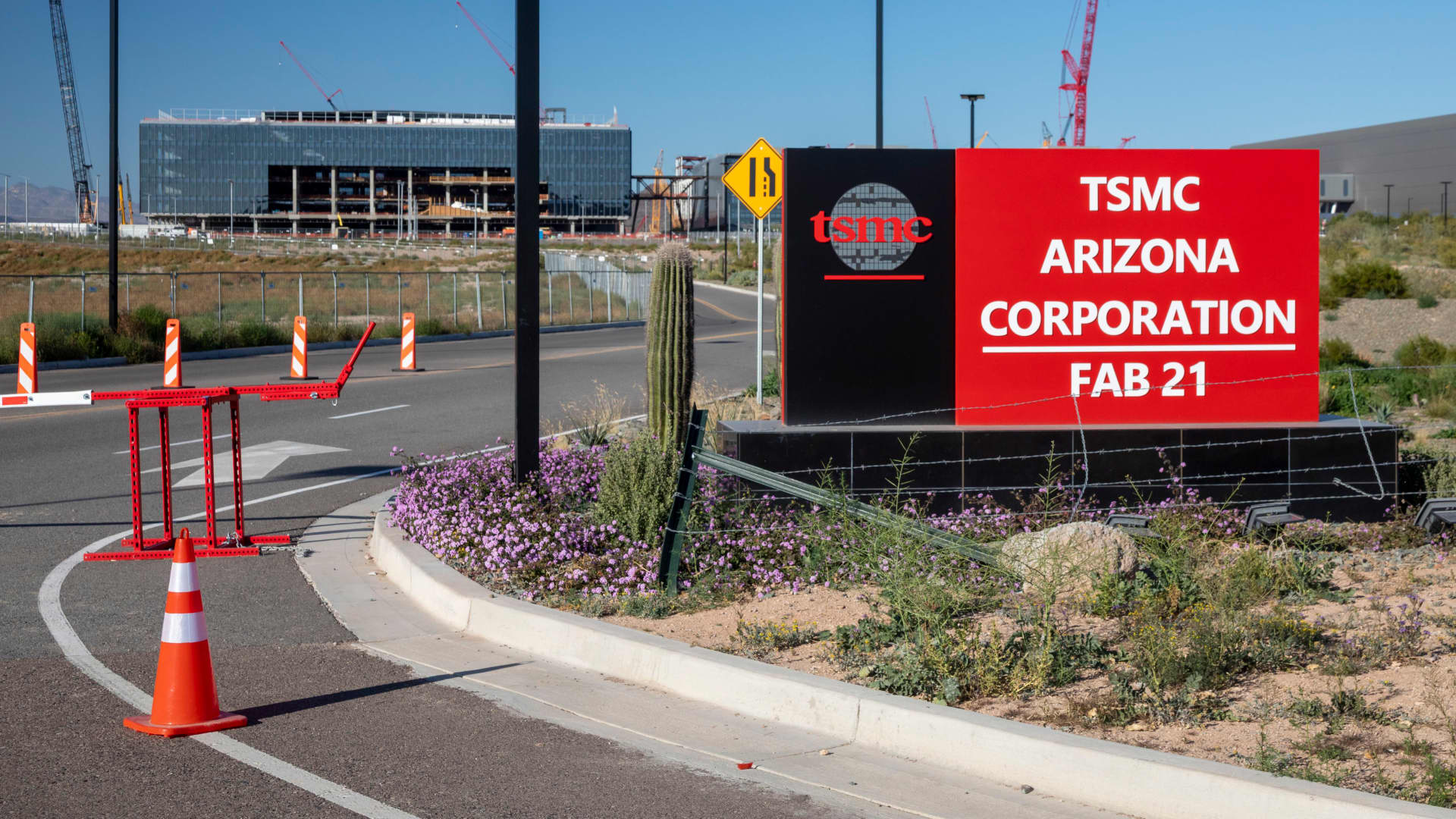
Taiwan Semiconductor Manufacturing Co. is absorbing higher costs from its US manufacturing buildout, with management saying overseas fabs will dilute margins for several years. The pressure comes as President Donald Trump pushes advanced chip production onto American soil and threatens tariffs on companies that keep manufacturing offshore.
TSMC has announced $200 billion of US commitments since Trump returned to office in 2025, including a $100 billion plan disclosed last week for advanced semiconductor manufacturing and packaging facilities in the country. The company remains supported by demand tied to artificial intelligence, and CNBC reported that its market value has more than doubled over the past 12 months.
The Taiwan-based group reported a 77.4% year-on-year increase in second-quarter profit, beating estimates and setting another quarterly record for the world’s largest contract chipmaker. Chief Financial Officer Wendell Huang said on an earnings call that gross margin came in above the company’s guidance, but overseas fabrication plants reduced the benefit.
Huang said the margin impact will continue as non-Taiwan projects scale up. He estimated gross margin dilution from the ramp-up of overseas fabs at 2% to 3% in the early stages over the next several years, widening to 3% to 4% in later stages. TSMC’s second-quarter gross margin was 67.7%, compared with 66.2% in the first quarter.
Policy pressure and customer demand
Trump has repeatedly used tariff threats to press companies to make products in the United States. A White House spokesperson told CNBC that “trillions of dollars in investments by TSMC and other semiconductor companies are a result of President Trump’s trade and economic policy,” citing a trade deal with Taiwan and changes to CHIPS program investments.
Commerce Secretary Howard Lutnick said in a statement that “President Trump’s leadership is driving companies to invest in American manufacturing.” He added that TSMC’s latest $100 billion commitment would create tens of thousands of US jobs and bring advanced semiconductor manufacturing back to the country.
TSMC executives have also pointed to demand from customers. Huang told CNBC the company sees a “multi-year demand mega trend” from clients, particularly as AI computing drives orders for advanced chips. Other Asian chipmakers, including SK Hynix, are also building US facilities, but TSMC’s stated US commitment is the largest cited by CNBC.
Cost gap for US production
Building chips in the United States is more expensive than producing them in Taiwan, analysts told CNBC. Phelix Lee, senior equity analyst at Morningstar, estimated that TSMC chips made in the US would cost 20% to 50% more than those made in Taiwan, depending on the timing of subsidies, tax credit recognition and other cost changes. Lee said he expected customers to take on more of those higher production costs.
Nikkei reported Tuesday that TSMC is set to raise prices by up to 10% in 2027 for both advanced and mature chip production. TSMC told CNBC it does not comment on pricing.
Gaurav Gupta, a vice president analyst at Gartner, told CNBC that TSMC’s position in leading-edge chip manufacturing gives it room to pass on some costs. Gupta said a large share of higher expenses would likely be borne by clients seeking more geographic diversification or responding to US government requirements to buy locally produced chips.
Gil Luria, head of technology research at D.A. Davidson, told CNBC that TSMC can absorb the margin difference because its overall profitability remains high. Lee of Morningstar said customer interest in geographic diversification increased after Covid-related supply chain disruptions, and he expects pressure for US-made chips to continue beyond the Trump administration, though the balance of incentives and penalties remains unclear.
This story draws on original reporting from CNBC.