United beats quarterly estimates as fuel bill pressures outlook
United reported stronger-than-expected second-quarter profit and revenue, while warning that fuel may add nearly $6 billion to 2026 costs.
By Marcus V. Thorne · Markets Editor
· 3 min read
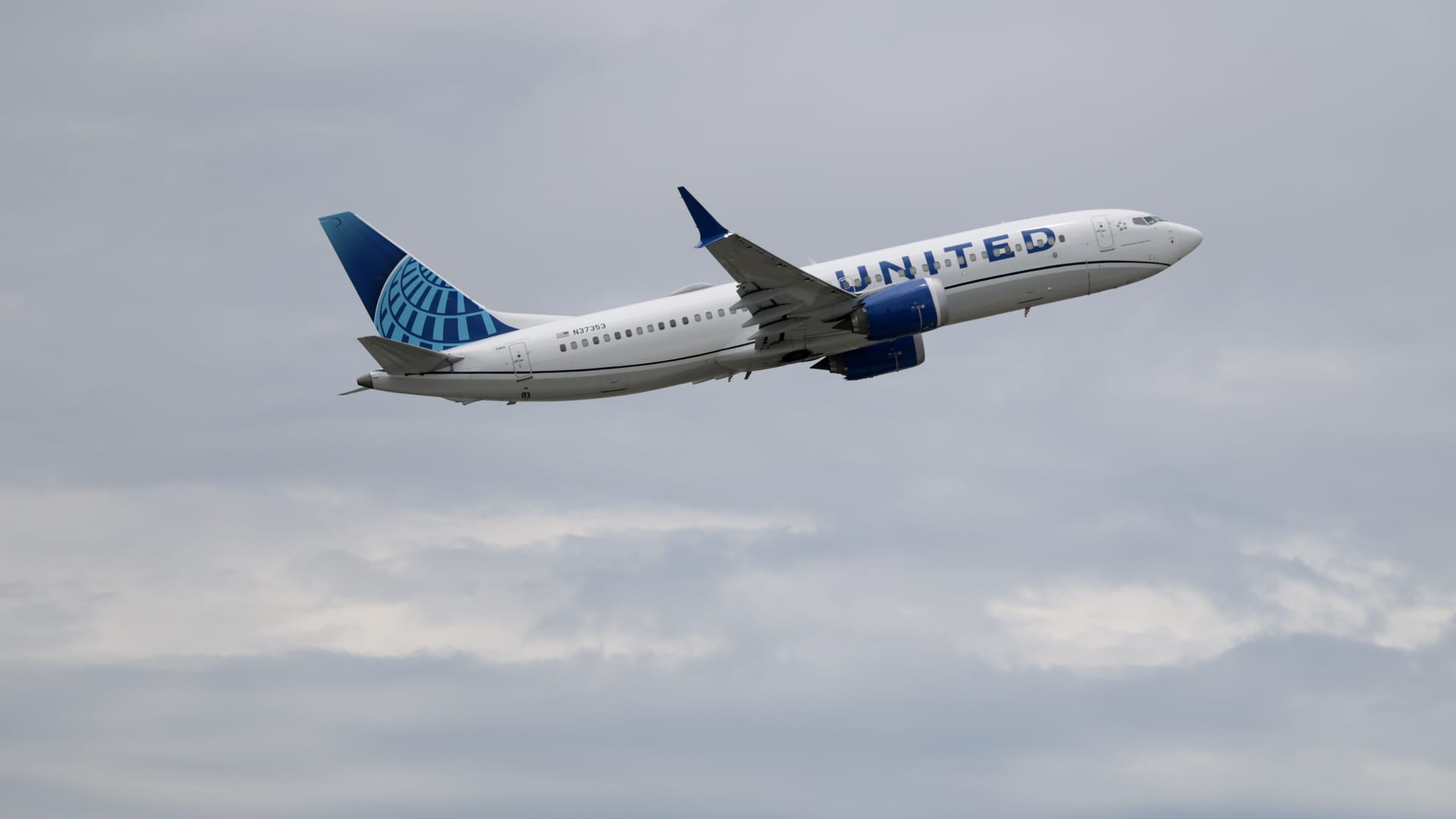
United Airlines beat Wall Street’s second-quarter expectations, reporting adjusted earnings of $1.99 a share on revenue of $17.67 billion, according to figures the carrier released Wednesday and LSEG estimates cited by CNBC. The carrier also said jet fuel could add nearly $6 billion to its 2026 expenses compared with its assumptions at the start of the year, a cost shock that is weighing on its earnings outlook.
Analysts had expected adjusted earnings of $1.88 a share and revenue of $17.61 billion, based on LSEG estimates. United’s revenue rose 16% from a year earlier, while net income fell more than 17% to $805 million, or $2.46 a share. Excluding one-time items, the airline reported adjusted net income of $649 million.
United projected third-quarter adjusted earnings of $2.50 to $3.50 a share, below analysts’ estimate of $3.60 a share. For the full year, it forecast adjusted earnings of $9 to $11 a share, placing its latest guidance at the upper end of the $7 to $11 range it issued in April, when it lowered a January forecast after the U.S. and Israel attacked Iran in late February.
Fuel costs reset the earnings math
Jet fuel prices at major U.S. airports have risen 34% in July through Tuesday, according to Argus data published by Airlines for America and cited by CNBC. The increase has come amid recurring escalation and de-escalation in the conflict between the U.S. and Iran.
Fuel is typically an airline’s largest expense after labor. When fuel prices rise, carriers can try to offset the increase through higher fares, reduced flying, operational efficiencies or a combination of those measures. The ability to recover higher costs depends on whether passengers continue buying tickets at higher prices and whether competitors follow similar pricing moves.
United said its second-quarter fuel expense rose 84% from a year earlier to $2.3 billion. The company said its estimates were based on Tuesday’s fuel prices and that fuel moves since the start of July had reduced third-quarter adjusted earnings by $1.12 a share.
The airline said customers have continued to book despite higher fares. United said it expects to cover as much as 90% of the higher costs in the current quarter and all of them in the fourth quarter. Delta Air Lines has also said it is passing more fuel costs on to passengers, according to CNBC, and both carriers said demand has remained strong.
Capacity may be adjusted
United said in a filing that it could further reduce capacity plans this year because of higher fuel prices. Capacity measures how many seats an airline offers across its network, typically adjusted for distance flown. Cutting planned capacity can help an airline avoid adding flights that would be less profitable under higher fuel costs.
In the second quarter, United increased flying by 3.5%. Total unit revenue rose 12.1% from a year earlier, which FactSet data cited by CNBC showed was the carrier’s strongest unit revenue growth since early 2023. Unit revenue is a closely watched industry measure because it captures the revenue generated for each seat flown over a mile, reflecting both fares and how full planes are.
United said revenue improved across premium cabins, corporate travel and basic economy tickets. The airline also reported higher unit revenue for both domestic and international routes.
United executives are scheduled to discuss the results on an earnings call Thursday at 10:30 a.m. ET.
This story draws on original reporting from CNBC.


