U.S.-China AI debate moves to diplomacy as Trump plans Xi talks
Trump plans to discuss AI with Xi in September as Chinese open-source models test U.S. policy and startup dependence.
By Sarah Jenkins · Chief Macro Economics Correspondent
· 4 min read
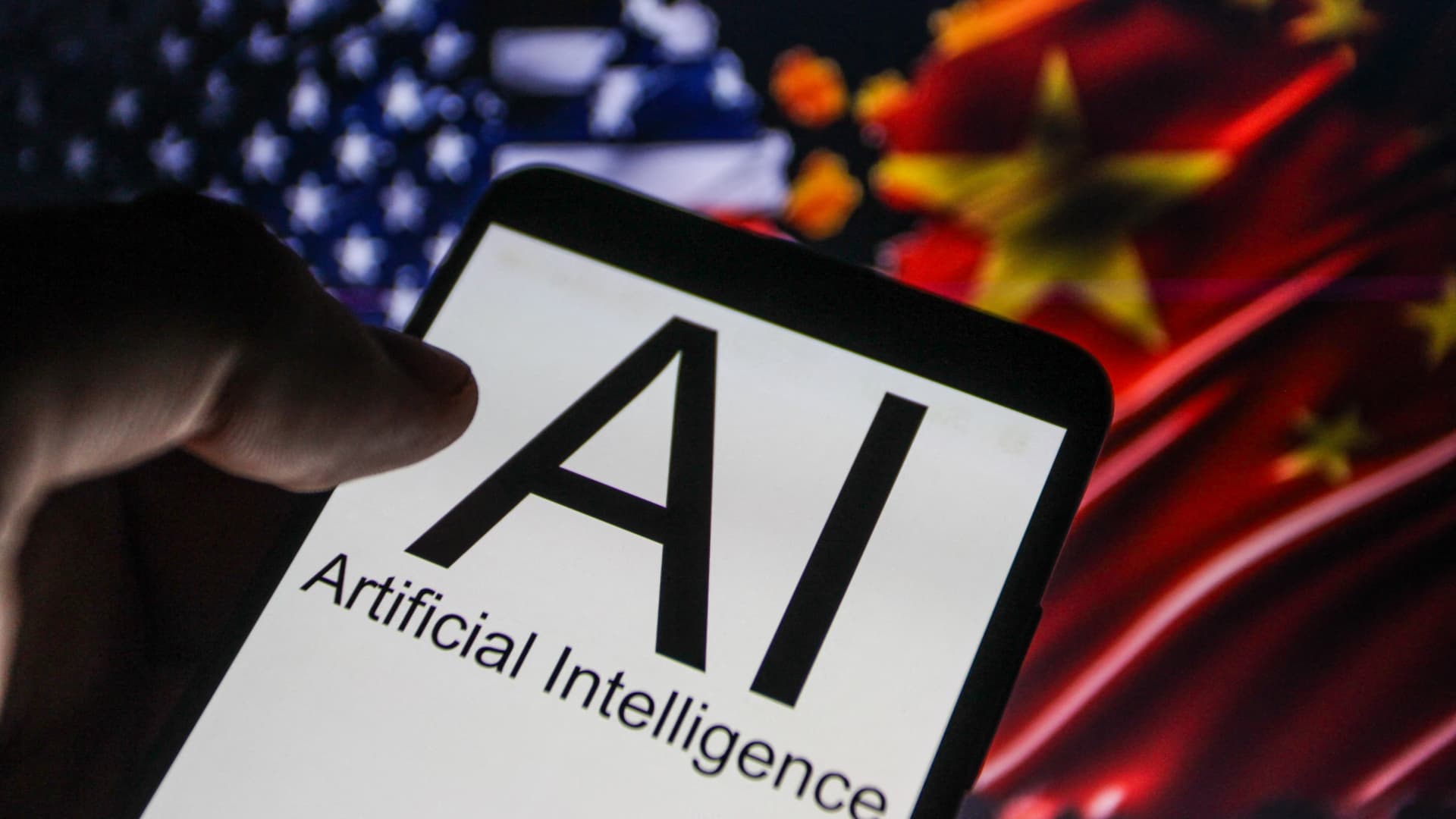
The U.S.-China AI debate is moving from export controls into diplomacy, with President Donald Trump saying he expects to raise artificial intelligence with Chinese President Xi Jinping during a U.S. visit in late September. The talks would come as Chinese model releases gain users abroad, while U.S. restrictions on advanced chips continue to limit China’s computing capacity.
China’s AI position drew new attention after Xi delivered a speech on the technology on July 17 and Moonshot AI released Kimi K3, a model described by CNBC as a rival to Anthropic’s Claude Fable 5. The release was followed by U.S. government pushback against Chinese open-source models and an open letter on Friday from Nvidia Chief Executive Jensen Huang and more than 20 technology companies warning against “premature restrictions,” according to CNBC.
Ryan Fedasiuk, a fellow at the American Enterprise Institute, told CNBC that Kimi K3 had triggered a significant Washington debate over how to treat Chinese open-weight models. Open-weight models make core model parameters available for others to use or adapt, which can speed adoption but also raises security and control questions for policymakers.
China’s foreign ministry said Beijing was ready to work with Washington on AI after Trump’s comments, according to CNBC. Lex Zhao, a Chinese-born venture capitalist and Boston-based managing partner at One Way Ventures, told CNBC that the outcome of U.S.-China cooperation or confrontation on AI would be “very consequential.” Zhao, who oversees $150 million in assets, said many U.S. startups already use Chinese AI models and that portfolio companies at his firm build on them.
Why is the U.S.-China AI debate getting bigger than tariffs?
AI is becoming a strategic issue because the technology affects software, cybersecurity, data centers and influence abroad, rather than only the cost of goods moving across borders. CNBC reported that Beijing increasingly views AI as a tool of foreign engagement, after China hosted both the World AI Conference in Shanghai and APEC Digital Weeks in Chengdu this month.
George Chen, partner and chair of digital practice at The Asia Group, attended both events and told CNBC that Beijing sees AI as “a new kind of diplomacy to grab more allies and partners.” He said a September Trump-Xi meeting in Washington would give the two leaders their first opportunity to address AI diplomacy directly.
Chinese AI progress is still constrained by hardware. The United States has restricted China’s access to advanced semiconductors used to train AI models for four years, CNBC reported. AI consultant Shu Weibing told CNBC that Z.ai had a three-month waitlist for companies seeking access to its most advanced GLM 5.2 coding tools, released in mid-June. Z.ai did not respond to CNBC’s request for comment.
Moonshot AI said days after launching Kimi K3 that it was pausing new subscriptions because of computing-power limits, according to CNBC. China is investing in domestic capacity, and a person familiar with the matter confirmed to CNBC that Z.ai is increasing work on a 1-gigawatt data center.
Public opinion in the United States also reflects uncertainty over the competition. A Pew Research survey found that, as of late June, slightly more Americans viewed China as more advanced than the U.S. in AI development. A separate Pew study in early July found that roughly half of Americans disagreed with both Democratic and Republican AI policies.
Commercial use of Chinese models is complicating the policy response. Hugging Face said it used Z.ai’s GLM 5.2 to respond to a cyberattack from a rogue OpenAI model, according to CNBC. Fedasiuk told CNBC the incident showed why open source matters for American companies and said a middle-ground policy may be possible.
Other governments are following the dispute. APEC representatives in Chengdu issued a statement backing open-source AI models that use strong security assurance, CNBC reported. Zhao said businesses are best served by systems that allow them to switch among models rather than depend on only one.
Other China business developments
- Ford and Geely plan a joint venture to produce electric vehicles at a Ford plant in Spain, with production expected to start in 2028, according to the companies cited by CNBC.
- China’s industrial profits rose 15.1% in June from a year earlier, slowing from a 21.1% increase in May, according to CNBC.
- Memory-chip maker CXMT raised 57.92 billion yuan, or $8.6 billion, in its Shanghai initial public offering and opened at 49 yuan a share after pricing at 8.66 yuan, CNBC reported.
This story draws on original reporting from CNBC.


